Traction, Tyres and Brakes
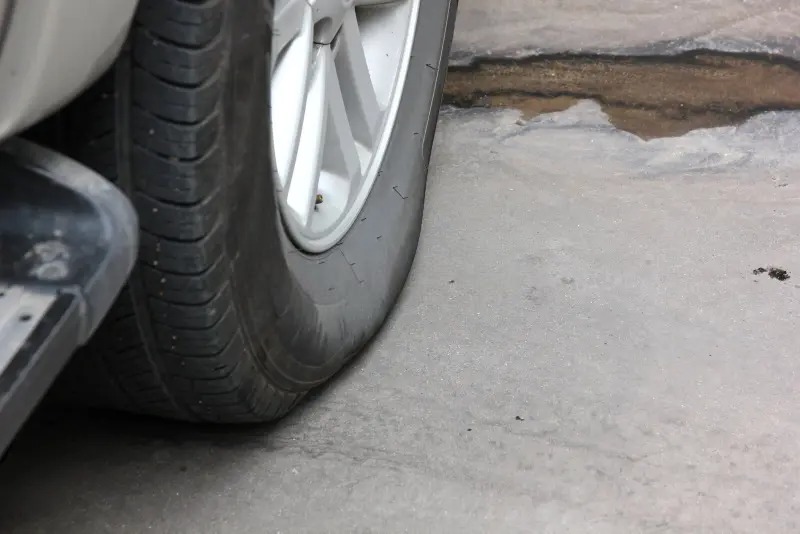
What is a consequence of driving with pressure lower than recommended?
Reviewed on 9 Aug 2026
- A Lower fuel consumption
- ✓ Greater blowout risk and wear at the shoulders
- C Greater stability in bends
- D Wear only in the centre of the tread
Why this is the correct answer
With low pressure the tyre heats up, deforms, and wears faster; the vehicle uses more fuel, is less stable, skids more in the wet, and the risk of a blowout increases.
More questions on Traction, Tyres and Brakes
- What effect does pressure higher than recommended have on tyres?
- Pronounced wear on both edges (shoulders) of the tyre usually indicates:
- When replacing tyres, what rule should be followed?
- Even if they appear to be in good condition, how often is it recommended to replace tyres due to ageing?
- If a tyre blows out while you are driving, what should you do?
Practise this topic: 30 free questions, save your progress
Ready to pass the DGT theory test?
Practise official-format questions in English, with explanations after every answer and full progress tracking.
Try a free practice test