Chapter 16 - Accidents and First Aid
As a driver, you may encounter an accident on the road - and knowing how to act can save lives. This chapter explains your legal responsibilities, the PAS protocol (Protect, Alert, Aid), and how to handle injuries until professional help arrives.
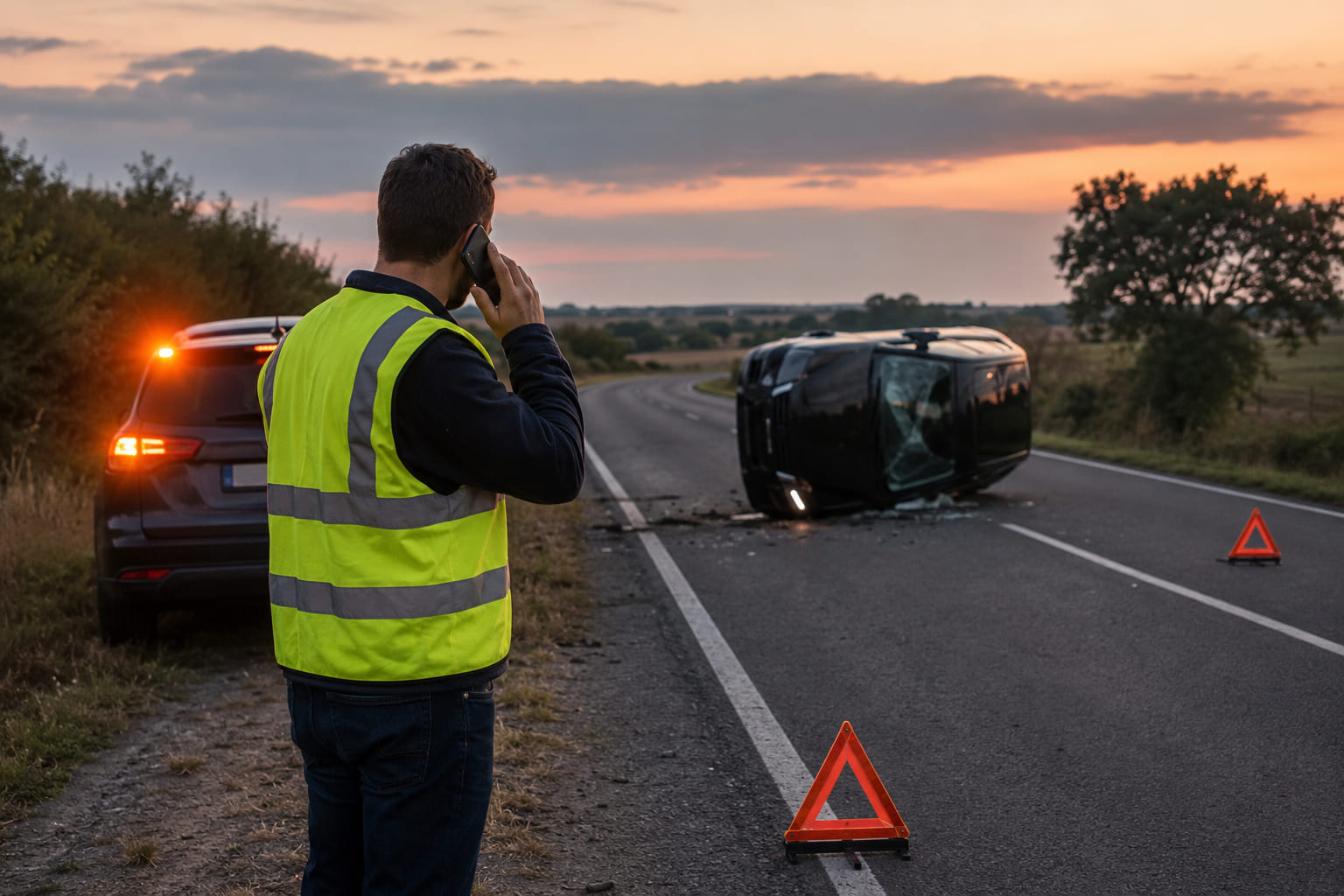
16.1 People at Higher Risk of Traffic Accidents
Studies show certain groups are more likely to be involved in an accident - called Risk Groups. We distinguish the risks faced by pedestrians from those faced by drivers.
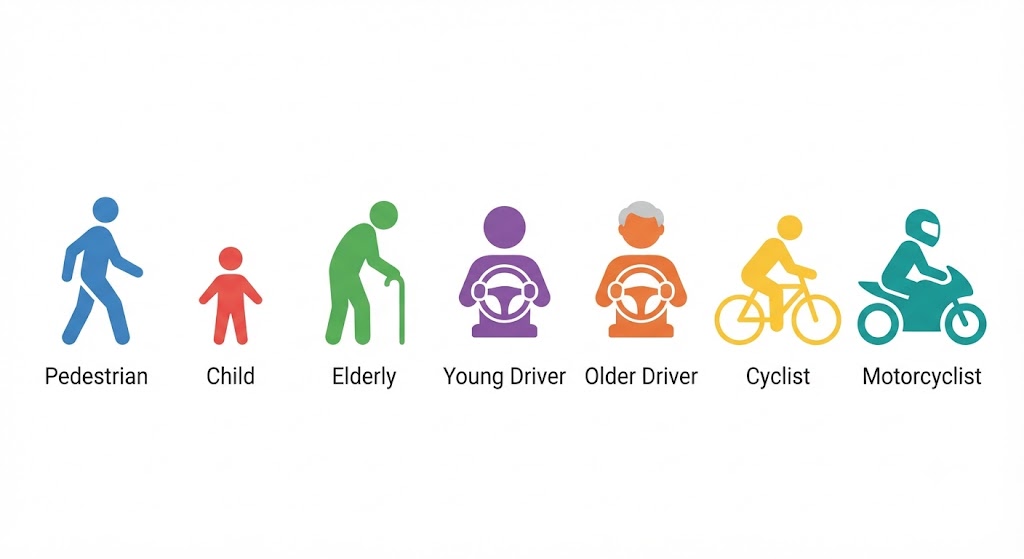
Pedestrians
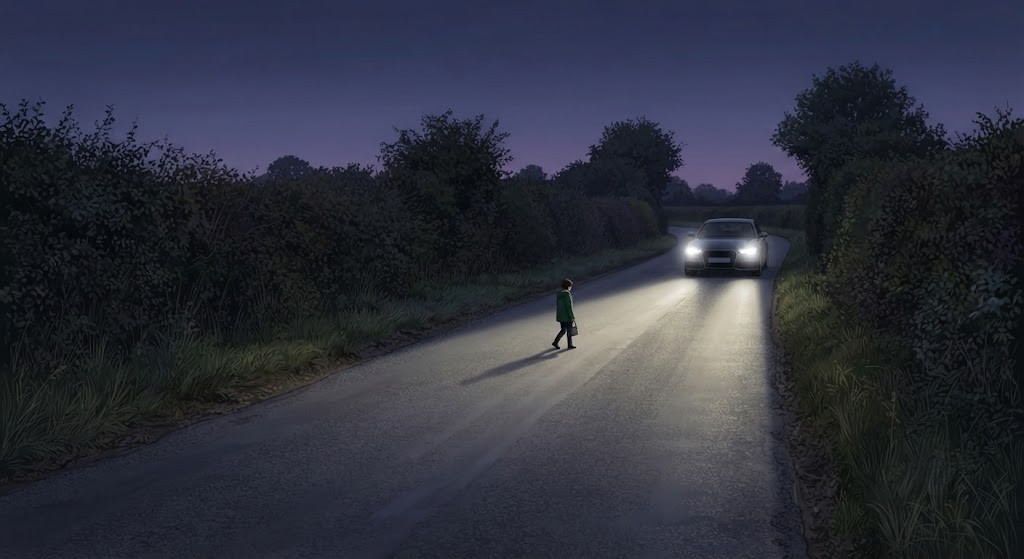
When a vehicle hits a pedestrian, the pedestrian usually suffers very serious injuries. The risk of death is higher outside the city, where vehicles travel faster. Collisions occur more often where drivers can't see pedestrians clearly because something blocks the view.
Precautions for pedestrians
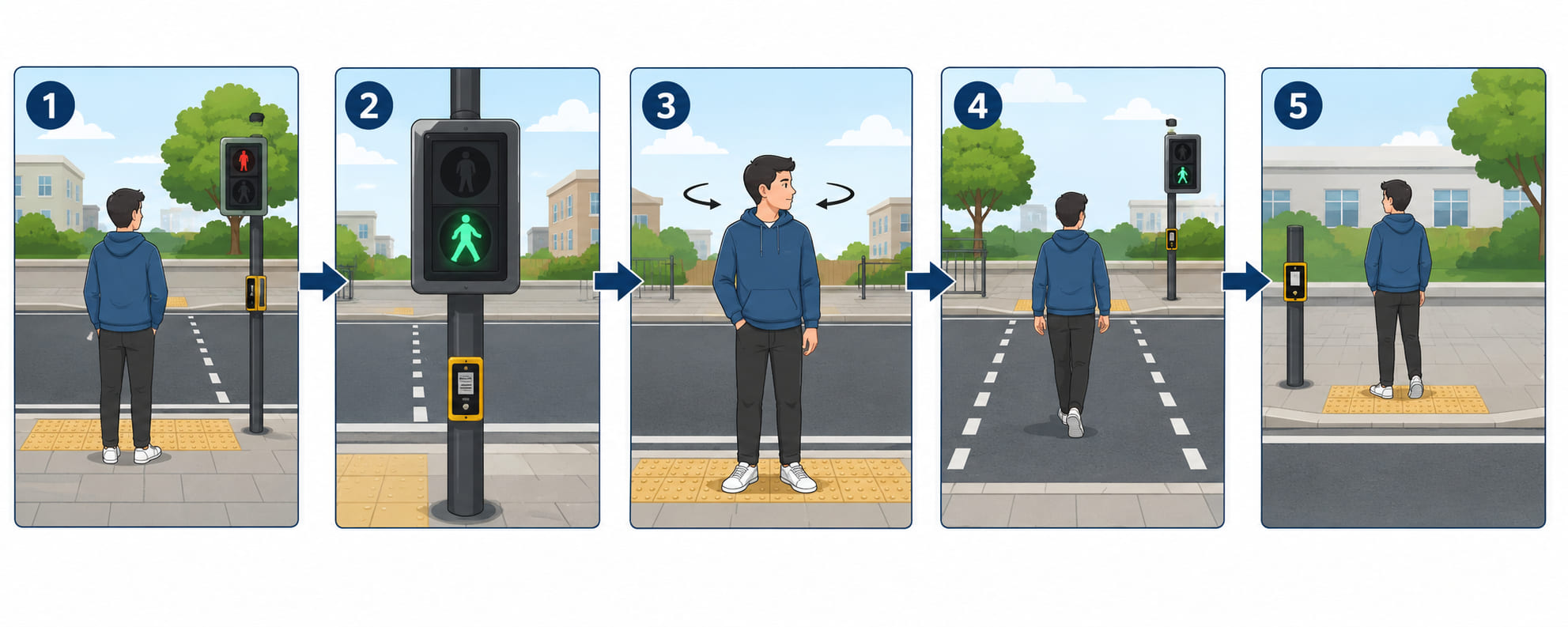
- Cross at designated pedestrian crossings.
- Cross only when the pedestrian light is green.
- Walk only in permitted areas, using roadsides and hard shoulders correctly where applicable.
- Wait on the pavement to cross - never on the roadway.
- Always look before stepping off the curb.
- Make sure no other vehicle is approaching before you get out of your own vehicle.
Precautions for drivers
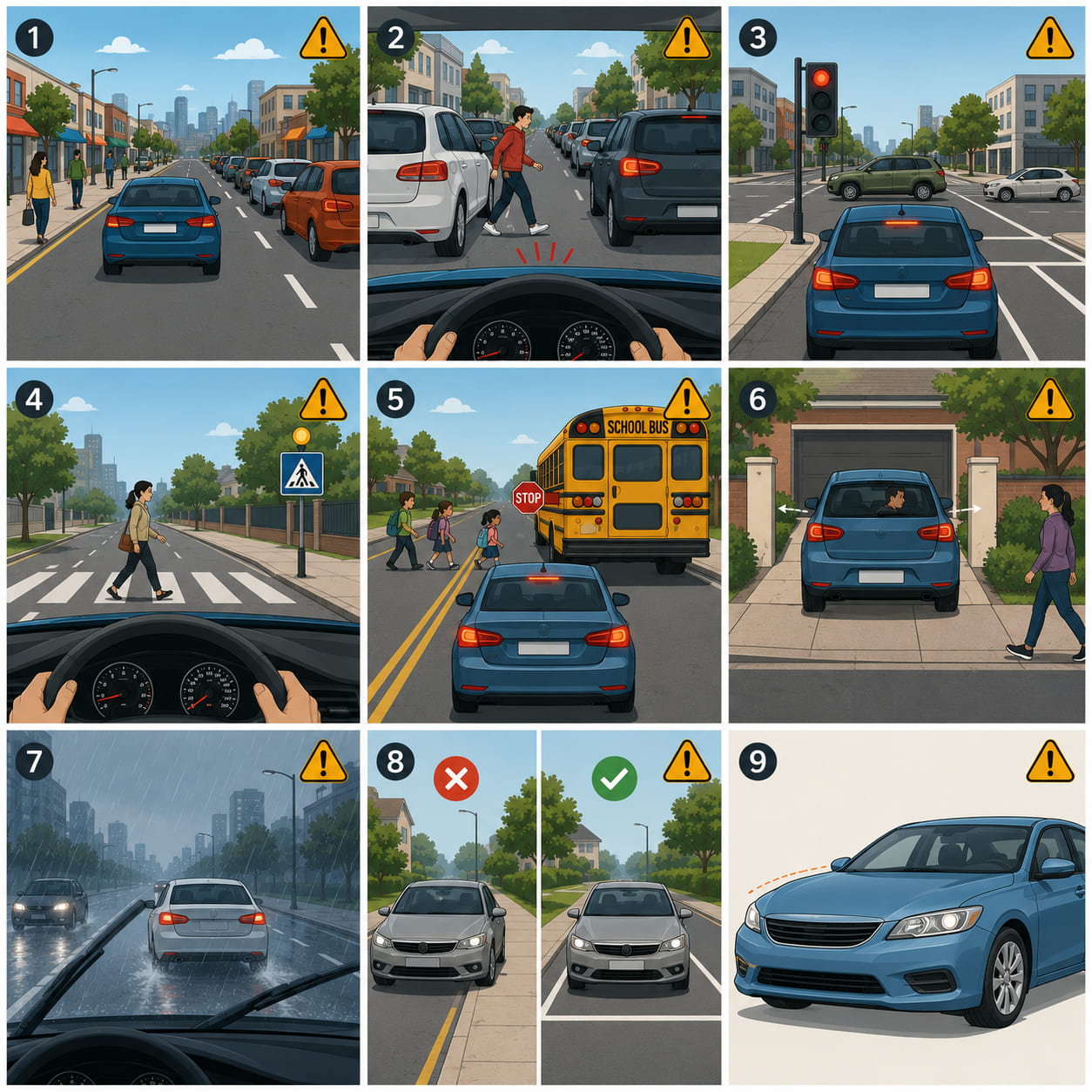
- Drive at a moderate speed, especially in built-up areas.
- Be extra cautious near pedestrians and parked vehicles with people inside - someone may step out without looking.
- Never proceed when the light is red or amber.
- Yield to pedestrians when they have the right of way.
- Take extra care if a pedestrian is crossing while on a mobile phone - they may be distracted.
- Pay close attention near nightlife and entertainment areas.
- Take special care when exiting garages or driveways.
- Do not park on the pavement (it forces pedestrians onto the roadway) or on pedestrian crossings.
- Do not modify the vehicle exterior - modern exteriors are designed to reduce pedestrian injury.
- Slow down when passing a stationary bus, especially a school bus.
- Drive with extra caution on rainy days and take extra precautions when reversing.
Children and Older People
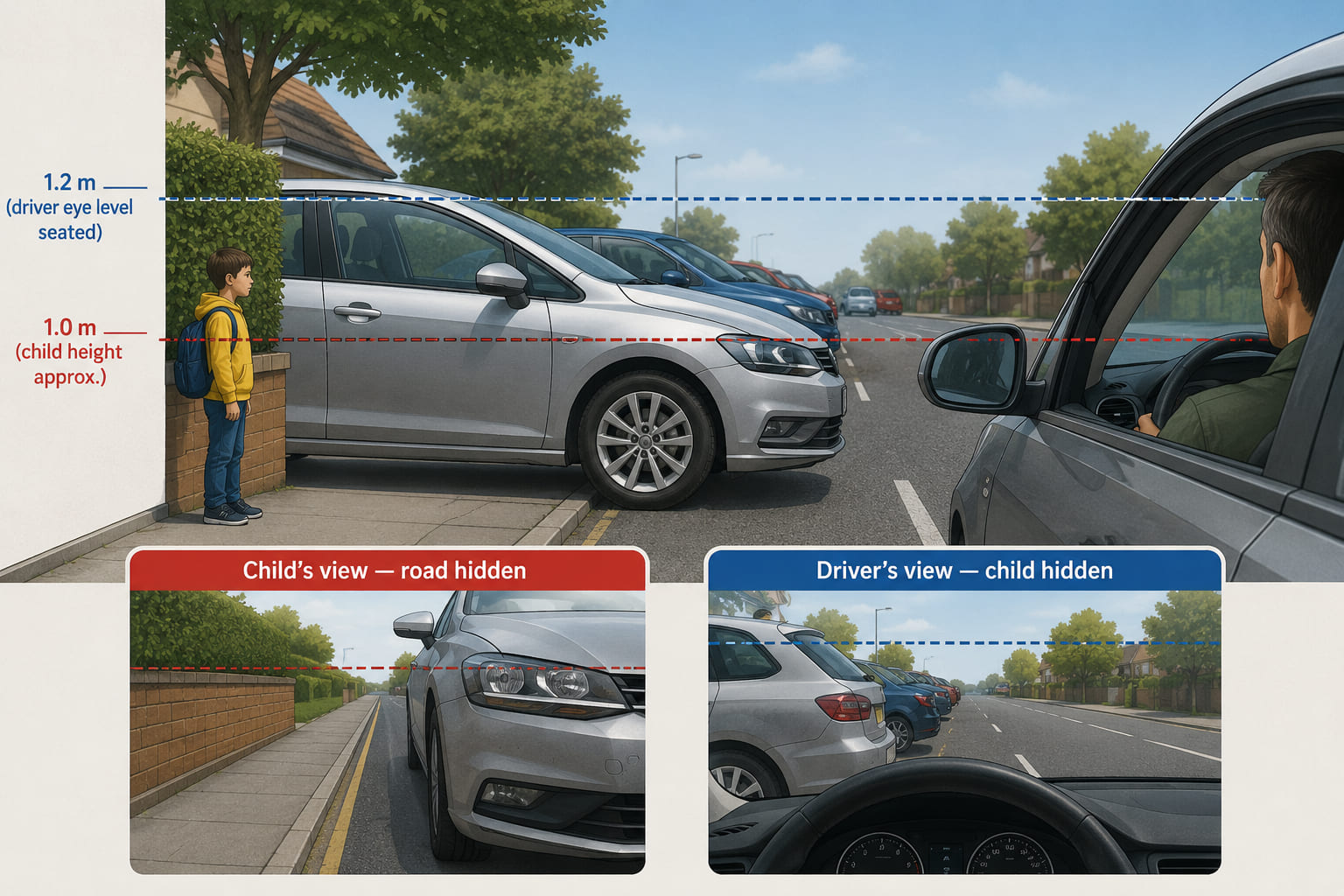
The pedestrians at greatest risk are children and older adults.
Children
- They are shorter than adults, so they see less of the roadway and drivers find them harder to see.
- They pay less attention to the road because they have a lower sense of danger.
- They don't fully know the traffic rules - most child pedestrian collisions happen when leaving school.
Elderly people
- Ambient noise makes it hard to hear an approaching vehicle.
- They may have difficulty judging how fast a vehicle is coming.
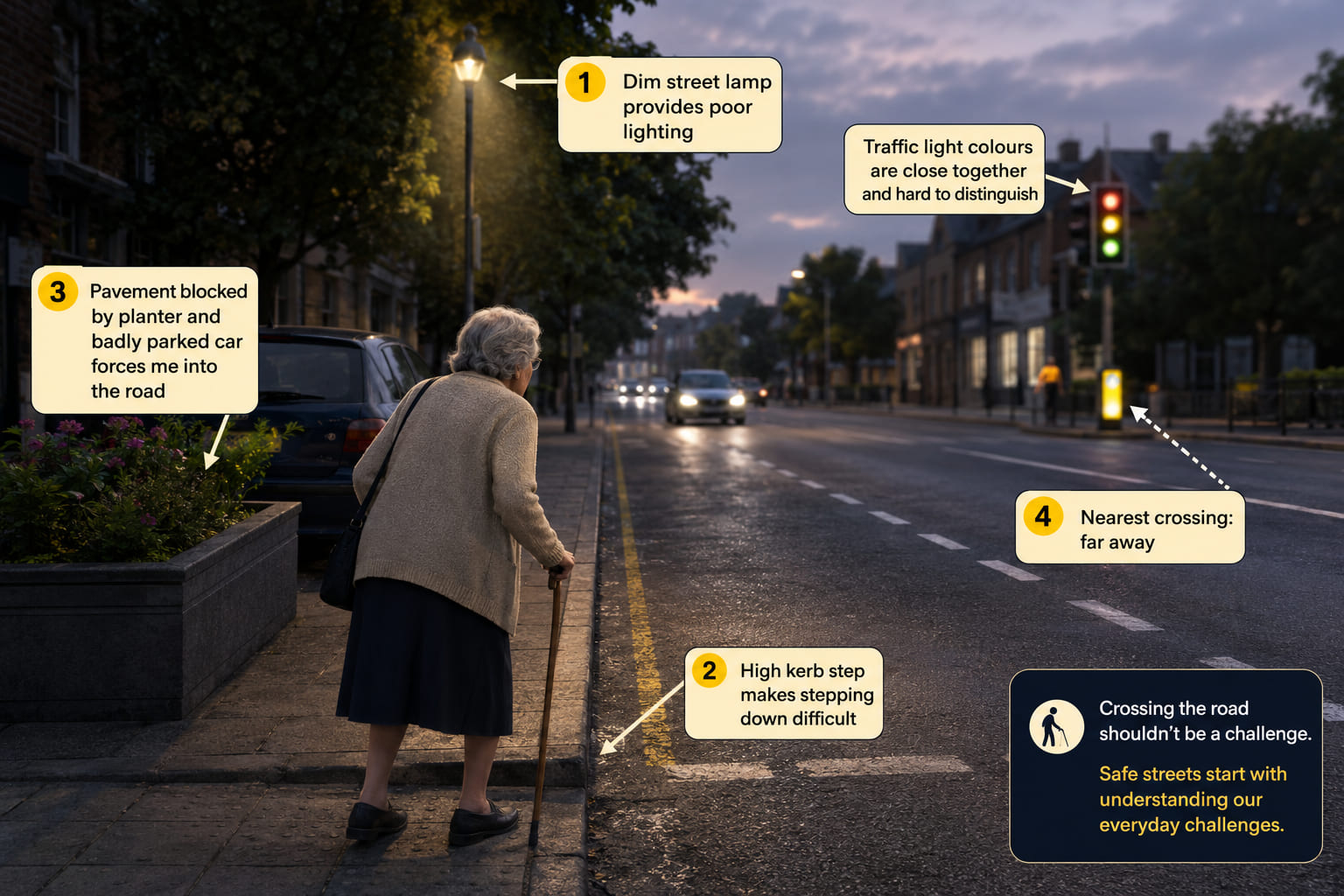
- They may have difficulty distinguishing traffic-light colours.
- In some areas there are too few pedestrian crossings.
- Some streets are poorly lit, making them harder to cross.
- Some kerbs are too high.
- There are obstacles on pavements (planters, badly parked cars).
- They may become disoriented in unfamiliar areas.
Older people have more accidents when alone than when accompanied by children - walking with children, they tend to be more cautious, both to set an example and to protect them.
Drivers at Highest Risk
Young people
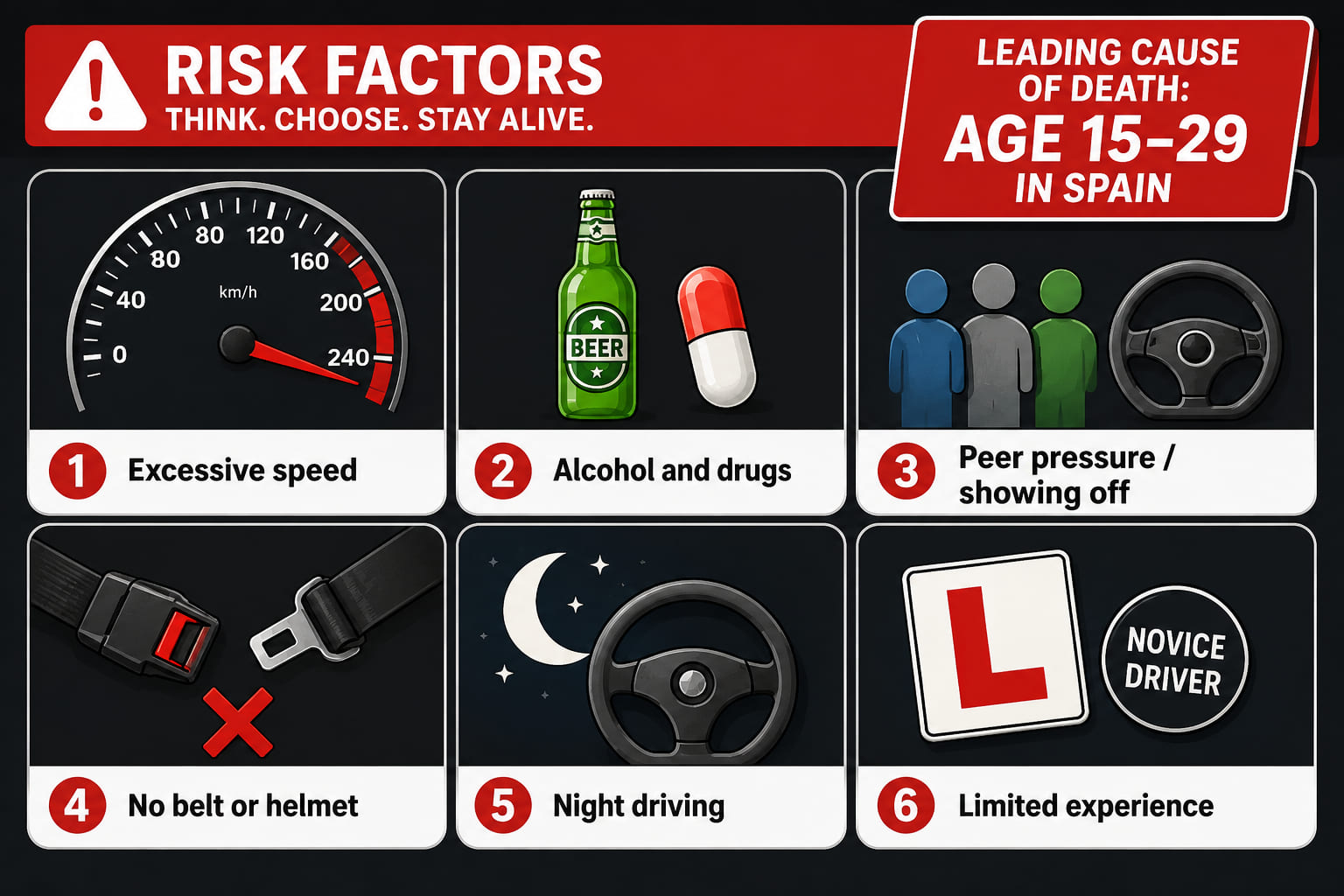
In Spain, traffic accidents are the leading cause of death among young people aged 15 to 29. Crashes occur mainly in large cities, on commutes, and in nightlife areas. The highest fatalities come in summer, Christmas, and weekends - most often at night and in the early hours. Main causes:
- Driving at excessive speed.
- Consuming alcohol and drugs.
- Failing to comply with traffic rules.
- Taking excessive risks while driving.
- Little/limited experience.
- Competing with other drivers (showing off or racing).
- Not wearing a seat belt or helmet because they think they don't need it.
- Following advertising or promotions that encourage risk-taking.
Older drivers (65+)
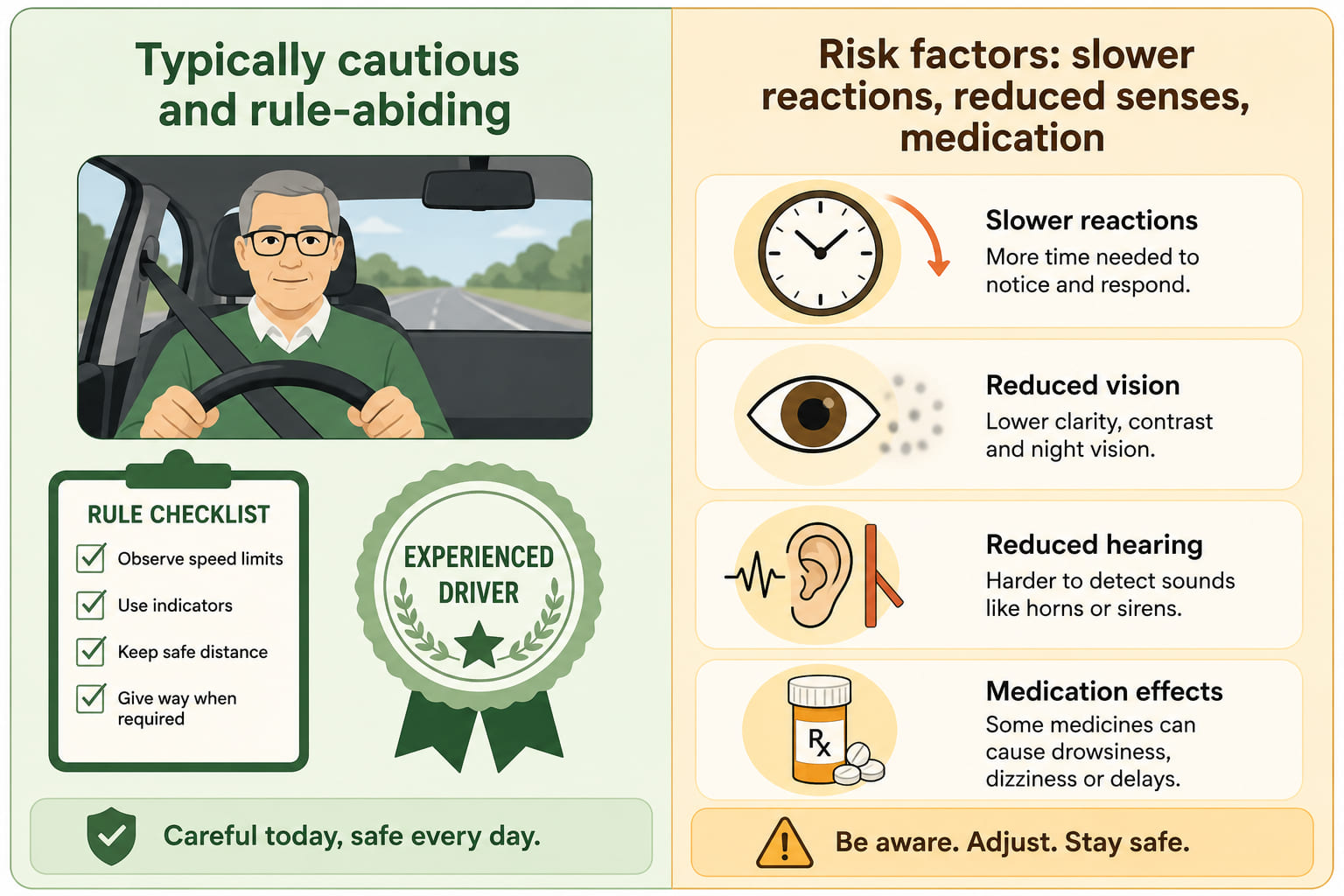
Usually very cautious and rule-abiding, but may be involved in more accidents because:
- Reduced attention capacity and more time needed to react to the unexpected.
- Many over 65 have poorer vision and hearing.
- Some take medications that impair driving.
In a crash, older people tend to suffer more severe injuries and have a lower chance of survival.
Two-wheeled vehicle riders
Two-wheeled vehicles are more vulnerable and less visible, so riders must drive with extra care.
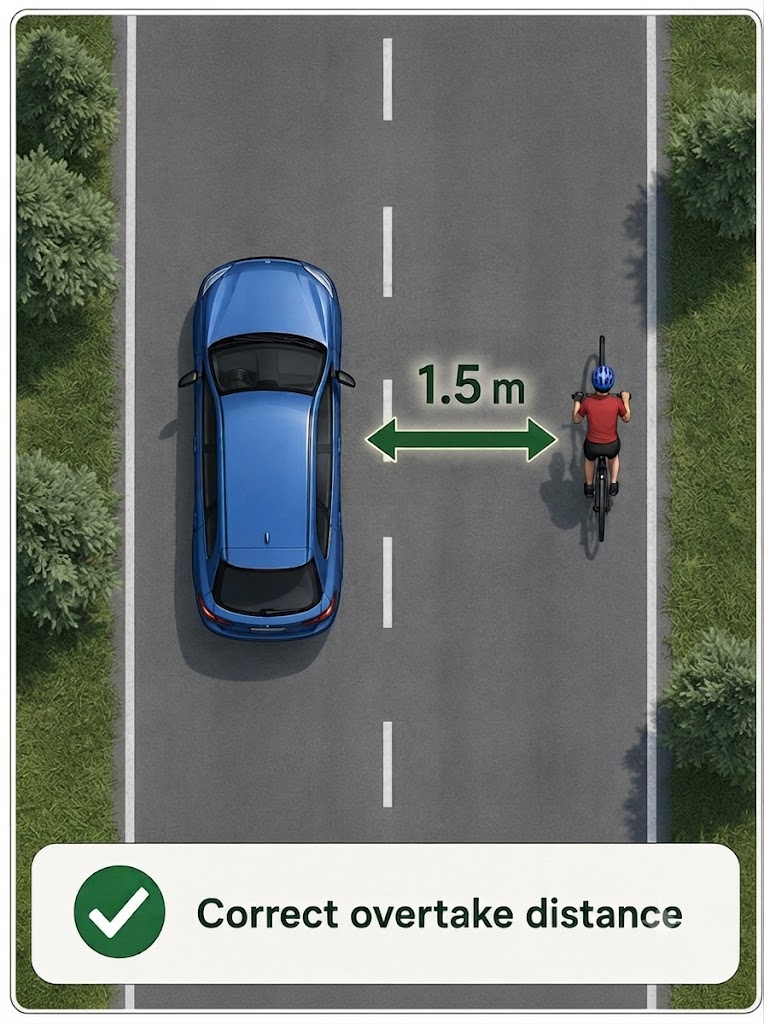
Bicycles. Cyclist accidents happen more often on weekends, especially in better weather. There are more crashes inside cities, but more fatalities on roads outside urban areas - mostly on straight sections or at junctions, from collisions with other vehicles. Causes may be cyclist mistakes or violations by other drivers. To avoid hitting cyclists, drivers should:
- Leave enough space behind before overtaking, and ample lateral clearance while passing.
- Never overtake if cyclists are approaching in the opposite direction.
- Take extra care in rain, snow, fog, or poor visibility.
- Avoid using the horn near cyclists so as not to startle them.
- Be cautious around parked vehicles - cyclists may emerge from between them.
- Drive more carefully near leisure areas and venues.
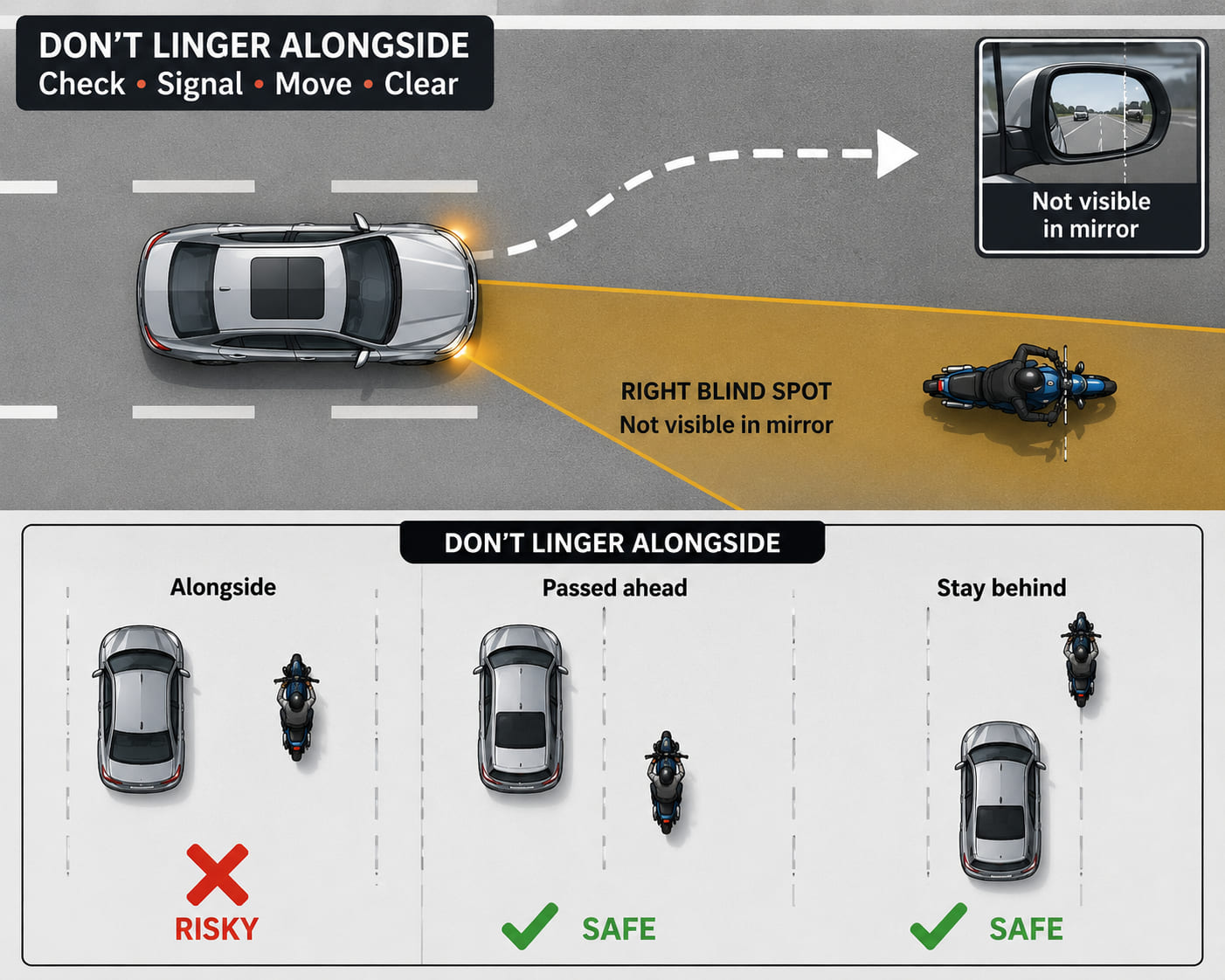
Motorcycles and mopeds. The most common crashes when overtaking are head-on and side impacts, mostly in urban areas; consequences are far more serious without a helmet. Causes may be rider mistakes or violations by other drivers. To avoid crashes, drivers should:
- Check carefully for two-wheelers before changing lanes.
- Avoid lingering alongside a motorcycle or moped - either pass and move ahead or stay behind.
- Maintain a safe following distance.
- Respect situations where they have the right of way.
- Take extra caution in rain, snow, fog, or poor visibility.
16.2 Duty to Assist
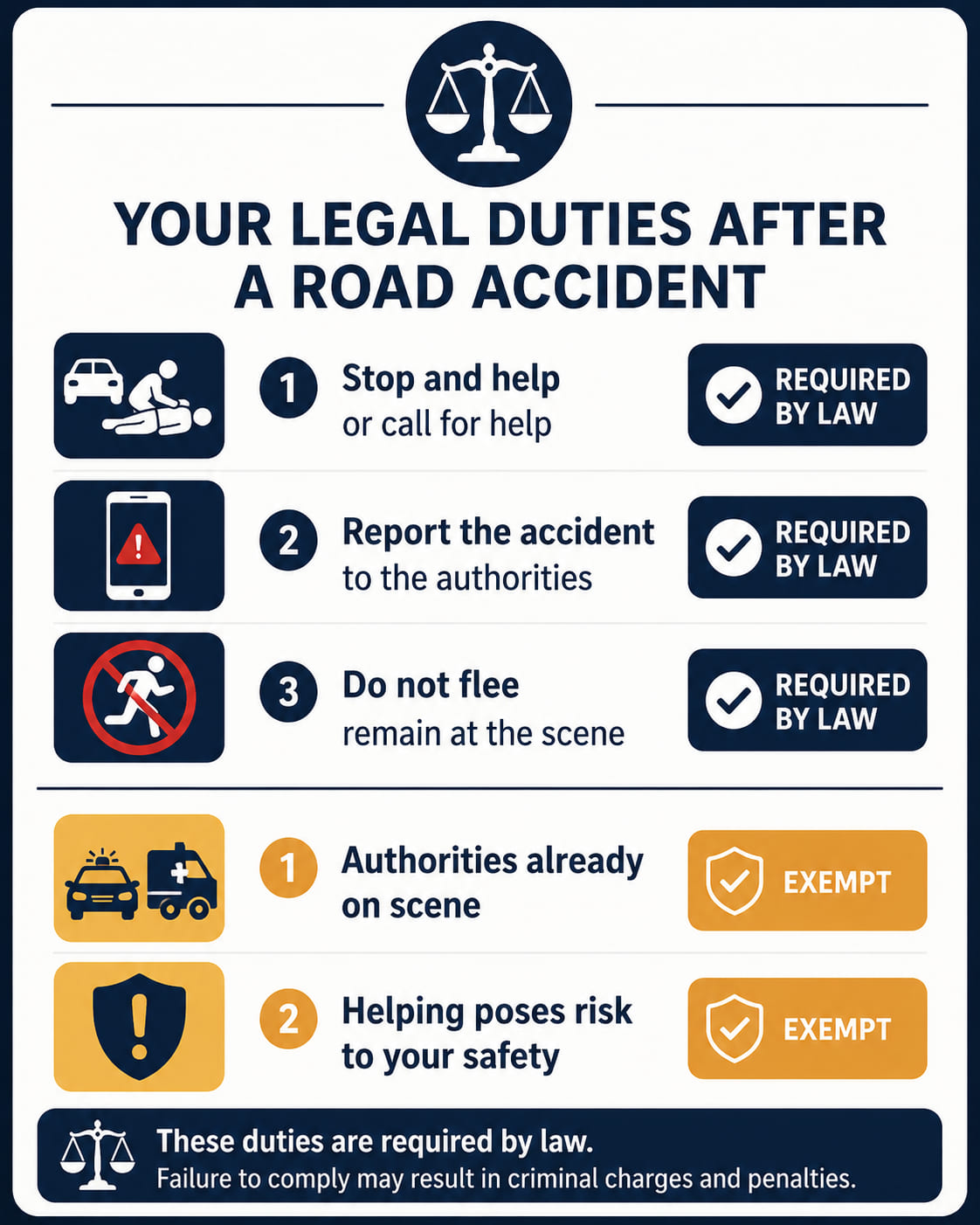
Anyone involved in or witnessing a traffic accident must stop and provide or seek help for the victims, prevent further danger, restore traffic flow, and cooperate with emergency services. Failure to do so may be a criminal offence under Spanish law.
- Fails to help victims when they can do so without putting themselves in danger.
- Fails to report the accident so that help can be sent.
- Causes an accident and then flees instead of assisting.
16.3 Action Plan: The PAS Rule
16.3.1 Steps to Follow
All people who witness a traffic accident must:
- Assist the victims or call for help so someone can assist them.
- Help prevent further damage or injuries.
- Help restore safe traffic flow when possible.
- Explain what happened to the authorities and emergency services.
- Give their name and contact details to the authorities and others involved. Drivers must also provide their vehicle details.
When you witness an accident but can't help, or traffic officers have already arrived, the best course is to keep driving and avoid obstructing the scene.
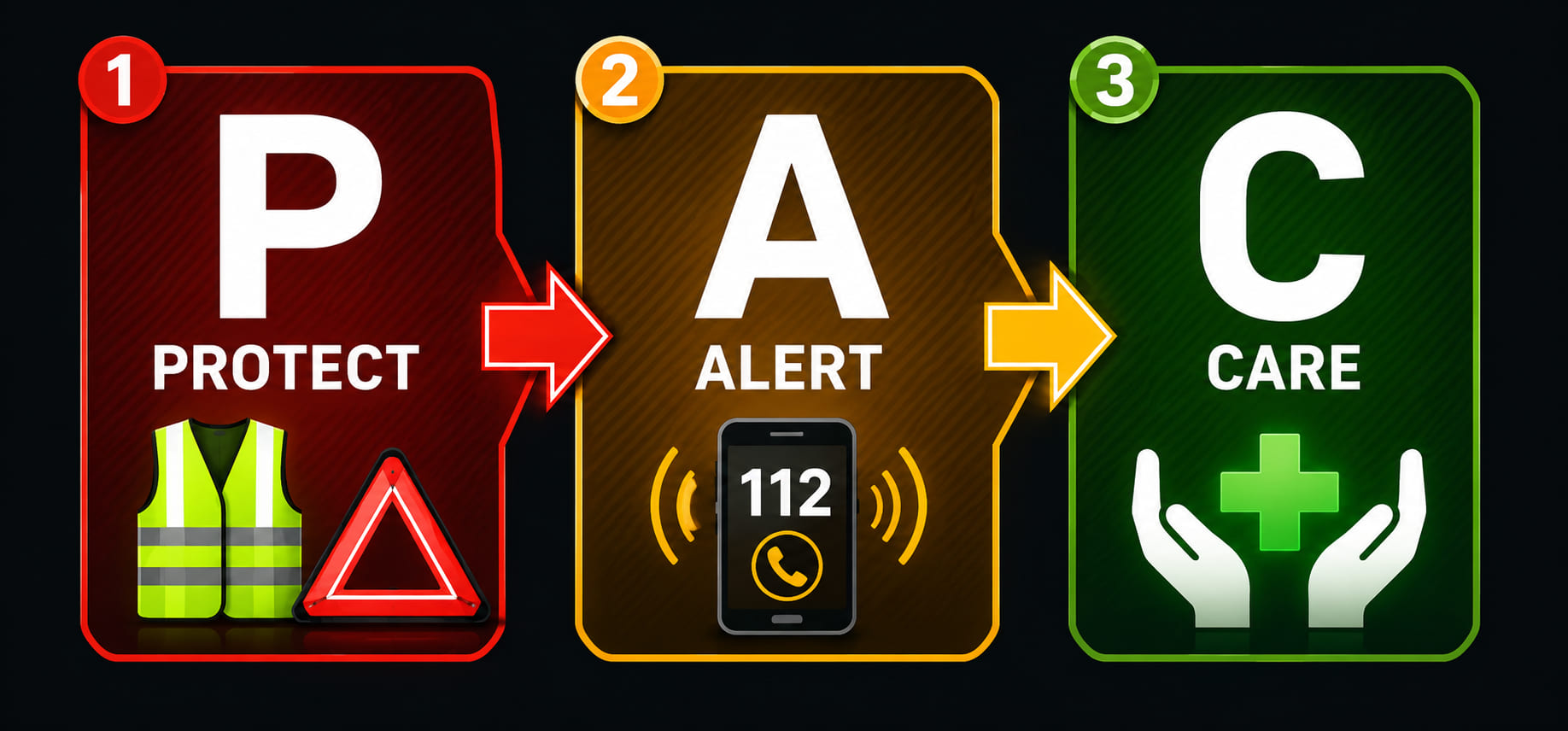
16.3.2 Protect
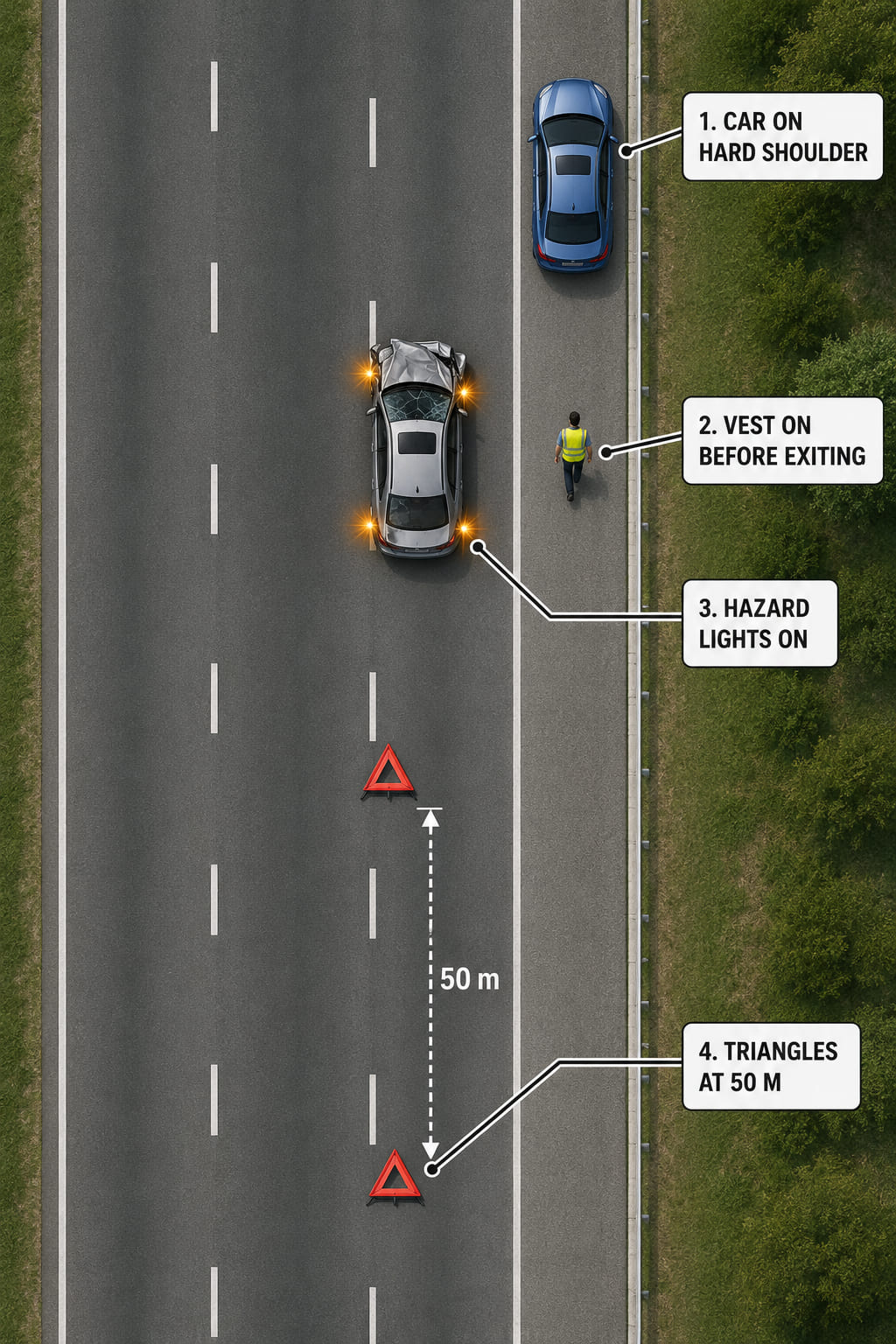
- Stop your vehicle in a safe location away from traffic.
- Wear your reflective vest before leaving the vehicle.
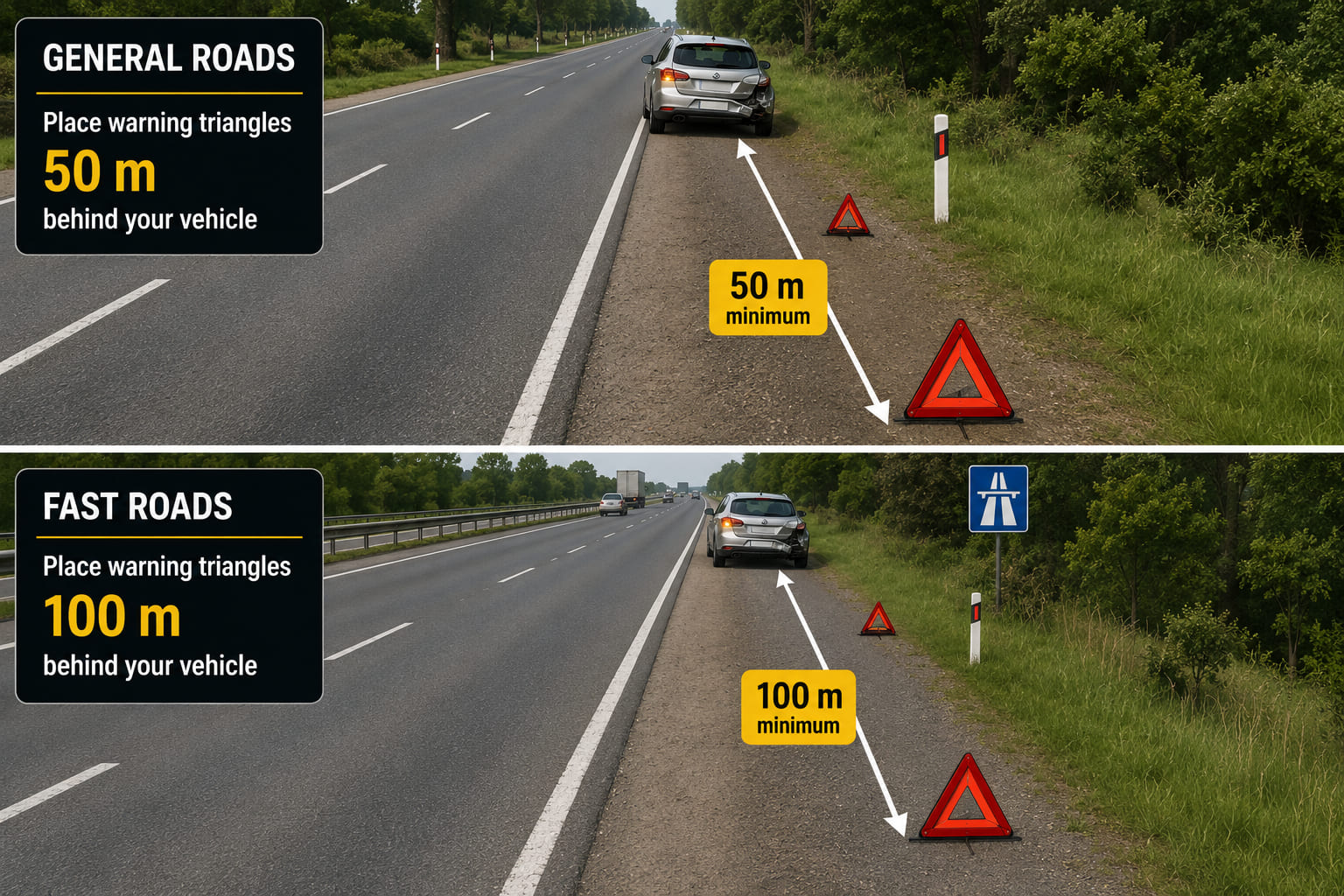
- Switch on hazard lights and place emergency triangles 50 m behind the vehicle (or more, on fast roads).
- Turn off engines in damaged vehicles and avoid fire risks - do not smoke or use flames.
- If a fire starts, use a fire extinguisher, sand, or blankets - never water.
- Do not move injured people unless absolutely necessary for their survival or safety.
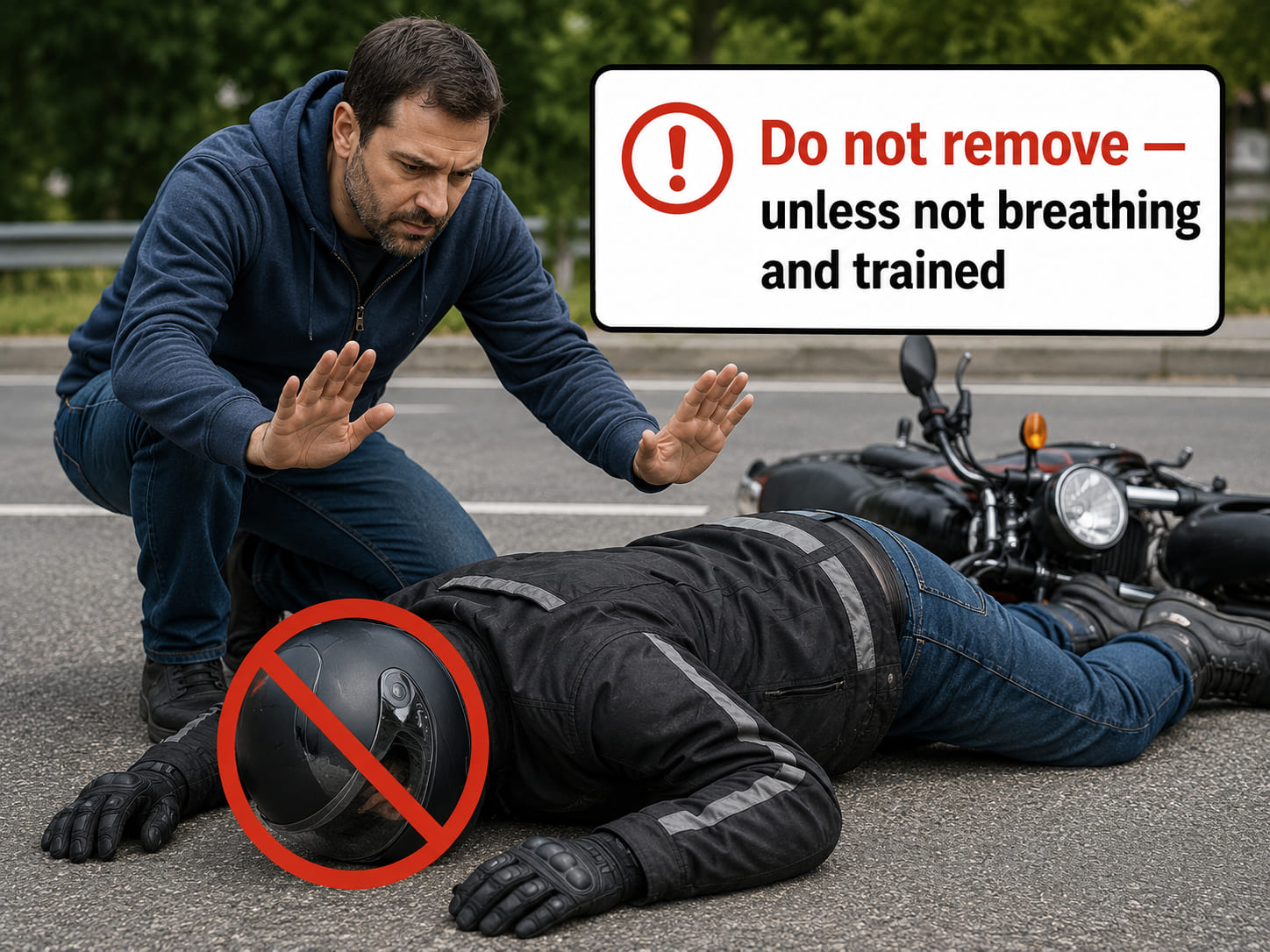
- Do not remove a motorcyclist's helmet unless they are not breathing and you know how to do it safely.
16.3.3 Alert
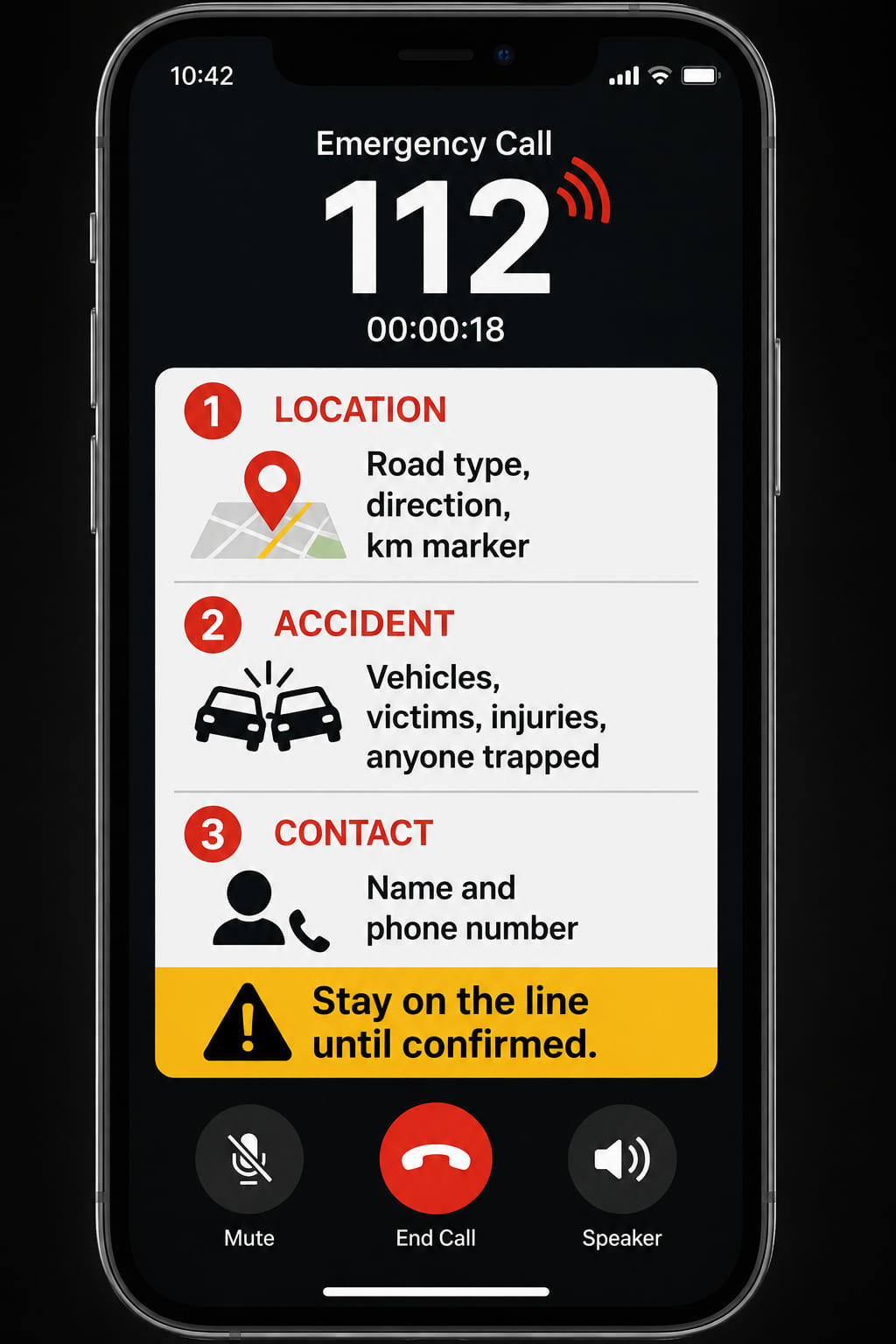
Call emergency services at 112. Provide:
- Exact location: road type, direction, nearby signs or kilometre markers.
- Description of the accident: number of vehicles, victims, visible injuries, trapped individuals.
- Your contact information: name and phone number.
Stay on the line until the operator confirms all details.
16.3.4 Aid
Provide help to injured persons while waiting for professionals:
- Do not move victims unless there is an immediate threat (fire, explosion, etc.).
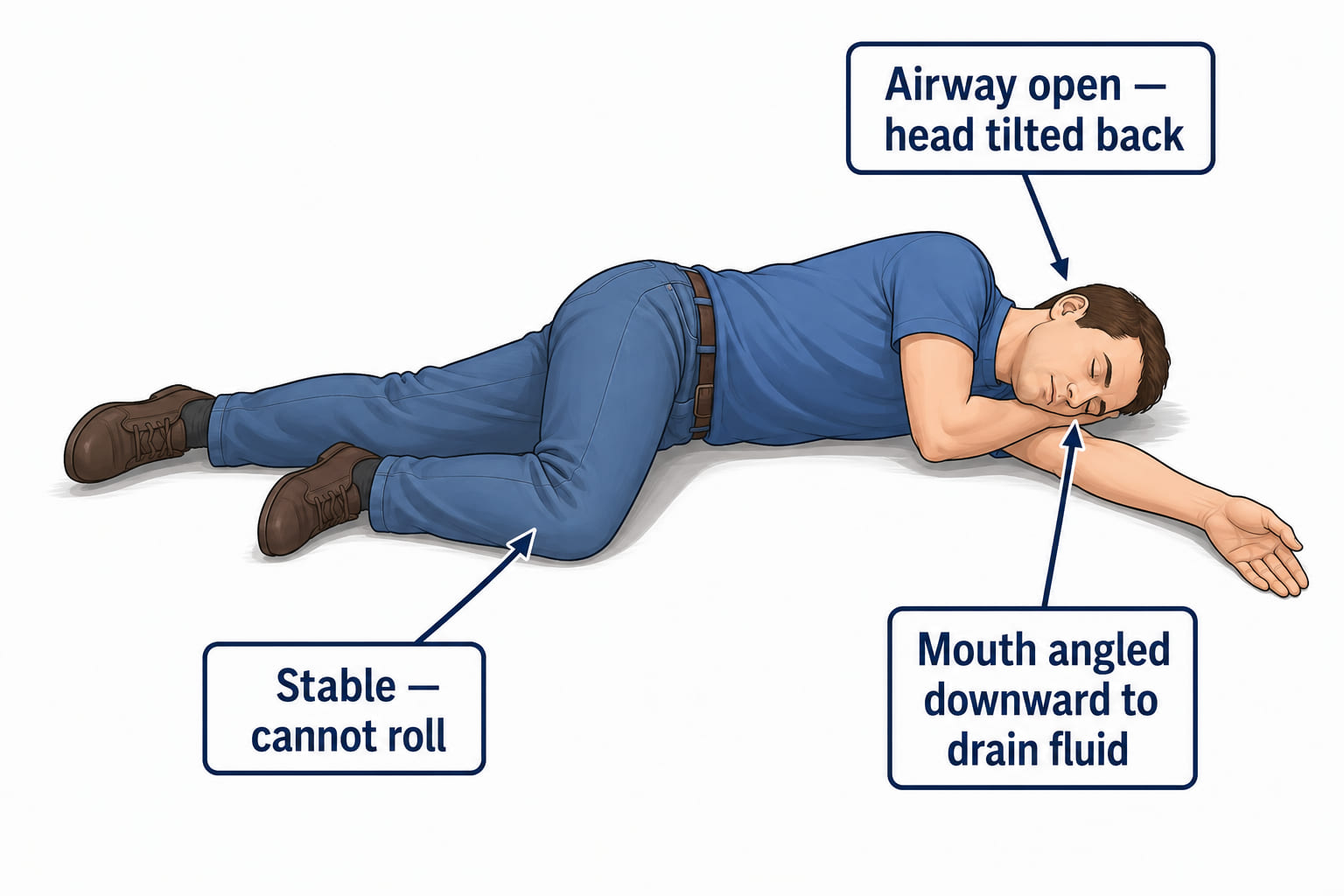
- If unconscious but breathing, place them in the recovery position.
- Reassure and keep them warm - cover with a coat or blanket if possible.
- Do not offer food or drink - especially not alcohol.
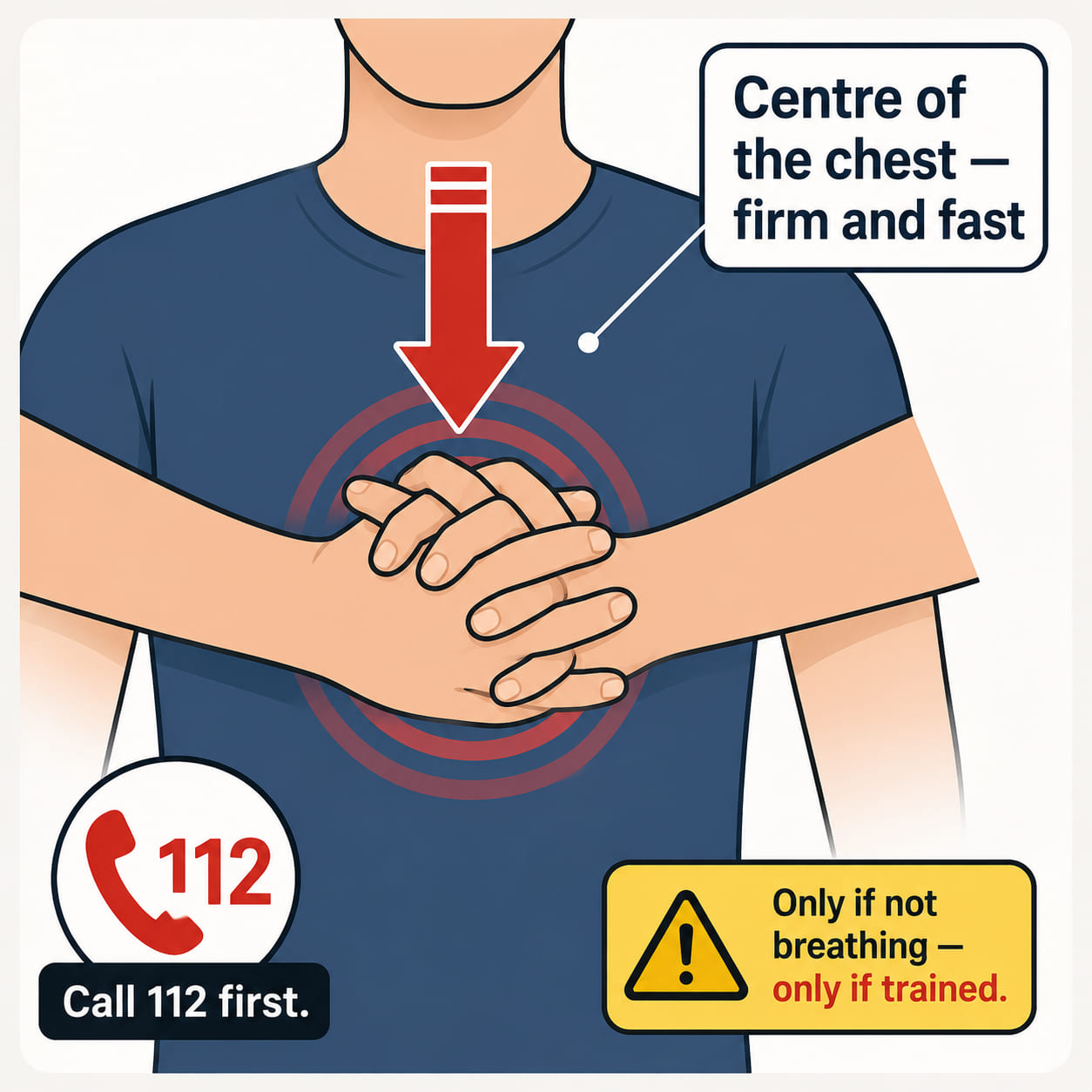
- If the person is not breathing, start CPR if trained to do so.
16.4 Managing Common Injuries
Shock (Circulatory Collapse)
Signs: pale, cold, clammy skin; rapid, shallow breathing; confusion or fainting.
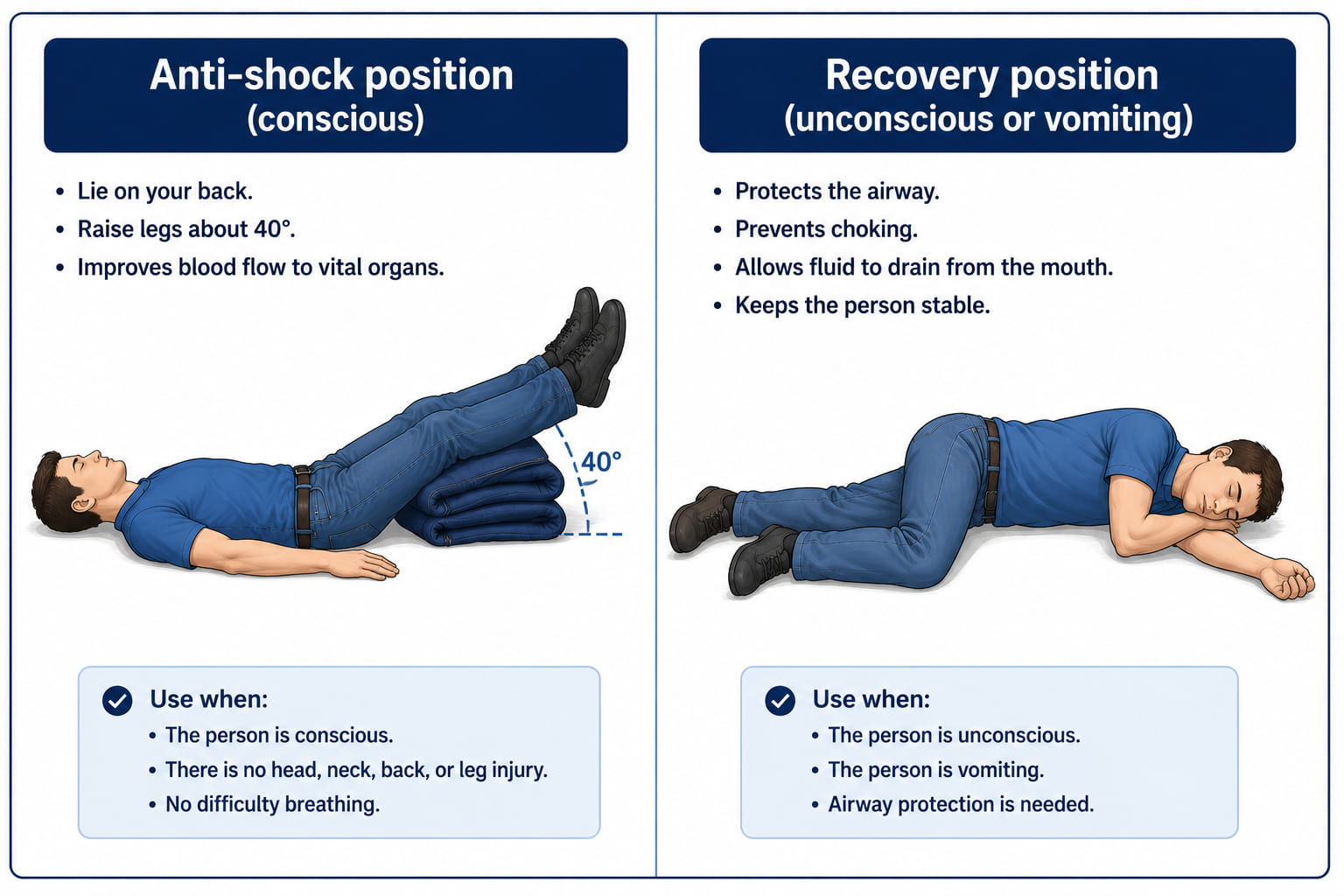
Action: if conscious, lay flat with legs elevated (anti-shock position); if unconscious or vomiting, use the recovery position.
External Bleeding
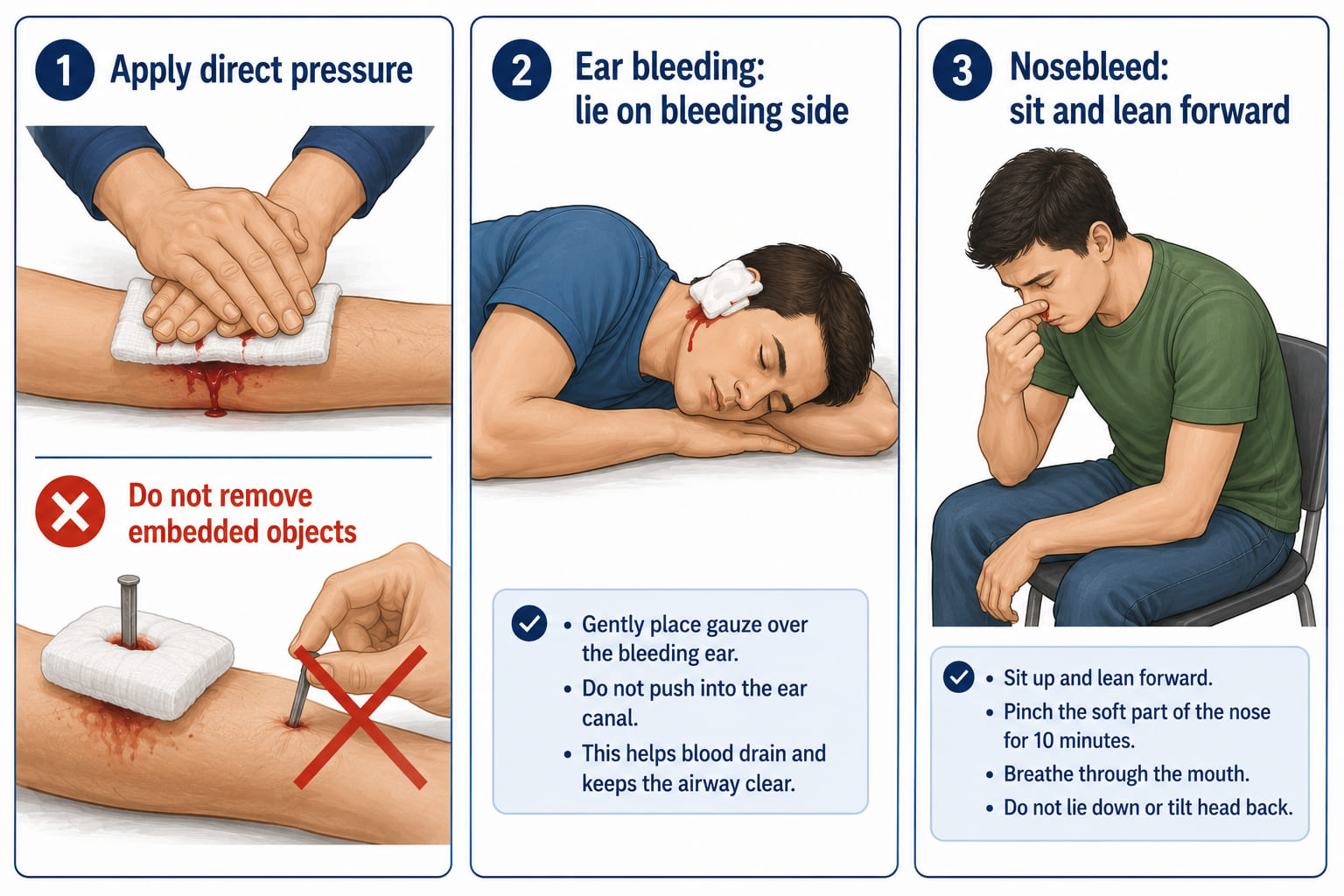
Do not plug or cut wounds. Apply pressure with a sterile cloth or dressing. Do not remove embedded objects - pad around them. Ear bleeding: lay on the side of bleeding, gauze on ear. Nosebleed: seated, head tilted forward (if conscious); recovery position if unconscious. Mouth bleeding: semi-seated if conscious; recovery position if vomiting.
Fractures
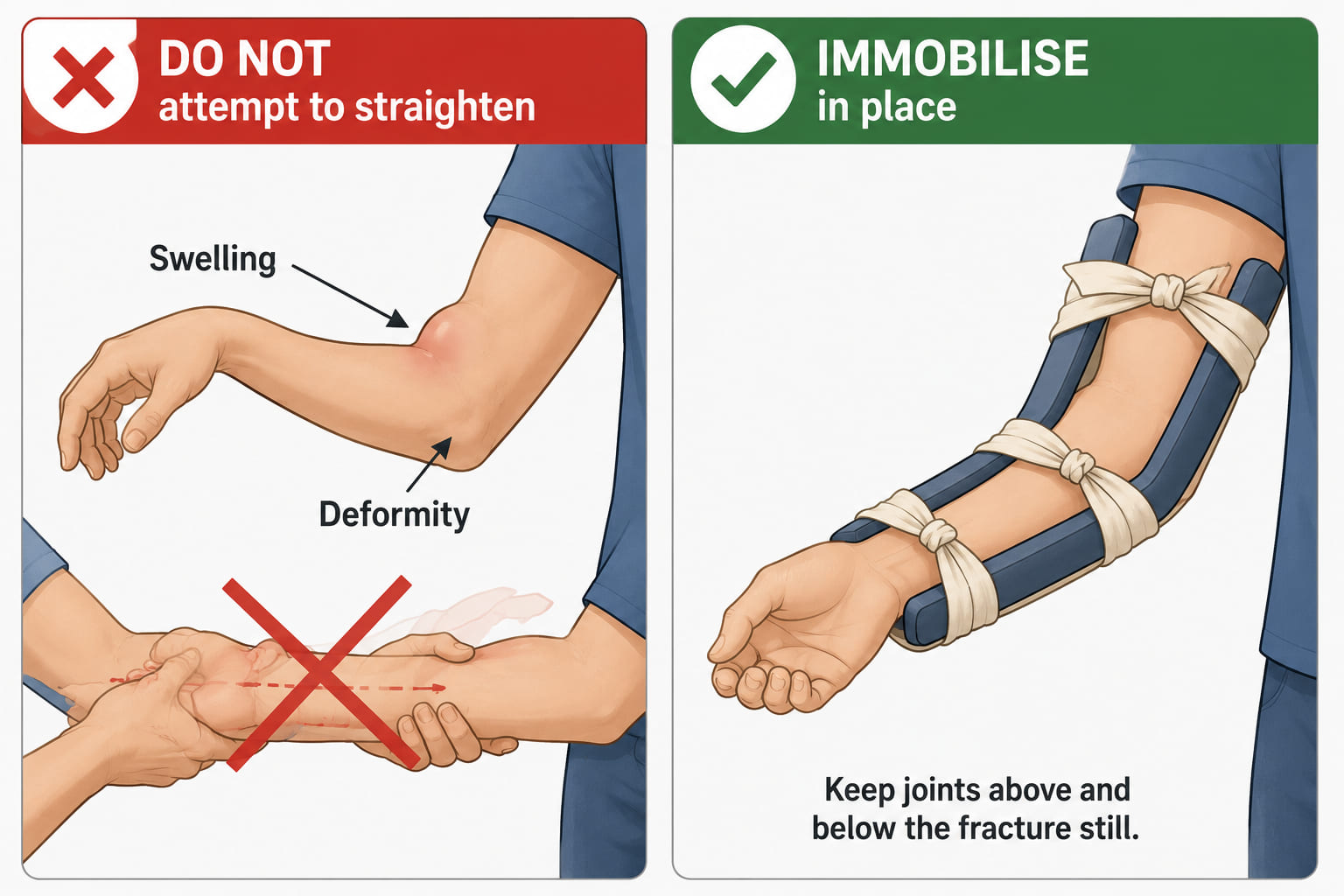
Signs: swelling, deformity, or shortening of a limb; pain and immobility.
Action: do not try to straighten or reset the bone; immobilise with splints or slings.
Burns
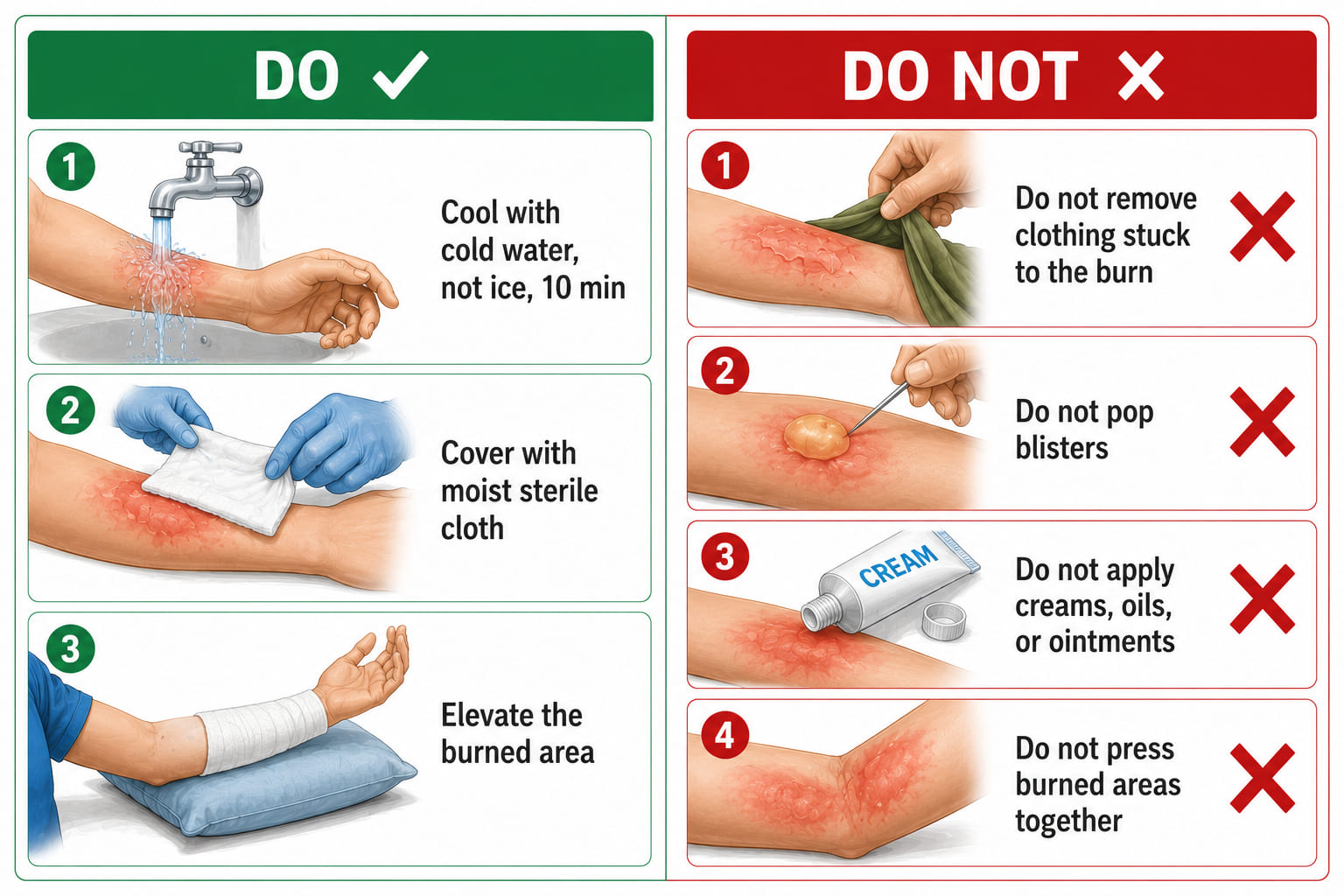
Do: cool with clean, cold water (not ice) for at least 10 minutes; cover with moist, sterile cloths; elevate the burned area if possible.
Do NOT: touch or remove clothing stuck to the burn, break blisters, apply creams or oils, or wrap two burned surfaces together. If conscious and not vomiting, a small amount of bicarbonated water may be given to drink.
16.5 First Aid Kit
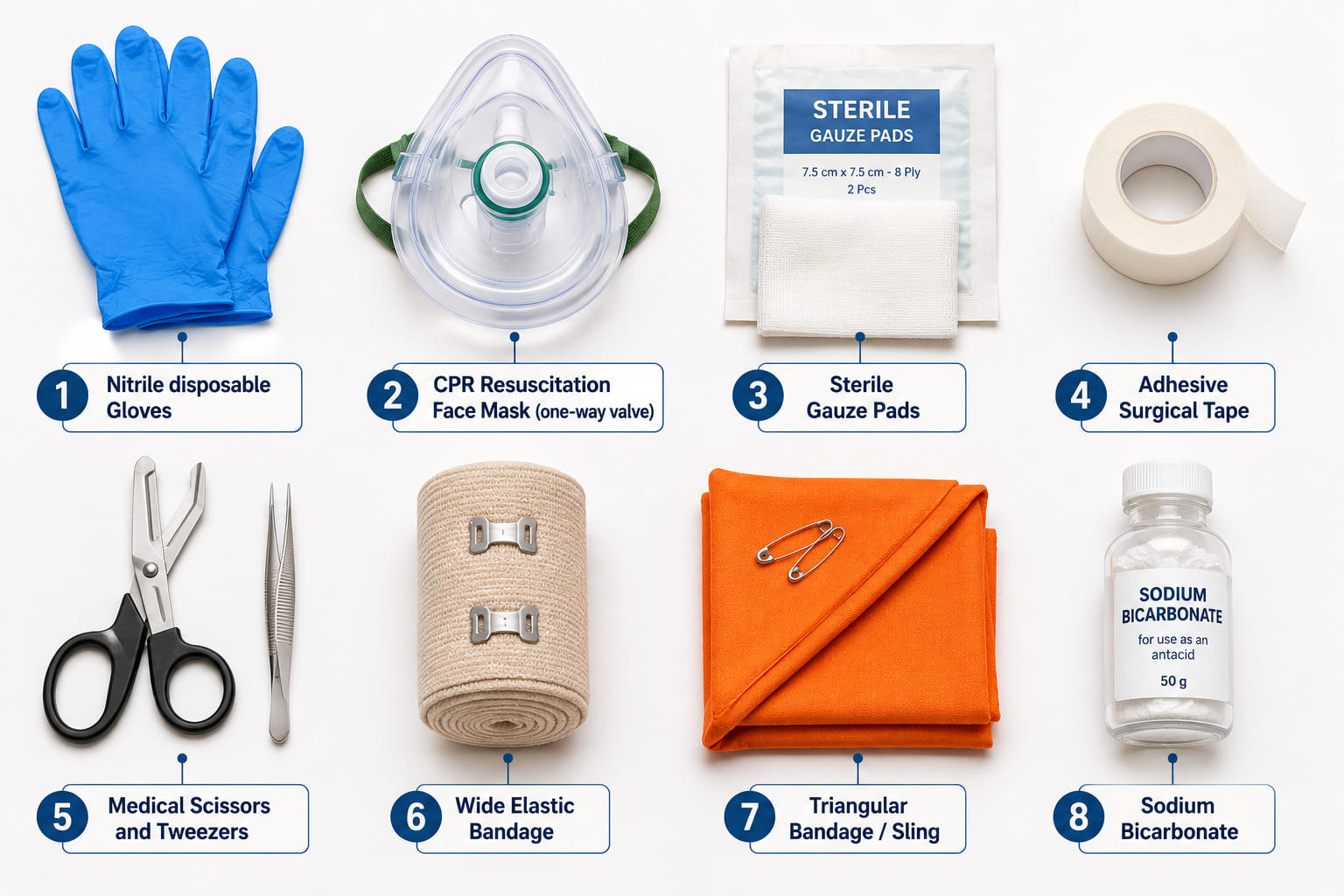
While not mandatory in Spain, it is highly recommended to carry a basic first-aid kit in your car:
- Disposable gloves
- Resuscitation mask or mouth barrier
- Sterile gauze and bandages
- Adhesive tape (e.g., surgical tape)
- Scissors and tweezers
- Elastic band (5-10 cm wide and ~150 cm long)
- Triangular bandage or large scarf
- Bottle of sodium bicarbonate
16.6 Legal and Ethical Considerations
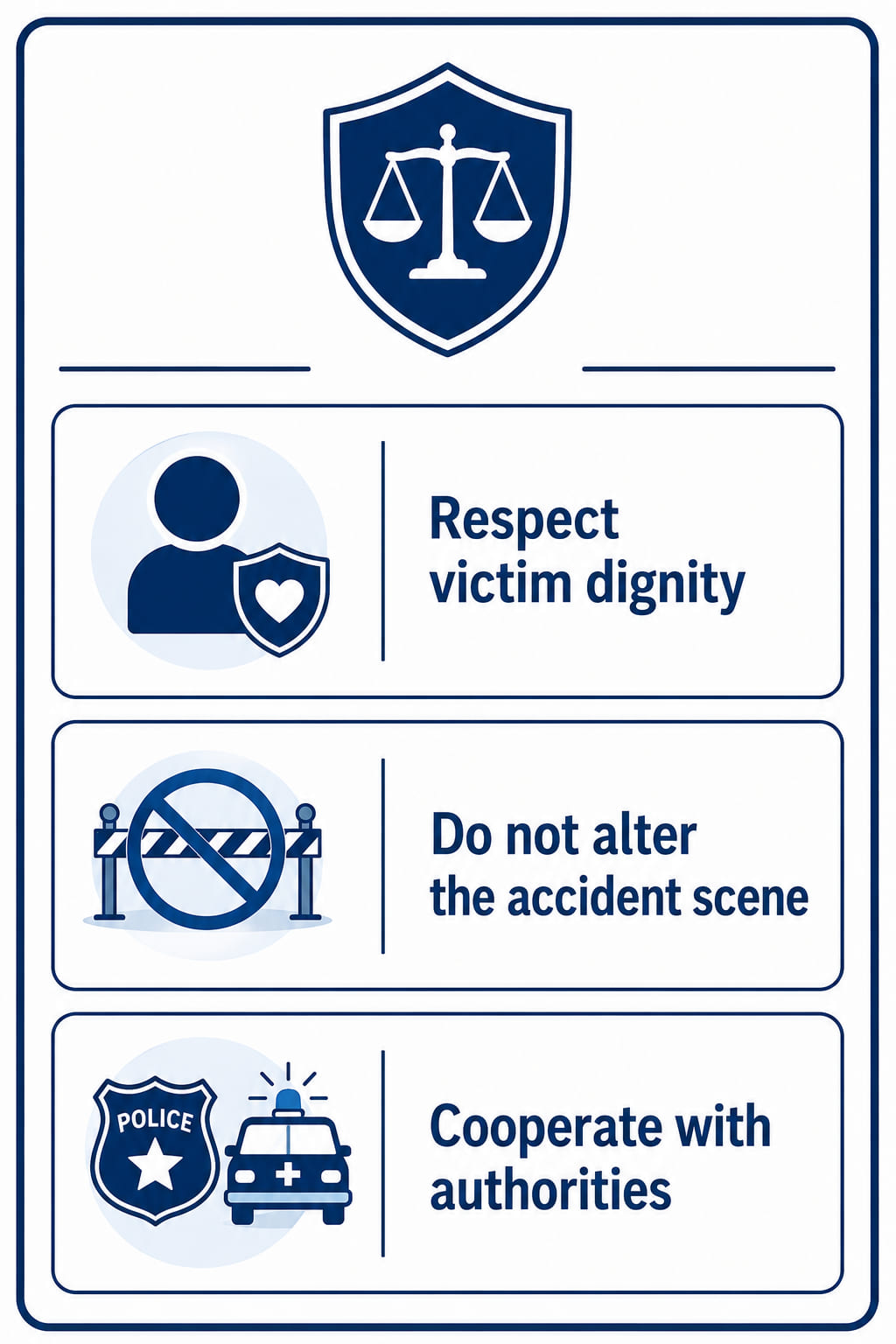
Drivers must respect the dignity of accident victims, avoid causing additional harm, and collaborate with authorities. It is also forbidden to obstruct emergency services or alter the accident scene (except when it poses danger).
16.7 Preventing Accidents
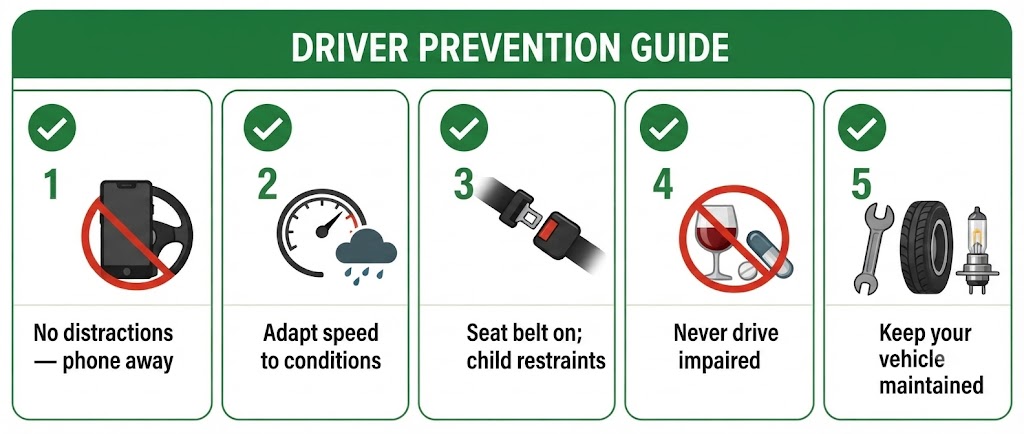
Prevention is the most effective form of safety. Drivers should:
- Maintain full attention and avoid distractions (e.g., mobile phones).
- Adapt speed to road and weather conditions.
- Use seat belts and child restraints properly.
- Not drive under the influence of alcohol, drugs, or extreme fatigue.
- Ensure vehicle maintenance (brakes, tyres, lights) is up to date.
16.8 Summary
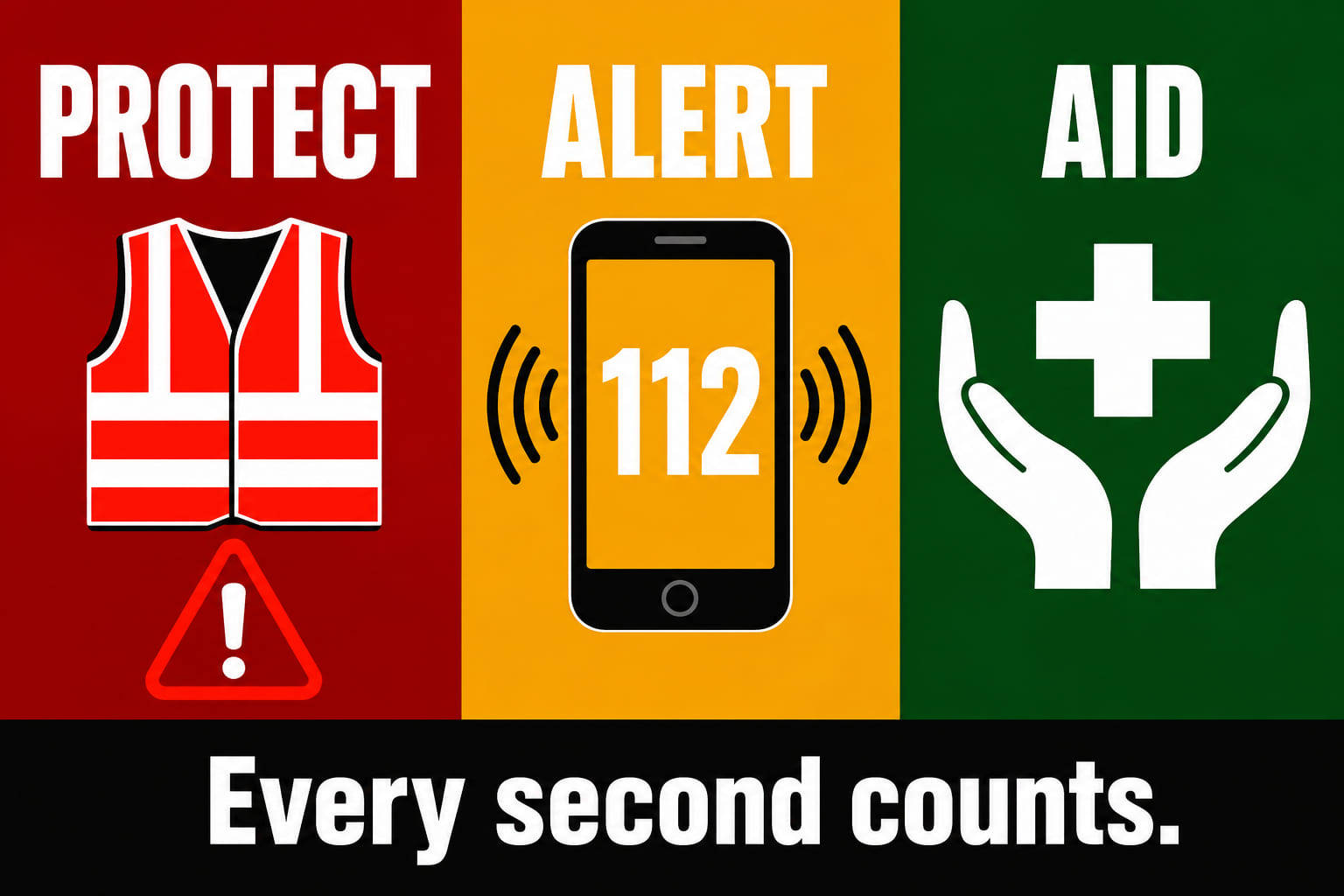
- Always follow the PAS rule: Protect - Alert - Aid.
- Call emergency services (112) as soon as possible.
- Offer assistance without putting yourself or others at further risk.
- Never move victims unless their life is in immediate danger.
Ready to test your knowledge?
Practice questions covering everything in Chapter 16 - Accidents and First Aid.Last updated: 2026-06-27
Practice the questions for this chapter
The theory is free to read. Create a free account to practice official-format questions and track your progress.