Chapter 15 - Driver Assistance Systems (ADAS)
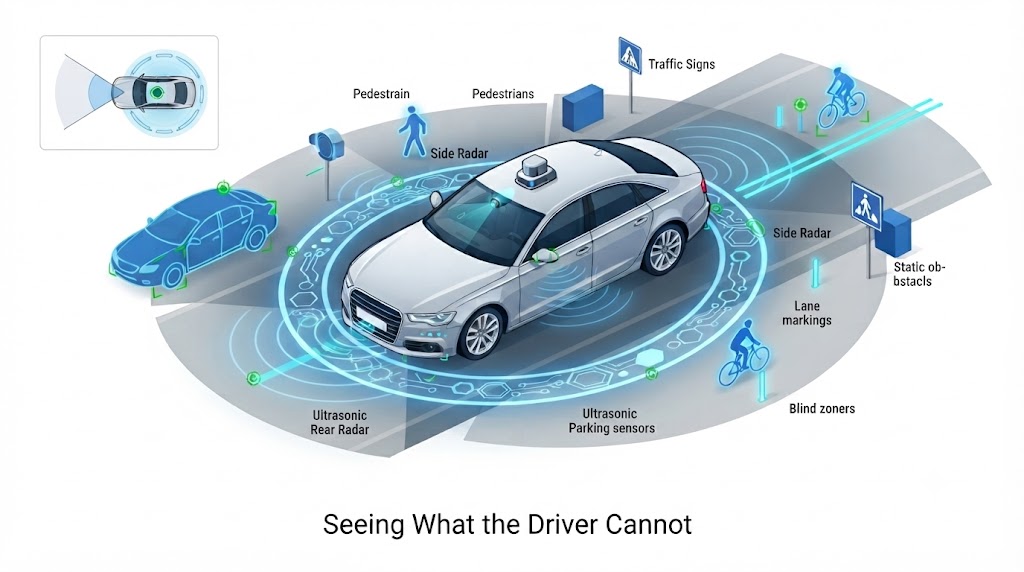
Advanced Driver Assistance Systems (ADAS) are electronic technologies designed to improve road safety, reduce accidents, and assist the driver. They use sensors, cameras, radars, and software to monitor the environment and support safe, comfortable, and efficient driving.
15.1 What Are ADAS?
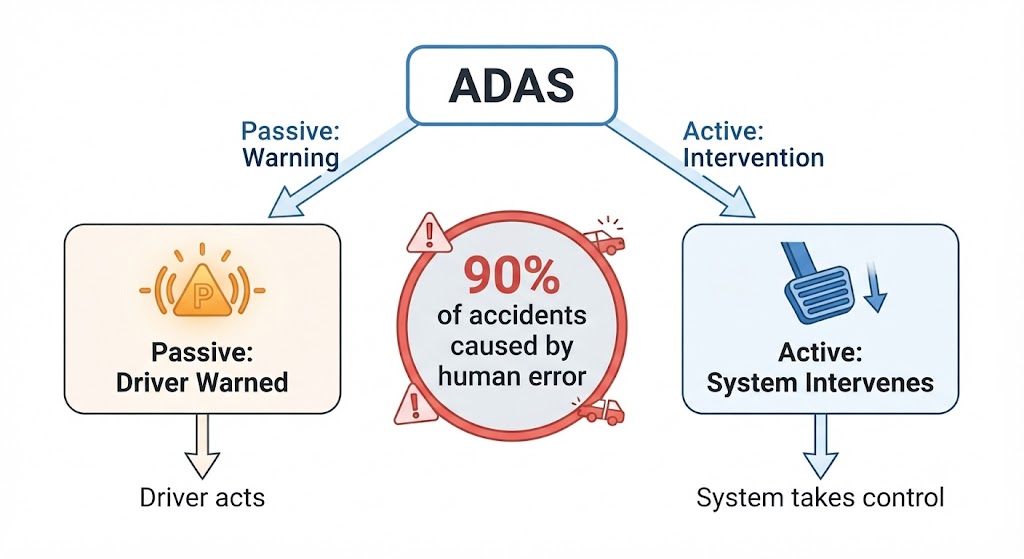
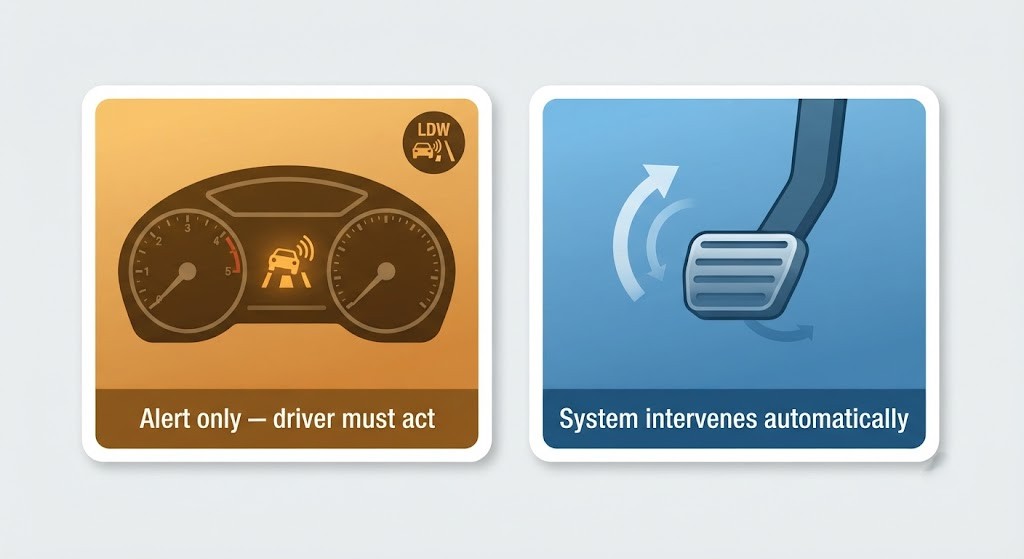
ADAS are intelligent systems that provide alerts, assistance, or even intervention in dangerous driving situations. They are designed to minimise human error, which is responsible for over 90% of road accidents. Depending on their complexity, ADAS can offer passive alerts or actively control certain driving functions.
15.2 Types of ADAS
15.3 Main ADAS Features
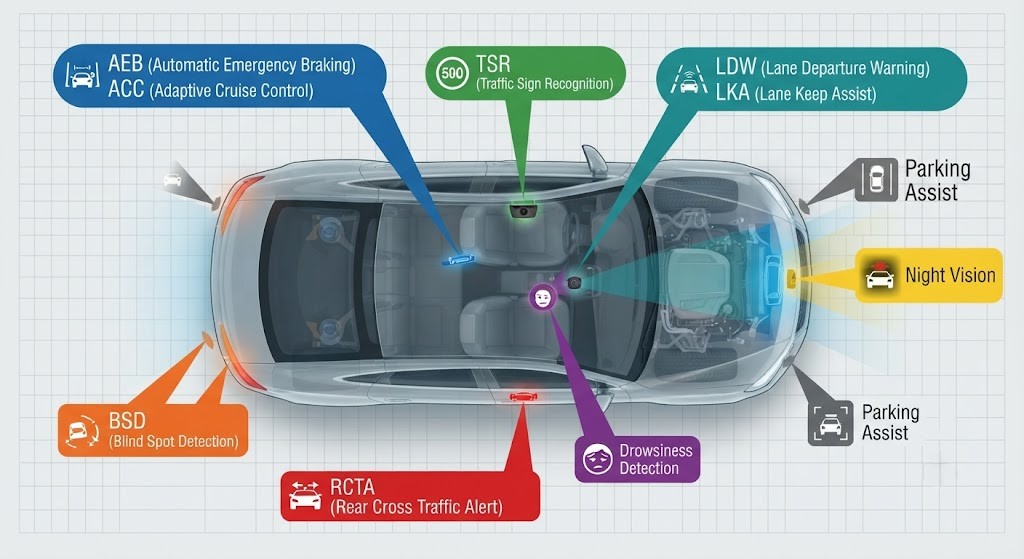
Quick reference of the main systems:
| System | Function |
|---|---|
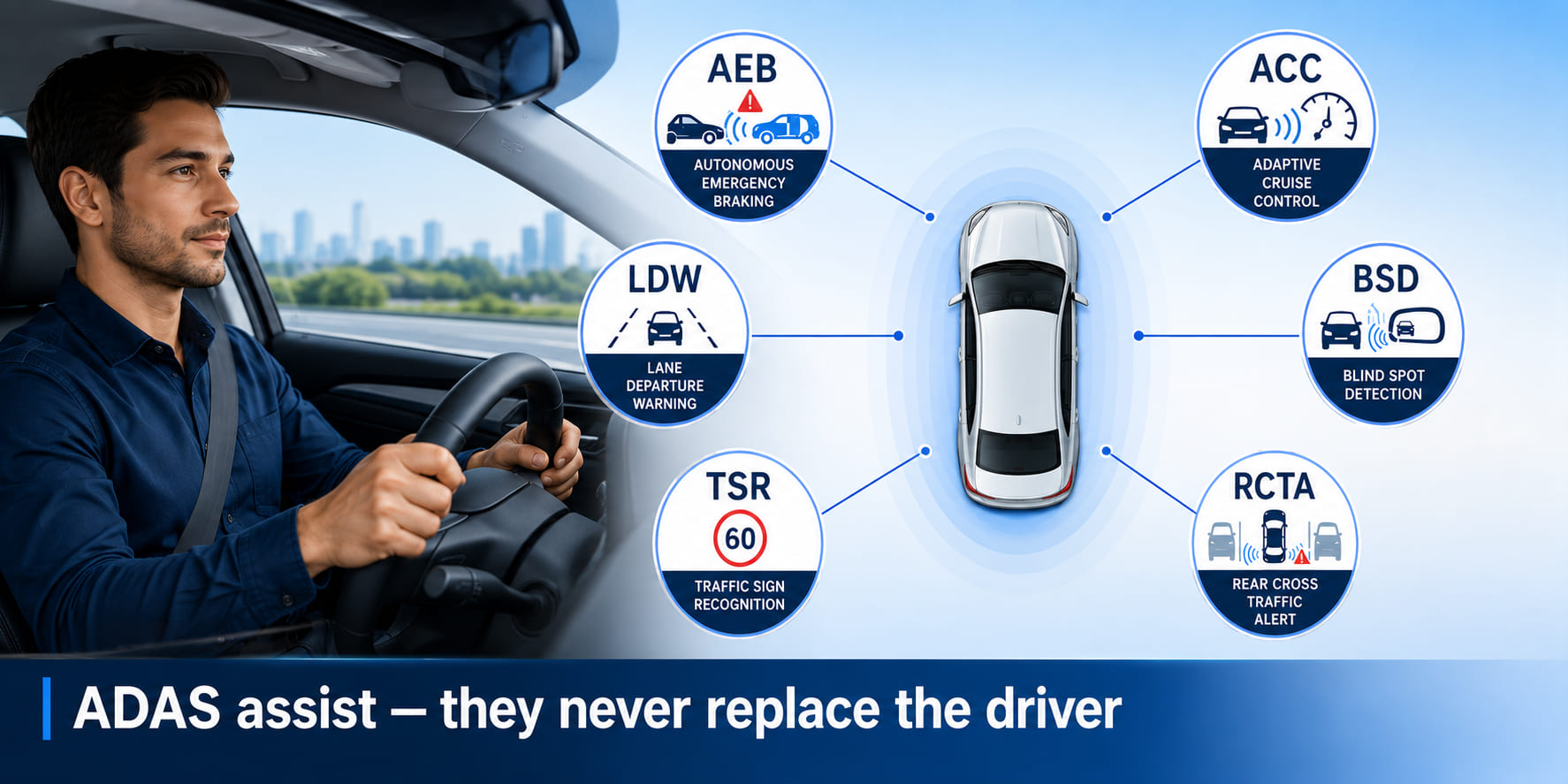
| AEB - Automatic Emergency Braking | Detects obstacles and applies brakes if the driver does not react in time. |
| ACC - Adaptive Cruise Control | Maintains a safe distance from the vehicle ahead, adjusting speed automatically. |
| LDW - Lane Departure Warning | Alerts the driver if the vehicle drifts out of its lane without signalling. |
| LKA - Lane Keeping Assist | Helps steer the car back into the lane if an unintended departure is detected. |
| BSD - Blind Spot Detection | Warns of vehicles in the blind spot during lane changes. |
| TSR - Traffic Sign Recognition | Reads and displays road signs such as speed limits or restrictions. |
| RCTA - Rear Cross Traffic Alert | Detects vehicles approaching from the side when reversing. |
| Driver Drowsiness Detection | Monitors driver behaviour and alerts when signs of fatigue are detected. |
| Parking Assist | Aids parking with sensors, cameras, and in some vehicles automatic steering. |
| Night Vision Assist | Uses infrared to detect pedestrians or animals beyond the reach of headlights. |
How Each System Works
Automatic Emergency Braking (AEB)
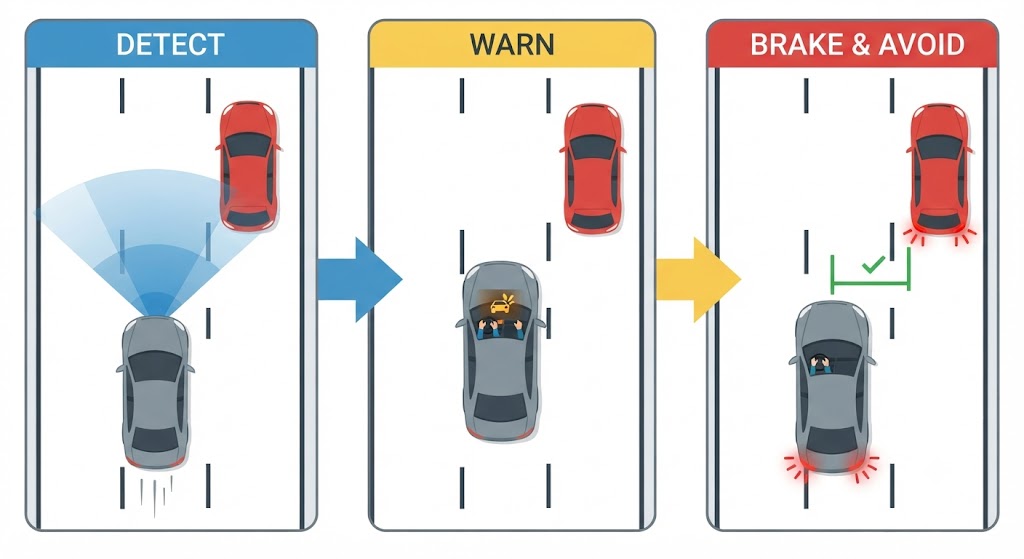
Activates the brakes on its own when the vehicle is about to hit something and the driver doesn't respond in time. Uses cameras, radar, or lidar to scan ahead - first warning the driver, then braking. Helps avoid or reduce rear-end collisions and can react to pedestrians, cyclists, and other obstacles.
Adaptive Cruise Control (ACC)
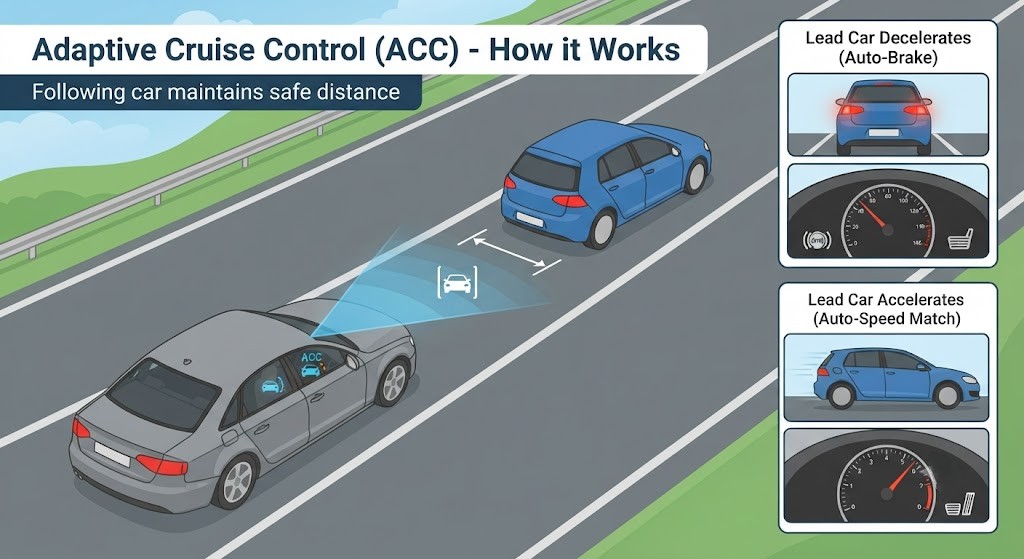
Regulates speed automatically to keep a chosen gap from the vehicle ahead. Uses radar and camera sensors and can speed up or slow down with the situation. Eases workload on long trips or in congestion and helps prevent rear-end crashes.
Traffic Sign Recognition (TSR)
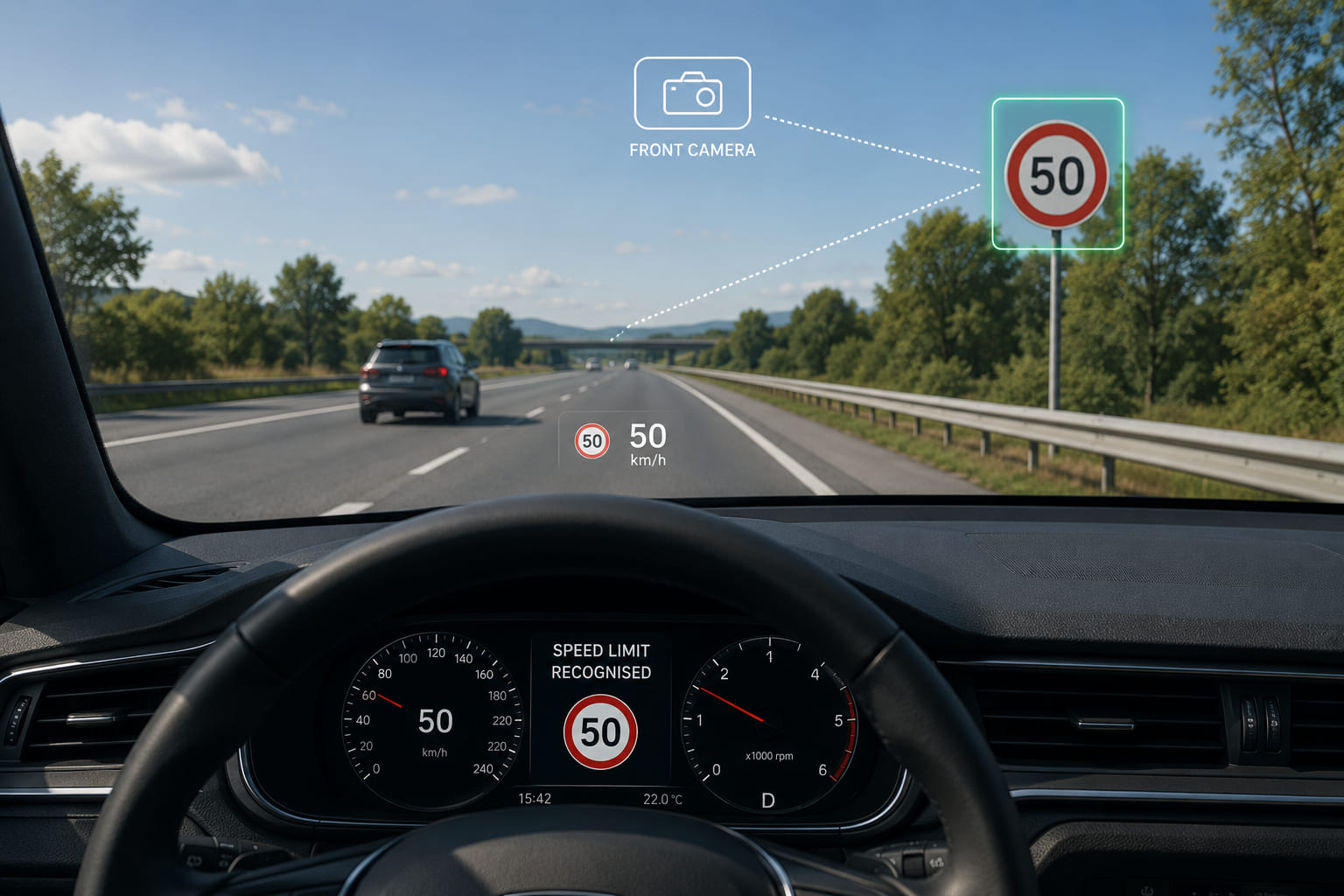
Detects speed-limit signs so the driver can adjust speed; the permitted speed is shown on the instrument cluster (and sometimes the head-up display). Some models can automatically reduce speed if exceeding the limit. Uses a front camera (and sometimes map data).
Blind Spot Detection (BSD)
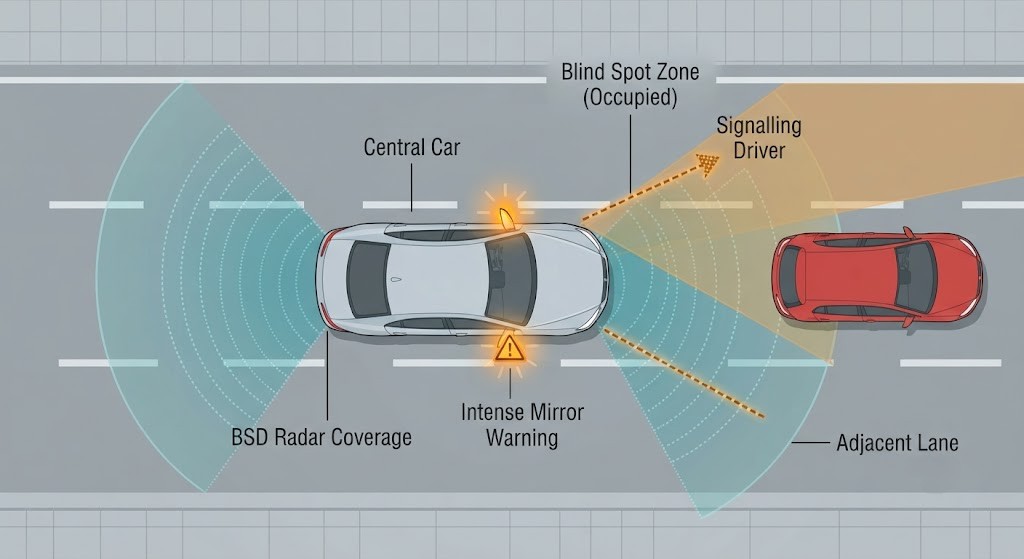
Monitors areas the mirrors can't fully cover (sides and slightly behind), usually with radar sensors in the rear corners. A steady light appears in the side mirror when something enters the zone; if you signal toward that side, the alert intensifies (flashing or sound).
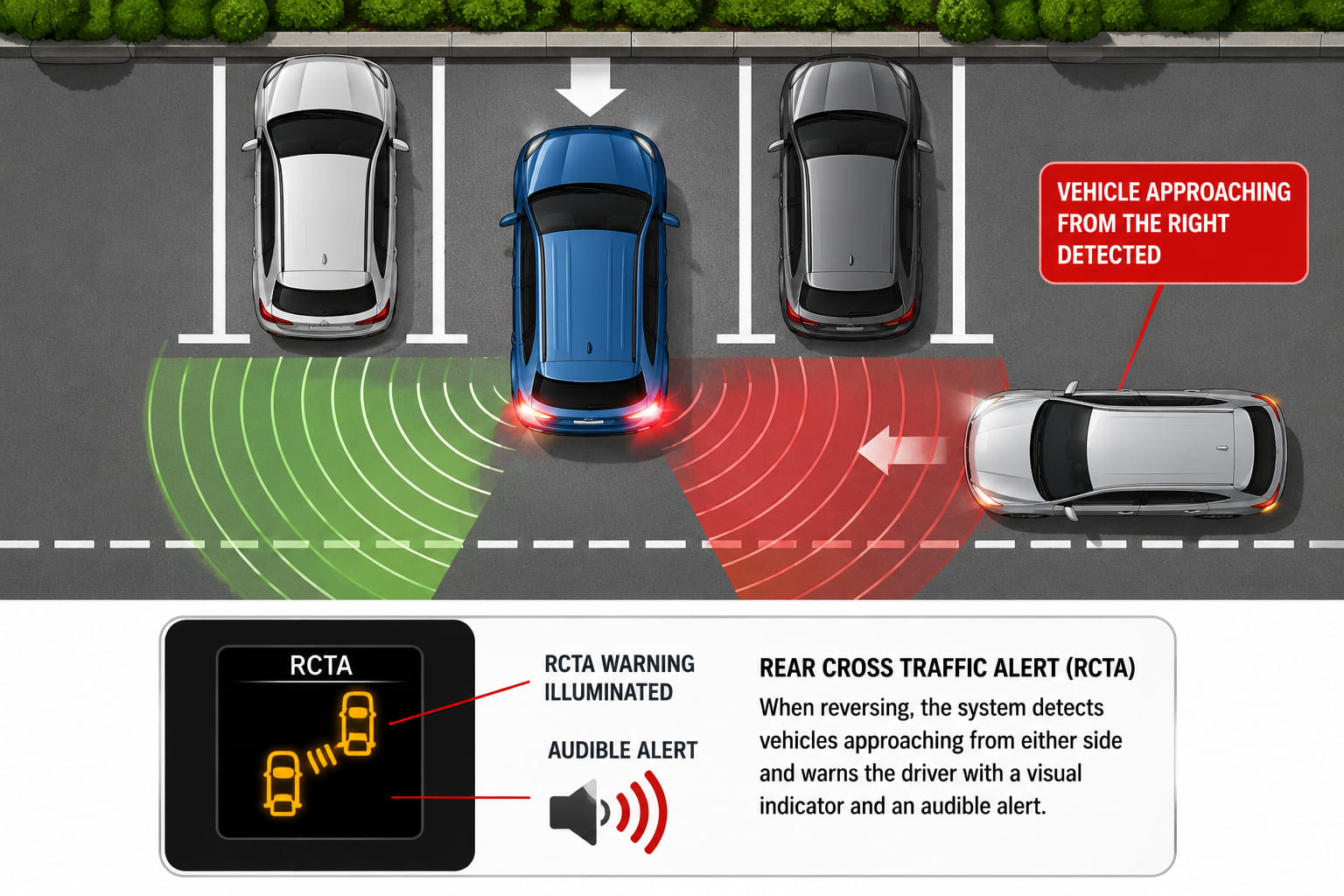
Rear Cross Traffic Alert (RCTA)
Warns of vehicles approaching from the sides behind when reversing (e.g., backing out of a space). Issues an audible alert (and often a dashboard warning) so you can brake. Complements - but doesn't replace - proper rearward observation and slow reversing.
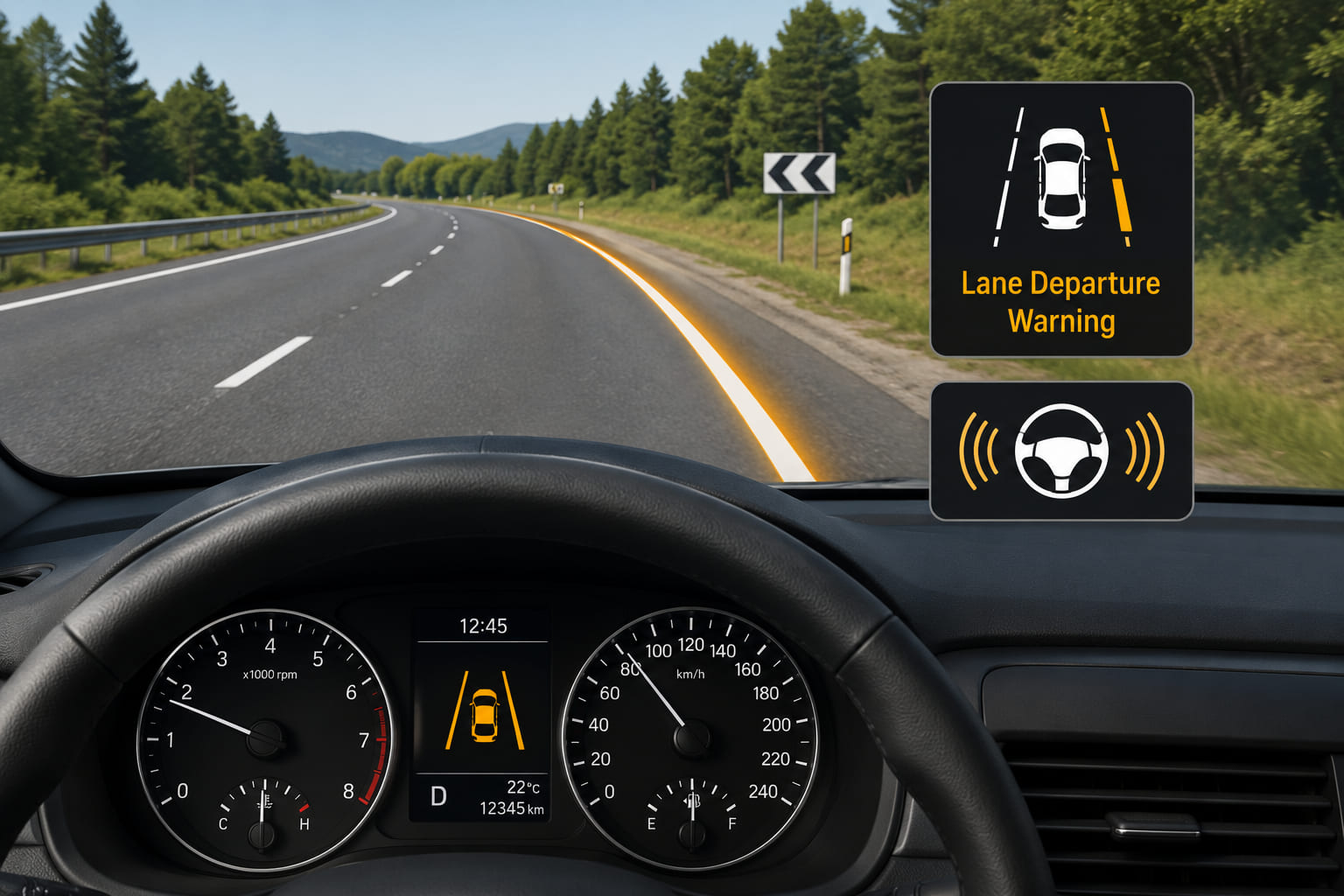
Lane Departure Warning (LDW)
Warns when the vehicle unintentionally drifts out of its lane (typically due to distraction or drowsiness) via a dashboard light, chime, or steering-wheel/seat vibration, prompting you to correct your path.
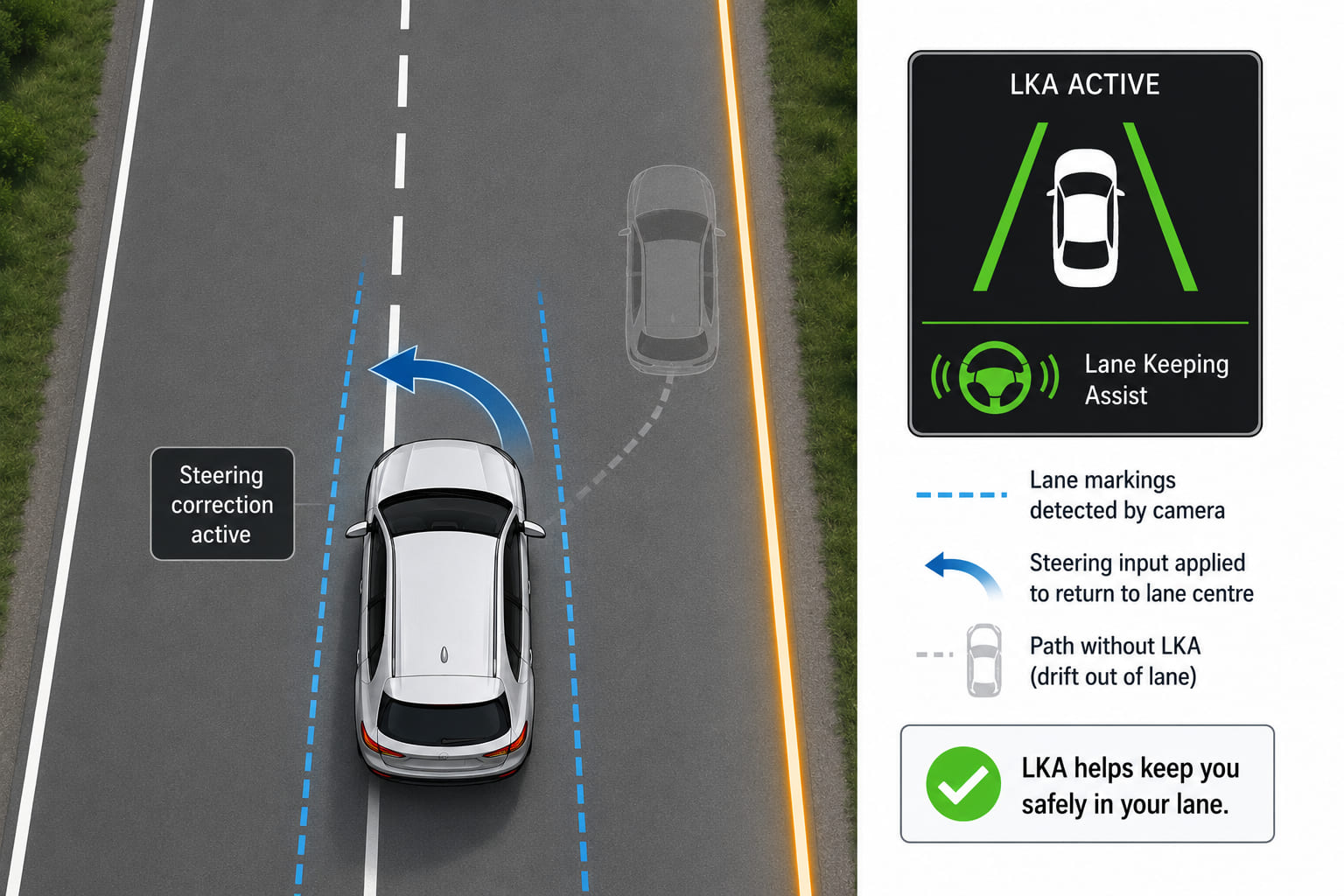
Lane Keeping Assist (LKA)
Uses cameras to track lane lines and keep the vehicle centred. On unintended drift without the turn signal, it can warn or apply a small steering correction (sometimes light braking) to guide the car back. A support tool, never a replacement for attention.
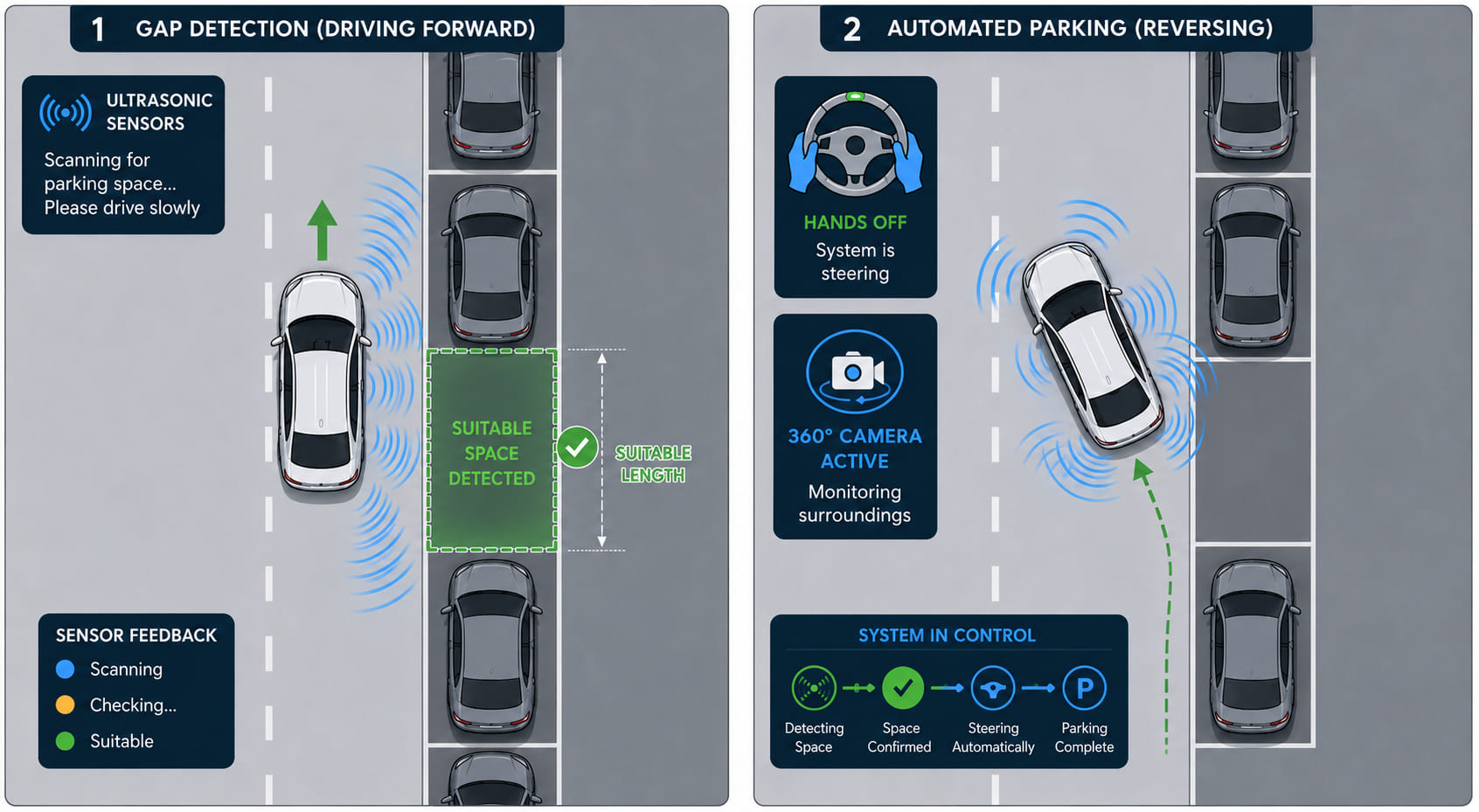
Parking Assist
Helps you park or exit: finds suitable spaces (scanning gaps as you pass), displays surroundings with cameras/sensors, and can steer automatically. The driver must stay attentive, check mirrors and surroundings, control speed/gears/braking as instructed, and interrupt the manoeuvre if unsafe.
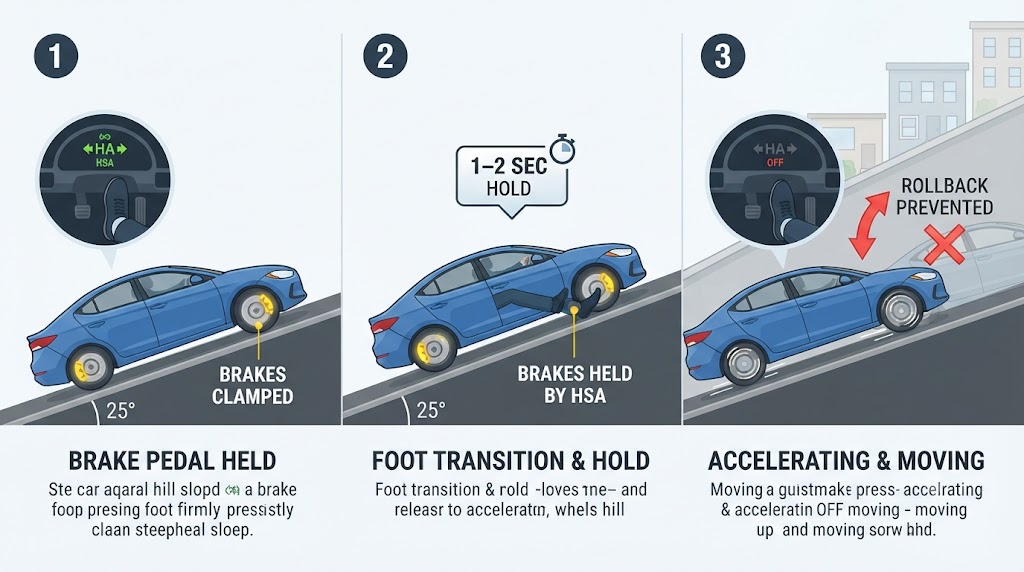
Hill Start Assist (HSA)
Prevents the vehicle rolling backward when setting off on a steep incline. Holds the brakes briefly (about 1-2 seconds) while you move from brake to accelerator (or clutch). Activates on uphill starts and often reversing uphill - accelerate promptly and with control.
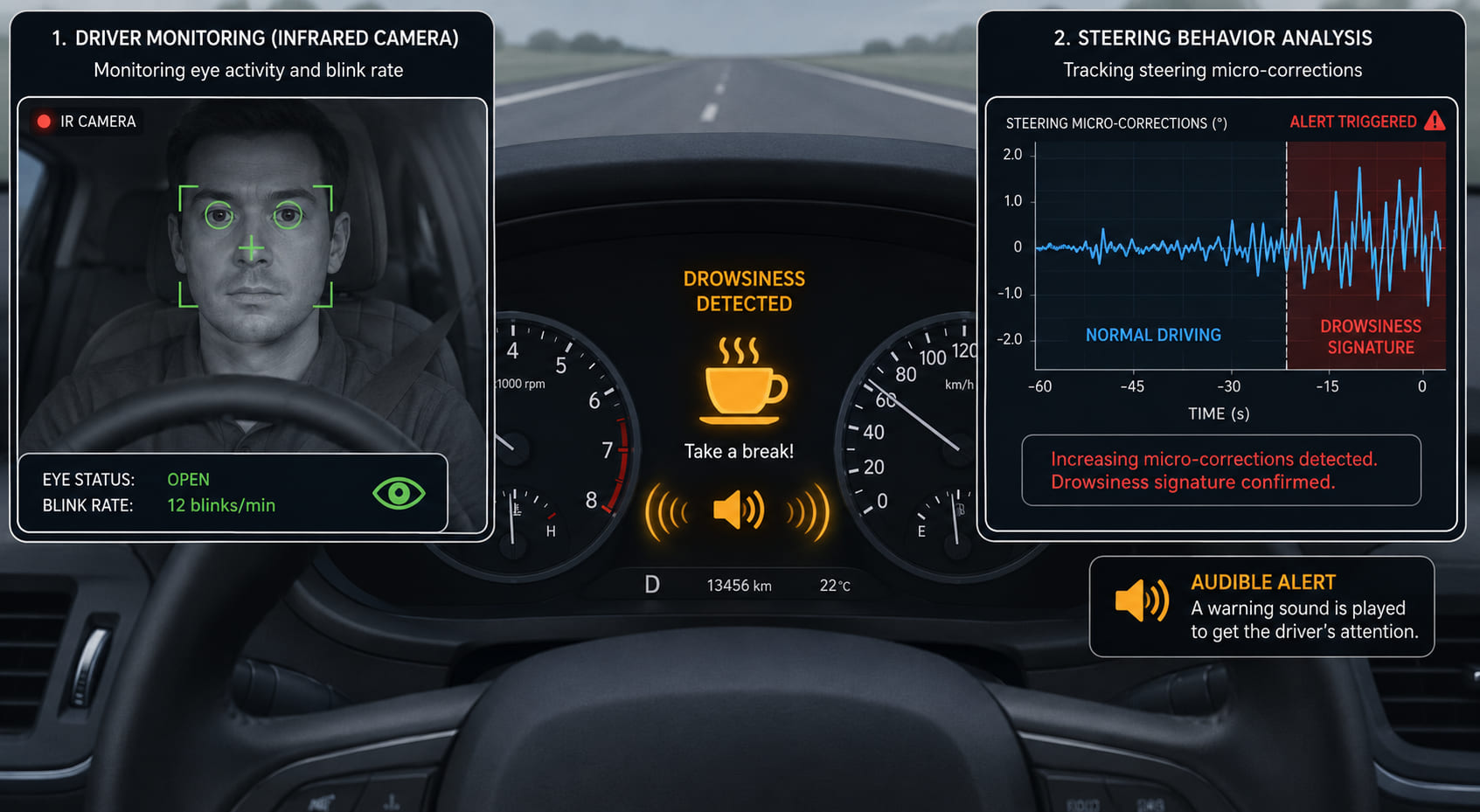
Driver Drowsiness Detection
Uses sensors or cameras to observe steering corrections, facial cues, and eye activity to identify fatigue, then triggers visual or sound warnings to keep the driver alert.
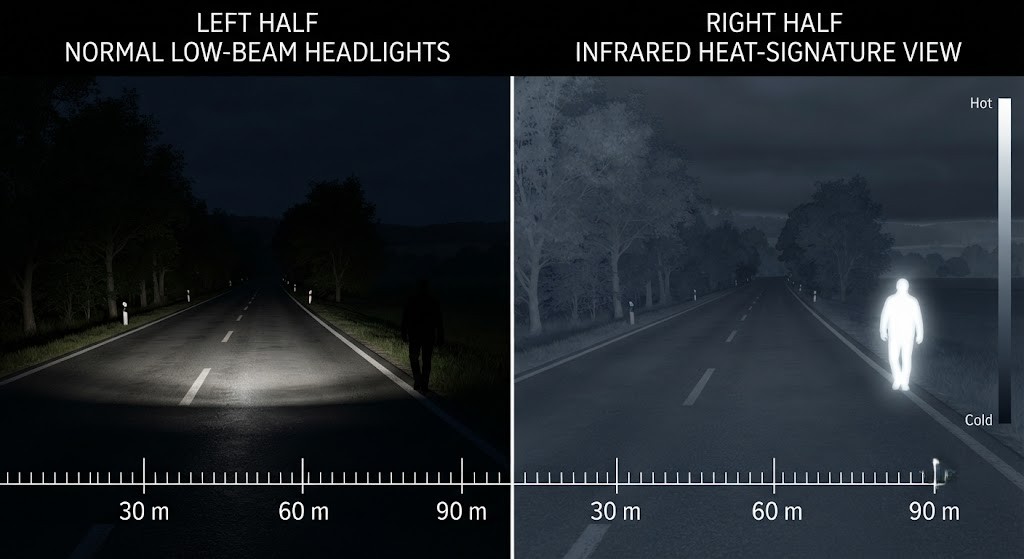
Night Vision Assist
Improves visibility in darkness or bad weather, far beyond headlights. Uses infrared sensors to capture heat signatures from pedestrians, animals, or obstacles, projecting an enhanced view onto the instrument or head-up display so dangers are spotted earlier.
15.4 Benefits of ADAS
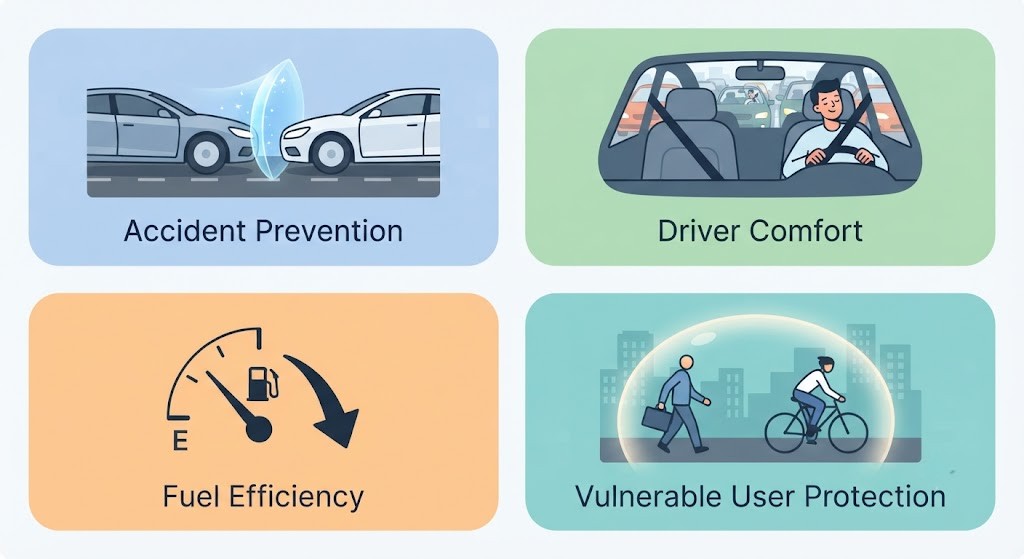
- Accident prevention: systems like AEB and LKA can avoid or reduce the severity of crashes.
- Driver comfort: less stress in heavy traffic or long-distance driving.
- Fuel efficiency: smooth driving supported by adaptive systems reduces fuel consumption.
- Protection for vulnerable users: detects pedestrians and cyclists, improving urban safety.
15.5 Limitations of ADAS
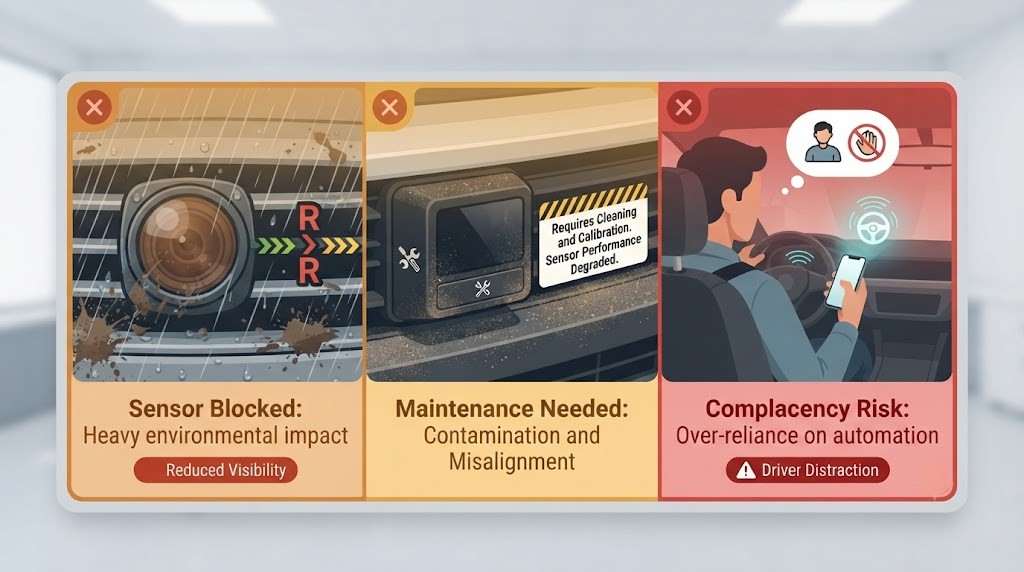
- Weather interference: heavy rain, snow, fog, or dirt may impair camera and sensor function.
- Maintenance dependency: sensors and cameras must be clean, calibrated, and maintained.
- Driver complacency: over-reliance can lead to inattention and reduced driving skill.
15.6 ADAS and EU Regulations
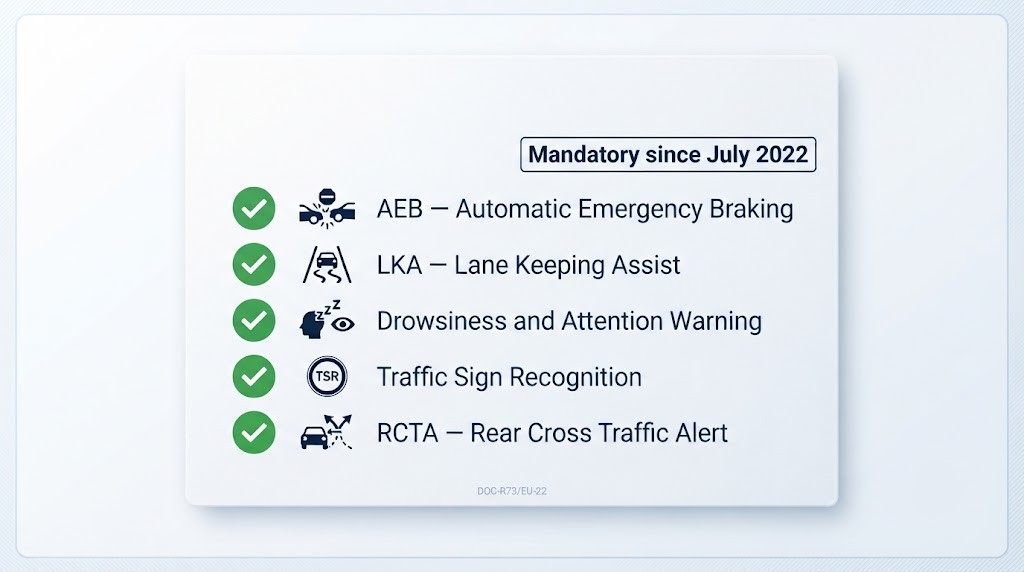
As of July 2022, the European Union requires several ADAS technologies in all new vehicles sold within the EU:
- Automatic Emergency Braking (AEB)
- Lane Keeping Assist (LKA)
- Driver drowsiness and attention warning systems
- Traffic sign recognition systems
- Rear cross traffic alert (RCTA)
15.7 ADAS and Driving Tests
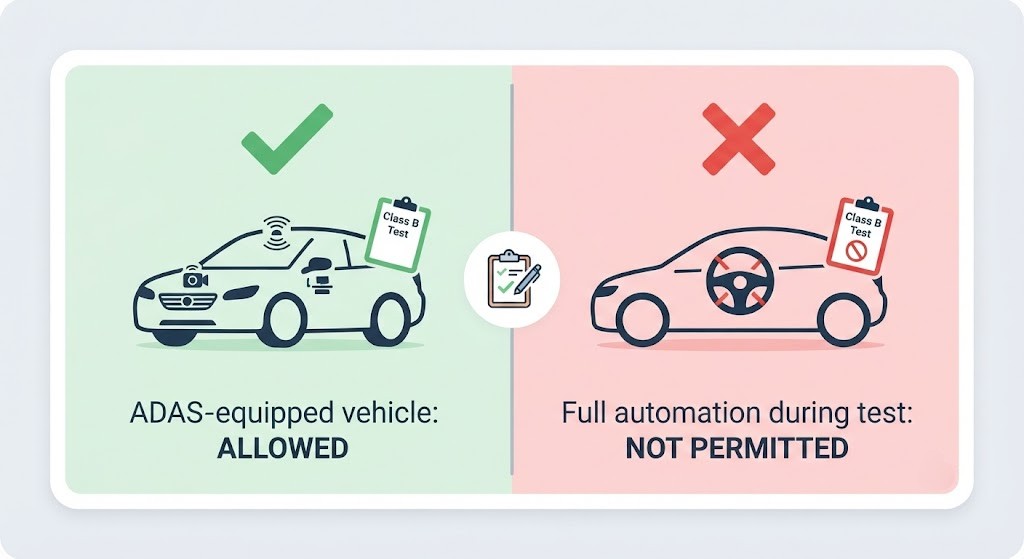
In Spain, drivers undergoing the practical test for the Class B licence may use vehicles equipped with ADAS systems, as long as the candidate demonstrates complete awareness and control of the vehicle. Fully automated systems are not permitted during tests.
15.8 The Future of ADAS
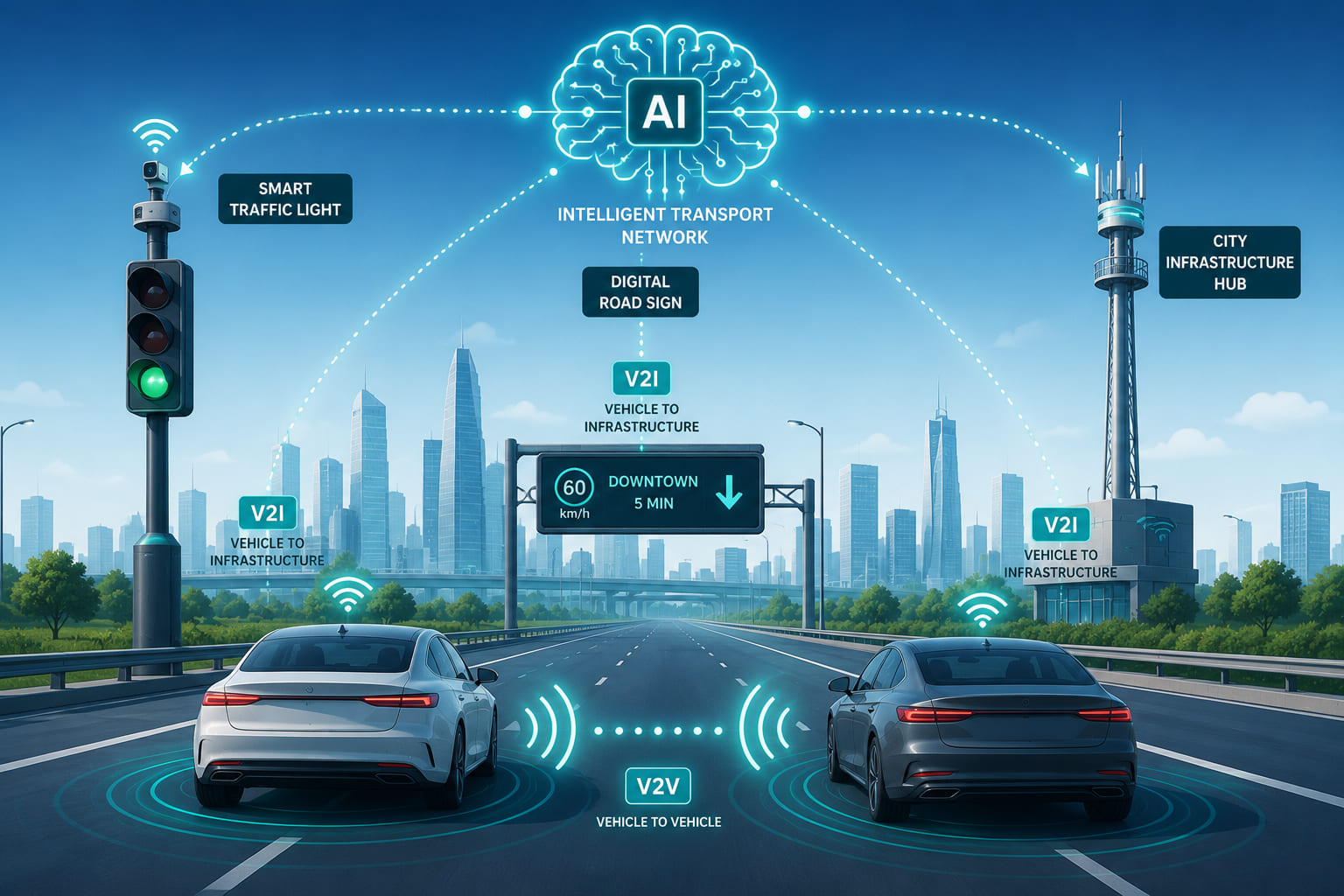
ADAS are expected to evolve with advances in AI, vehicle-to-vehicle (V2V), and vehicle-to-infrastructure (V2I) technologies. These will let vehicles interpret traffic in real time, predict hazards, and communicate with other road users and traffic systems, paving the way for autonomous driving.
15.9 Best Practices When Using ADAS
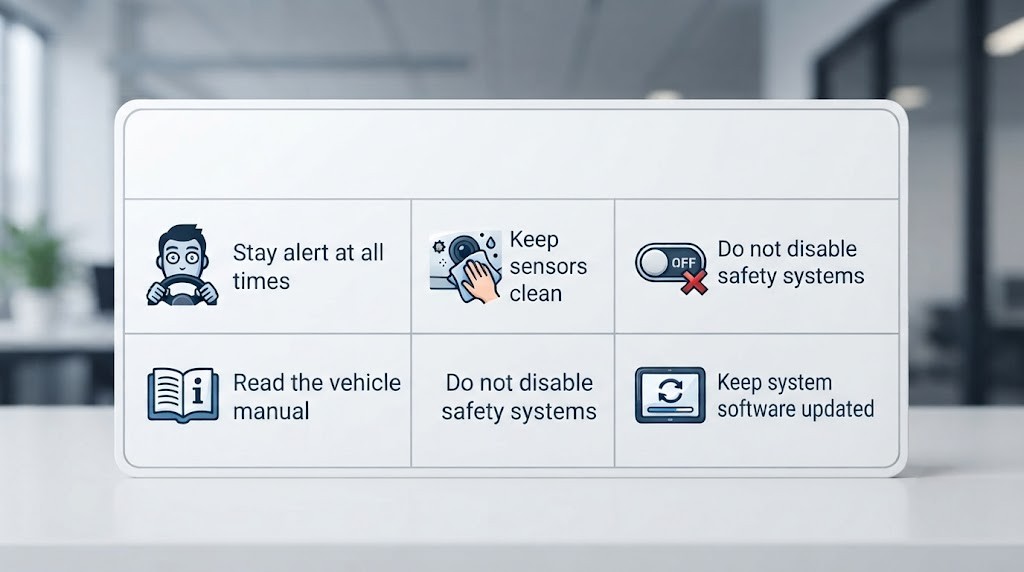
- Always stay alert - ADAS are support tools, not replacements for responsible driving.
- Familiarise yourself with each system's operation and limitations in your vehicle's manual.
- Keep cameras, radars, and sensors clean and calibrated.
- Do not disable safety systems unless recommended by a technician.
- Update system software regularly as advised by the vehicle manufacturer.
15.10 Summary
- ADAS improve safety, efficiency, and comfort for drivers and all road users.
- They provide real-time alerts, corrections, and preventive interventions.
- They must be used responsibly and never substitute the driver's attention.
Ready to test your knowledge?
Practice questions covering everything in Chapter 15 - Driver Assistance Systems (ADAS).Last updated: 2026-06-27
Practice the questions for this chapter
The theory is free to read. Create a free account to practice official-format questions and track your progress.