Chapter 10 - Physical Condition of the Driver
A driver's physical and mental condition directly influences road safety. Impairments caused by fatigue, drowsiness, stress, illness, or substances like alcohol and drugs can dramatically increase the risk of accidents. This chapter examines these factors and how to prevent them.
10.1 Fatigue
Fatigue is a progressive and dangerous state that reduces alertness and decision-making ability. It can lead to serious errors or delays in response while driving.
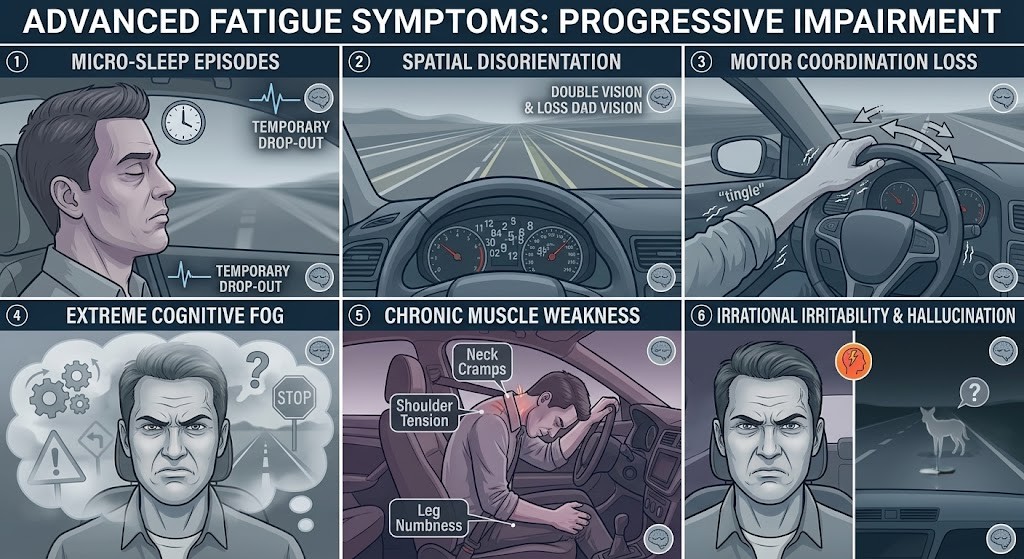
10.1.1 Symptoms of Fatigue
- Increased reaction time and delayed decision-making.
- Muscle stiffness and increased unnecessary movements in the seat.
- Sluggishness and lack of precision.
- Loss of attention and focus.
- Heavy eyelids and blurred vision.
- Reduced hearing ability.
- Numbness in the arms.
- Feeling of pressure in the head.
- Constantly changing position or moving in the seat.
- Slower movements.
- Feeling more nervous or irritable.
- Difficulty making driving decisions.
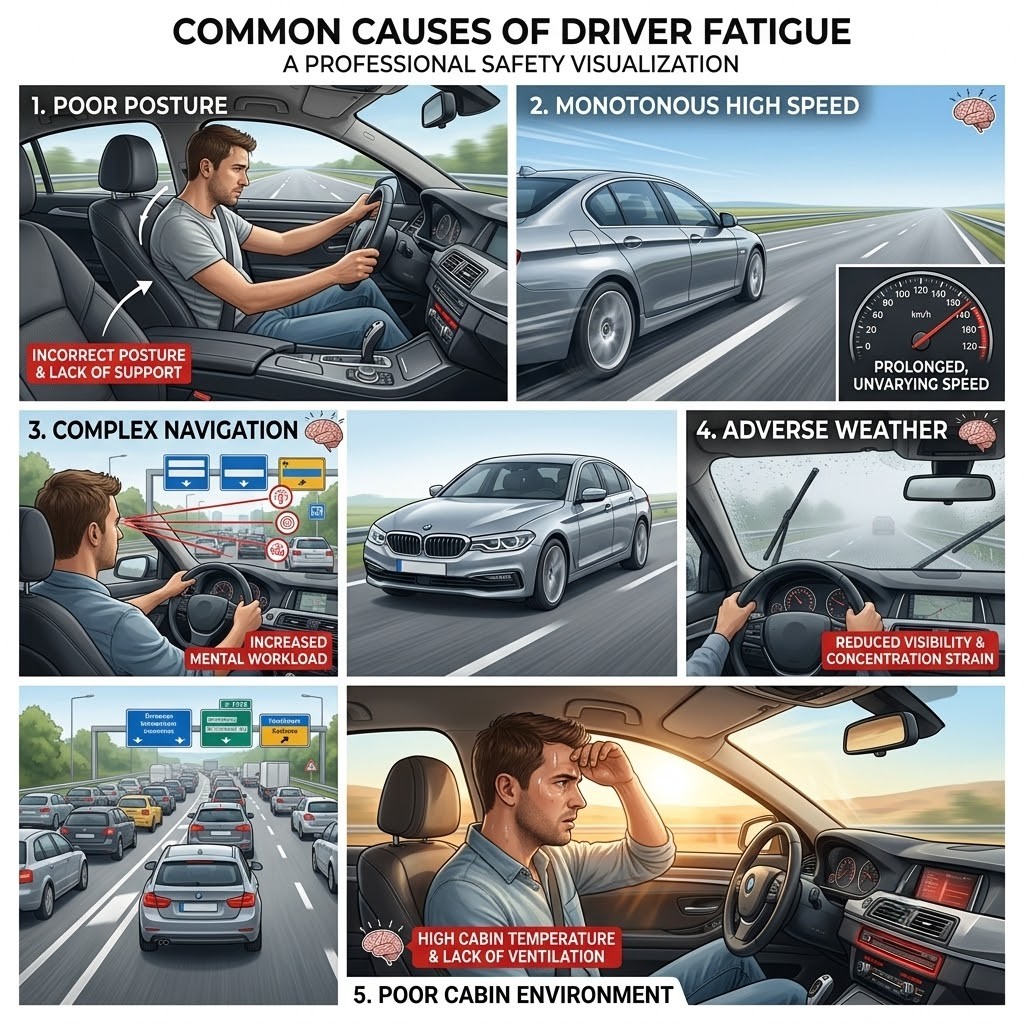
10.1.2 Causes of Fatigue
- Poor posture while sitting.
- Maintaining excessive speed for a long period.
- Driving in heavy traffic or on unfamiliar roads.
- Adverse weather conditions (fog, rain, heat).
- Poor ventilation or high temperatures inside the vehicle.
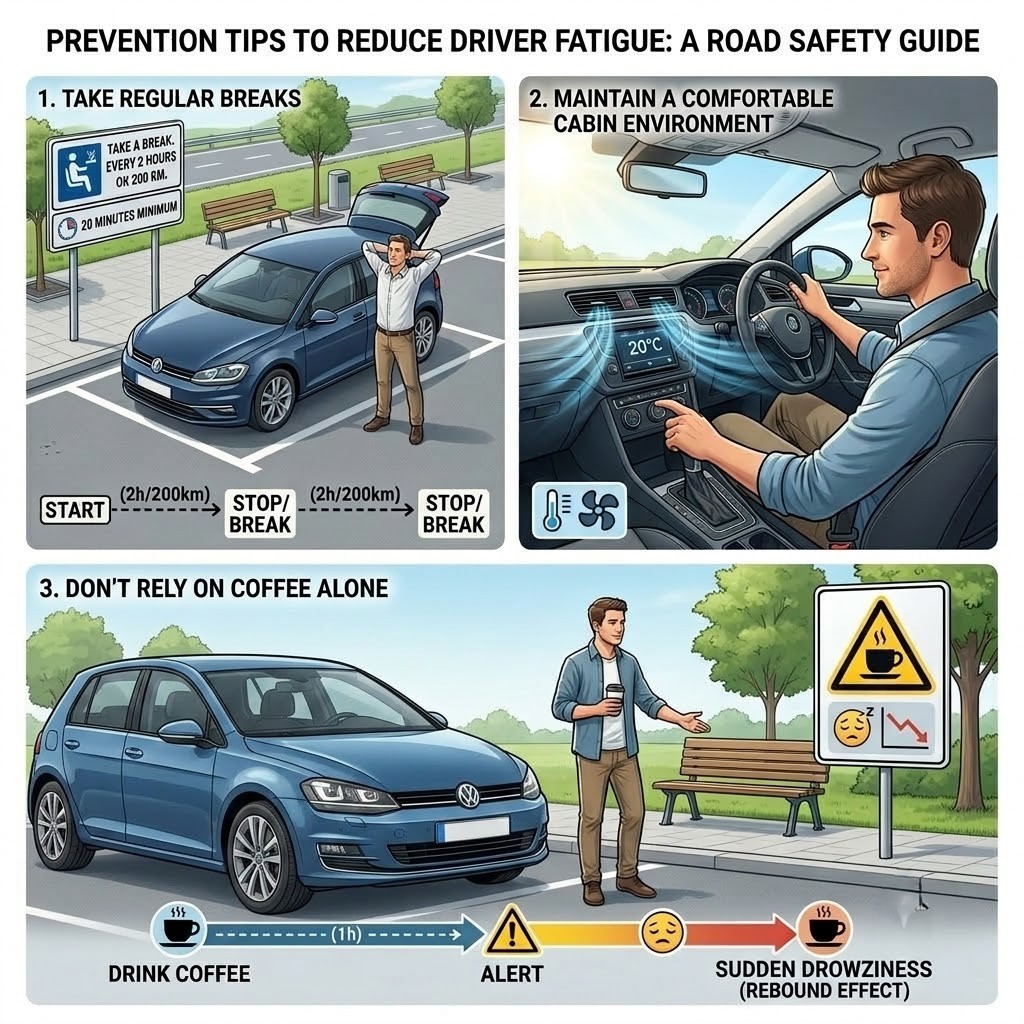
10.1.3 Prevention Tips
- Take a break of at least 20 minutes every 2 hours or 200 km.
- Use ventilation or air conditioning to maintain a comfortable cabin environment.
- Do not rely on stimulants (e.g., coffee). Excessive use can cause a "rebound effect" - sudden drowsiness when the effects wear off.
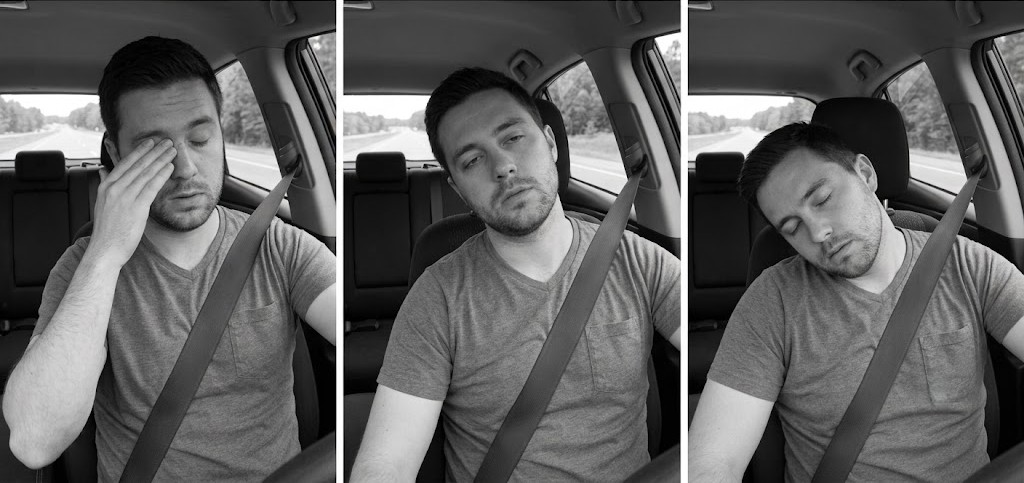
10.2 Drowsiness and Sleep
Drowsiness can be as dangerous as falling asleep at the wheel. It often precedes actual sleep and causes severe degradation of driving performance.
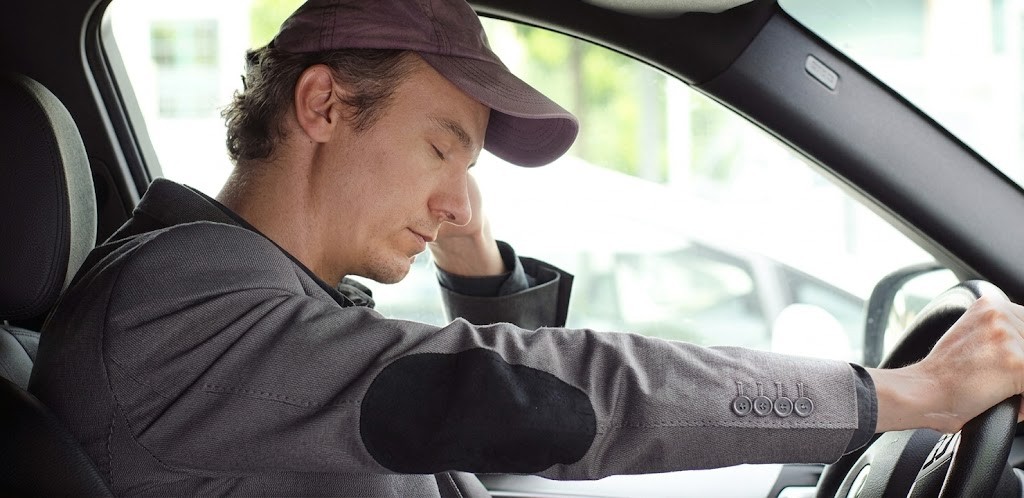
10.2.1 Causes of Drowsiness
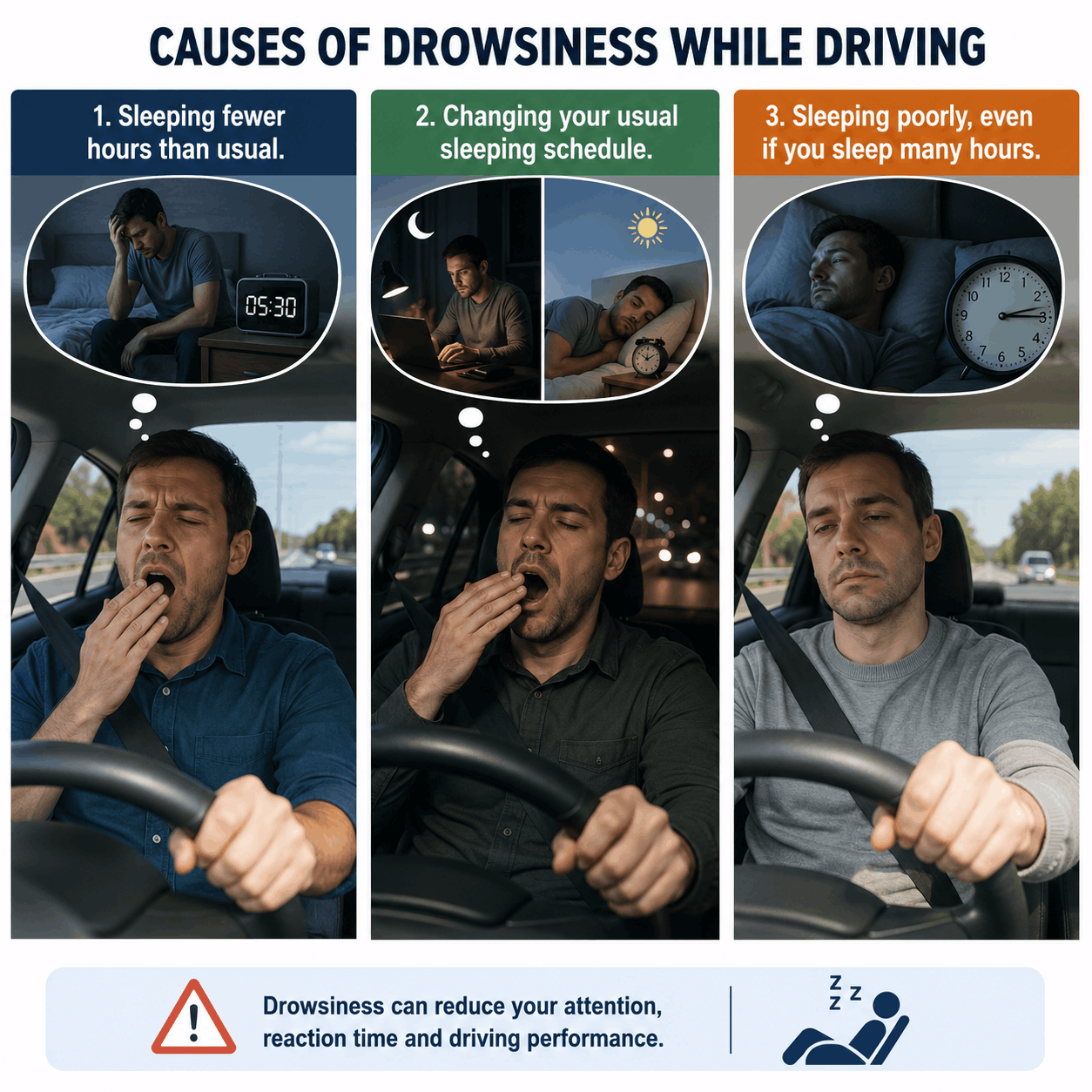
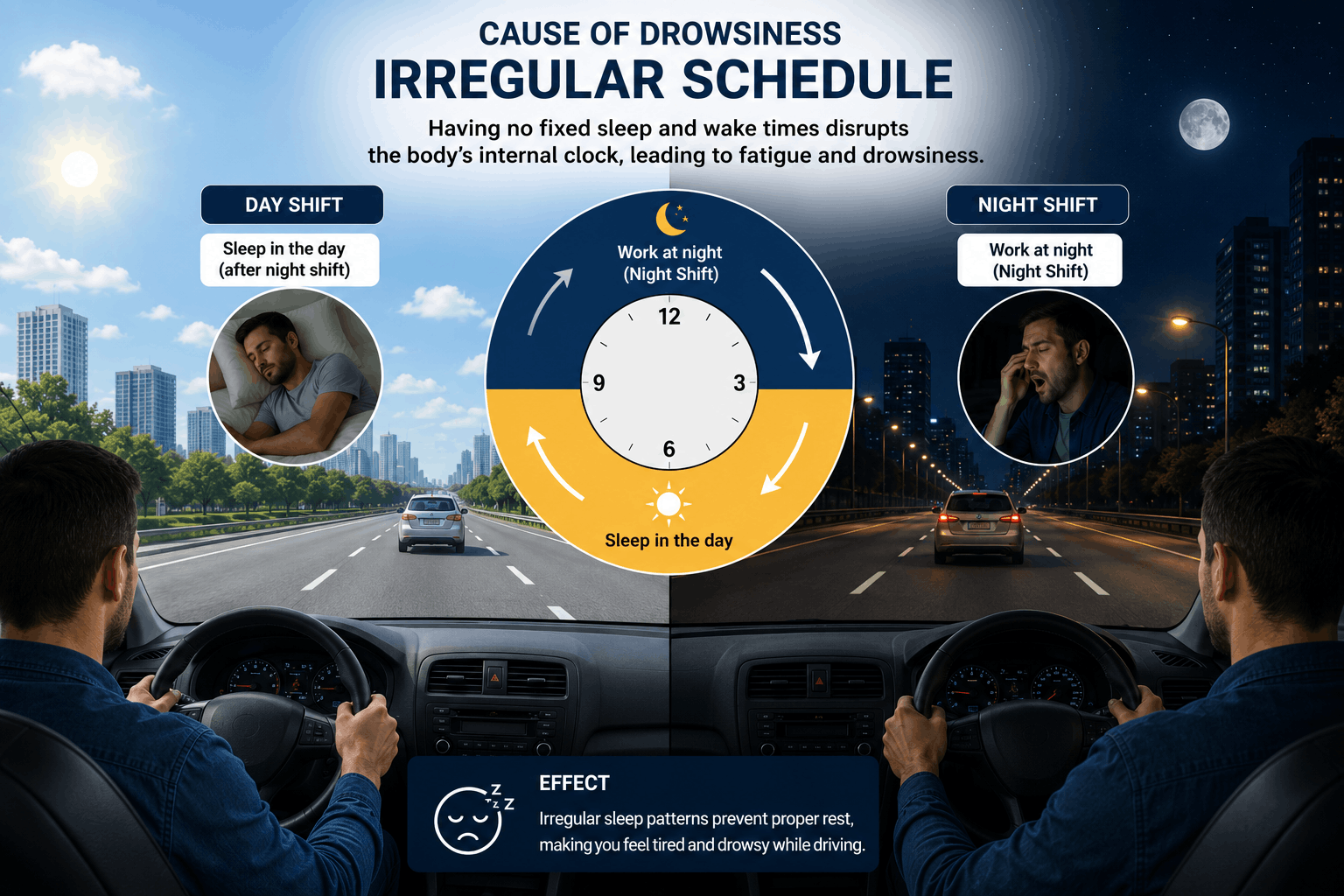
- Sleeping fewer hours than usual.
- Changing your usual sleeping schedule.
- Sleeping poorly, even if you sleep many hours.
- Driving on roads with little traffic.
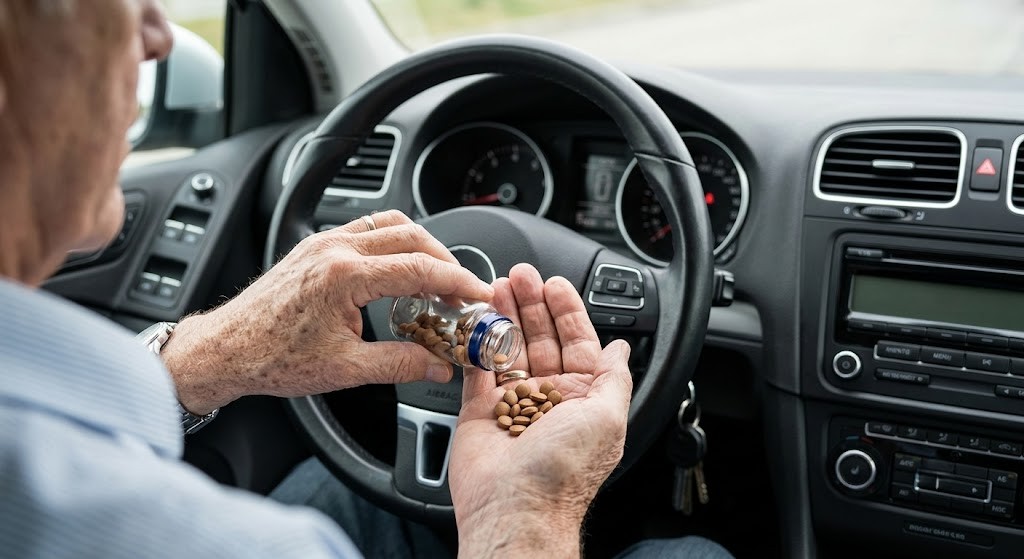
- Drinking alcohol or taking medication before driving.
- Having sleep-related disorders.
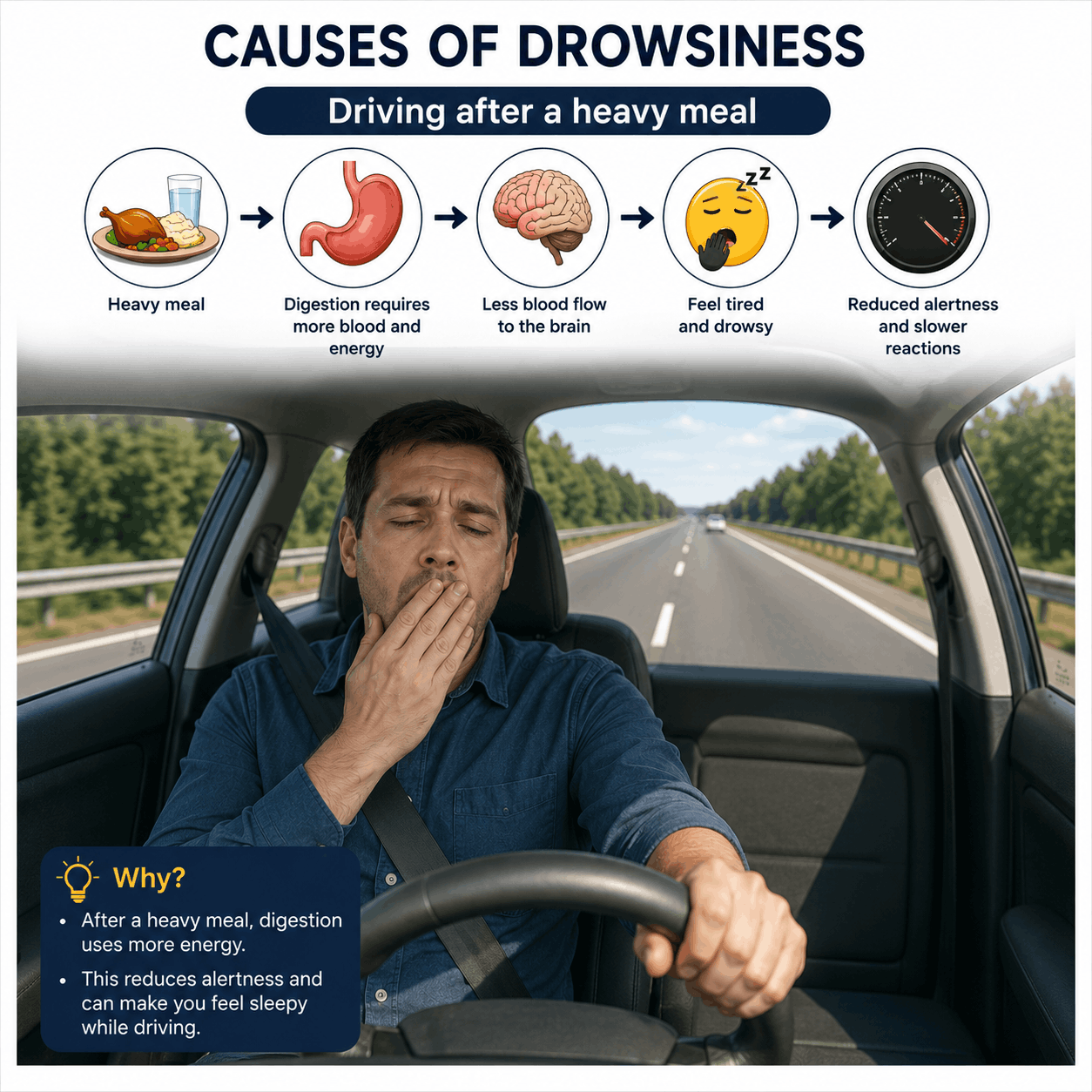
- Driving at dawn or midday, especially after eating.
10.2.2 Symptoms of Drowsiness
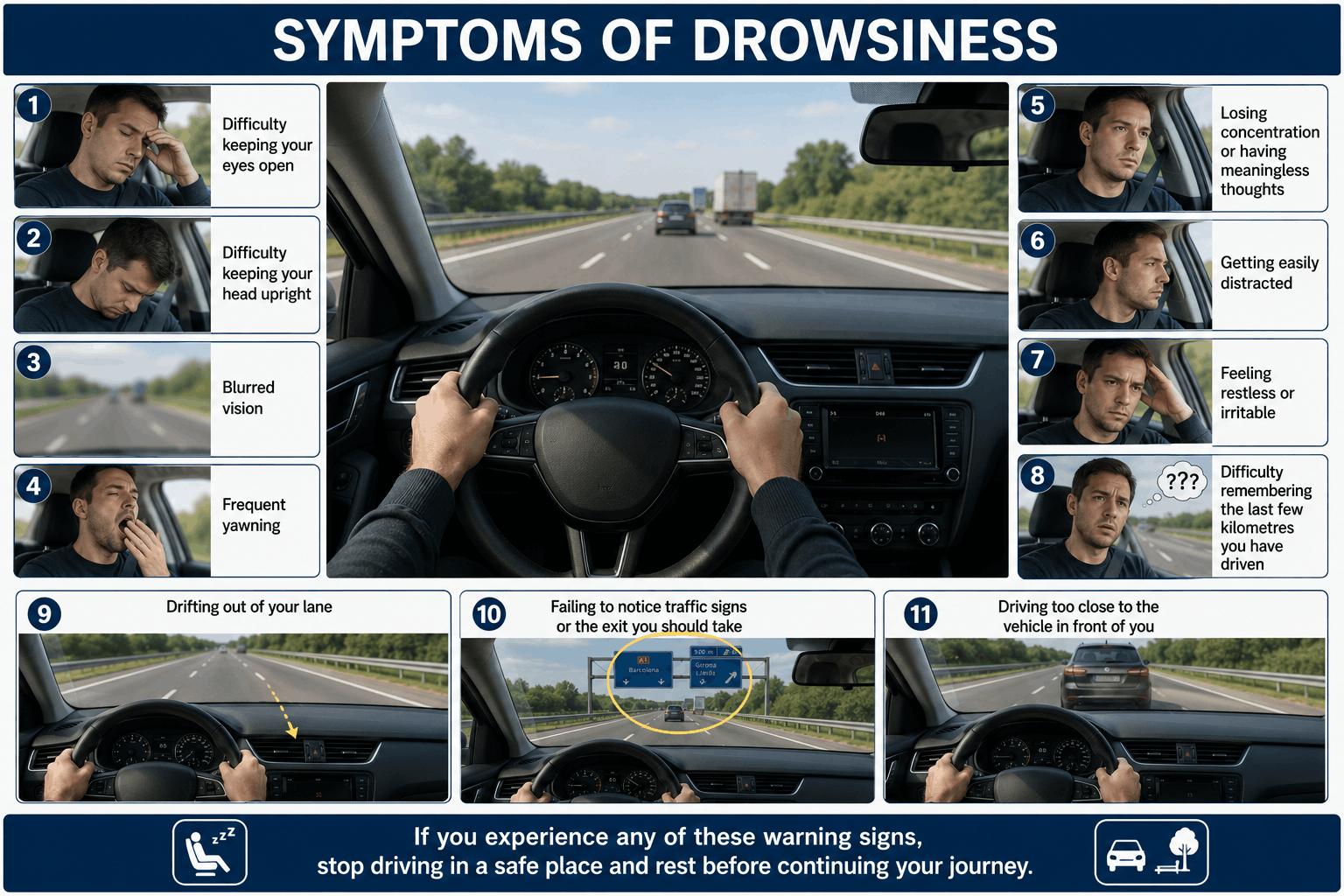
Warning signs that you are feeling drowsy and should stop driving include:
- Difficulty keeping your head upright or your eyes open.
- Blurred vision.
- Frequent yawning.
- Losing concentration or having meaningless thoughts.
- Getting easily distracted.
- Feeling restless or irritable.
- Difficulty remembering the last few kilometres you have driven.
- Drifting out of your lane.
- Failing to notice traffic signs or the exit you should take.
- Driving too close to the vehicle in front of you.
10.2.3 Effects of Drowsiness
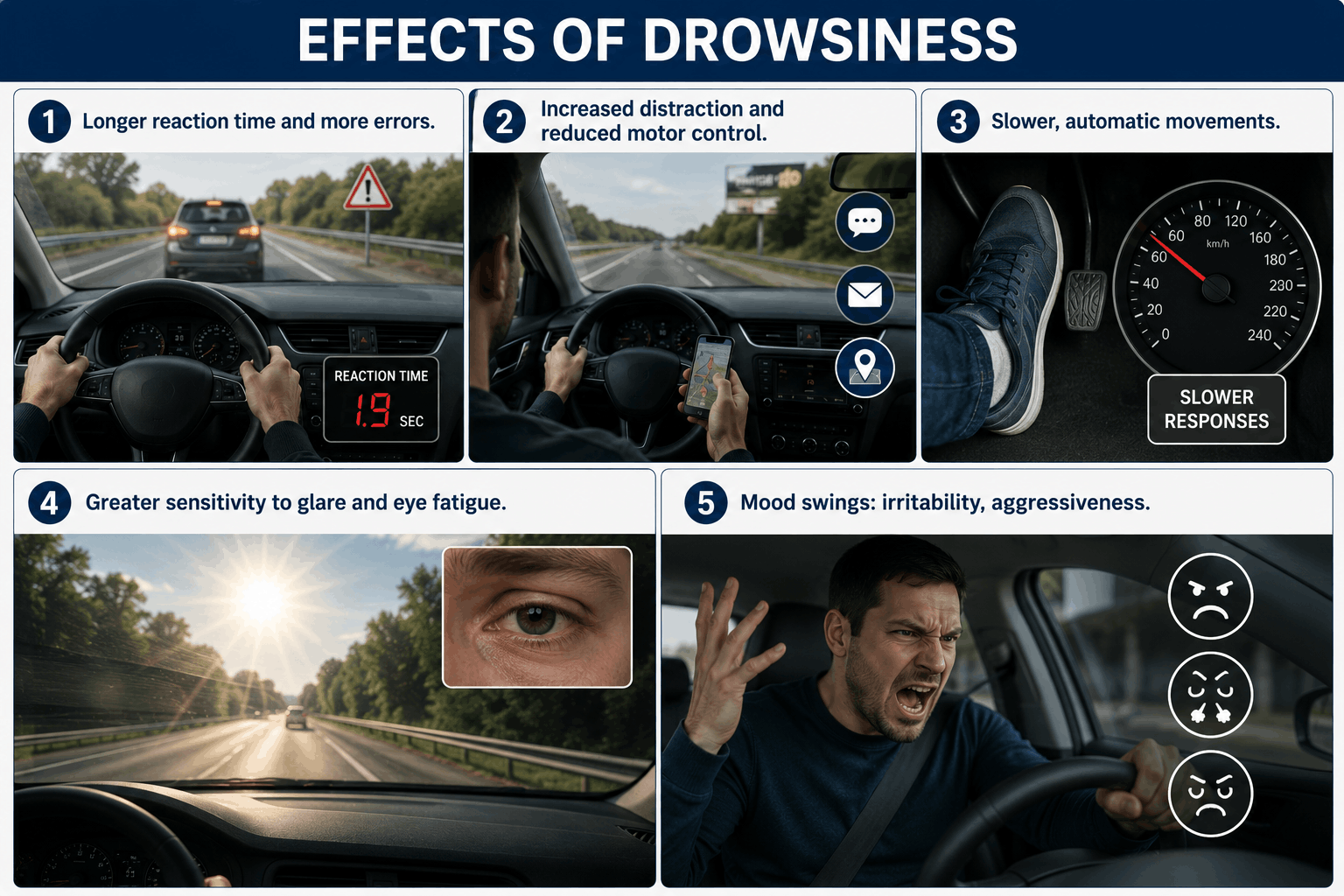
- Longer reaction time and more errors.
- Increased distraction and reduced motor control.
- Slower, automatic movements.
- Greater sensitivity to glare and eye fatigue.
- Mood swings: irritability, aggressiveness.
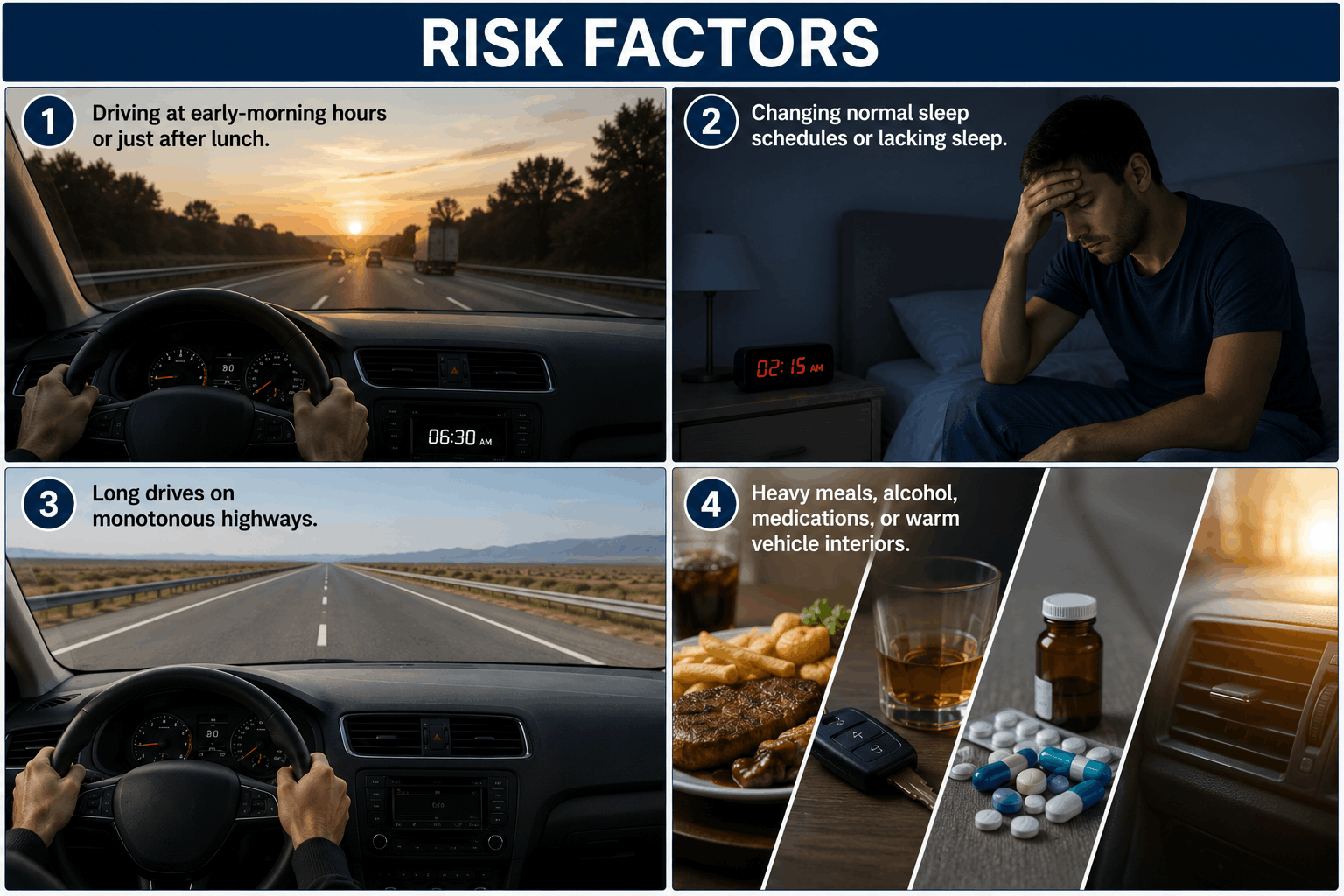
10.2.4 Risk Factors
- Driving at early-morning hours or just after lunch.
- Changing normal sleep schedules or lacking sleep.
- Long drives on monotonous highways.
- Heavy meals, alcohol, medications, or warm vehicle interiors.
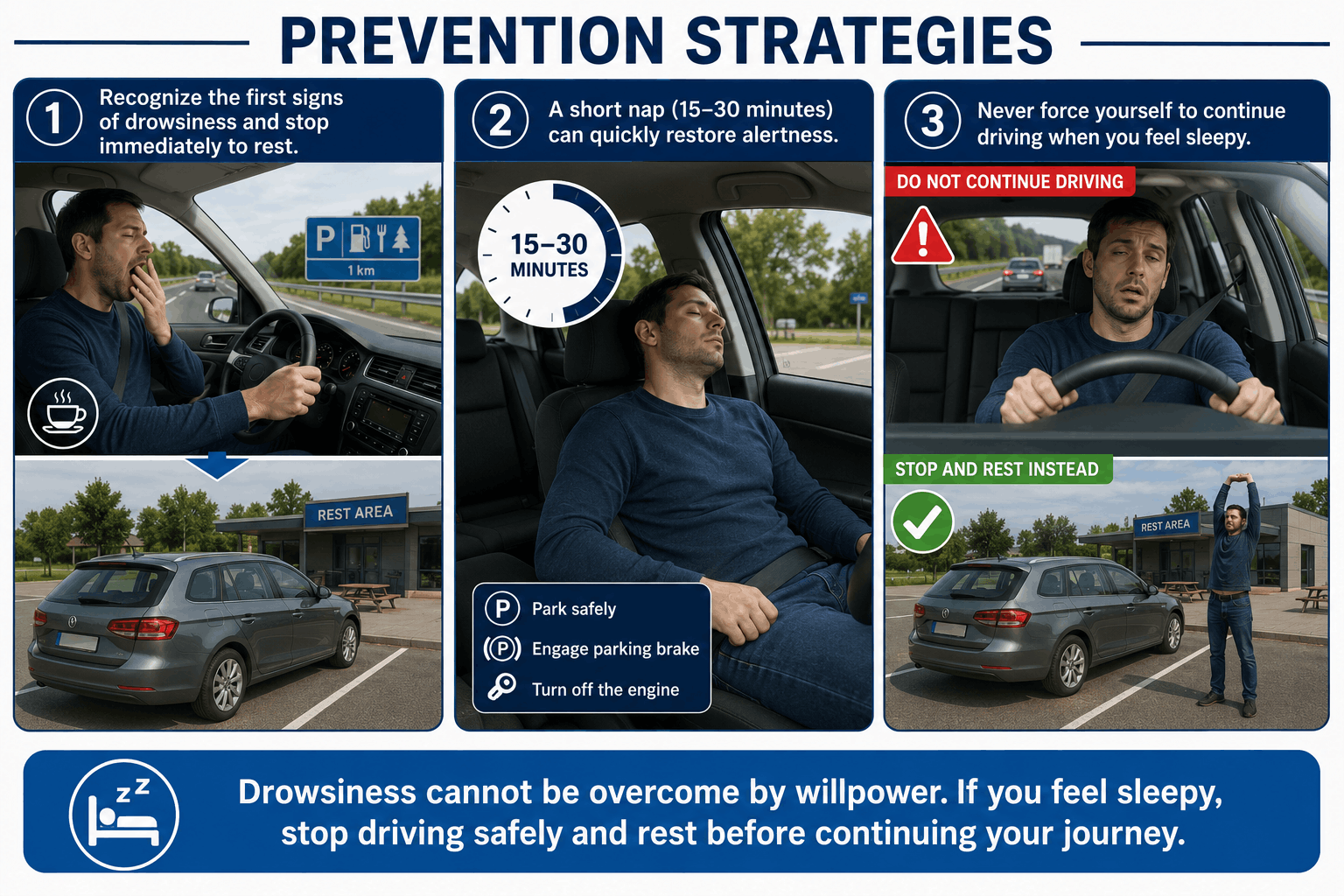
10.2.5 Prevention Strategies
- Be alert to the first signs of drowsiness and stop to rest immediately.
- Short naps (15-30 minutes) can be highly effective.
- Do not force yourself to continue driving when feeling sleepy.
10.3 Illnesses and Medications
Some diseases - especially neurological or mental illnesses - seriously affect driving. Even a mild cold or allergy can impair your ability to drive safely.
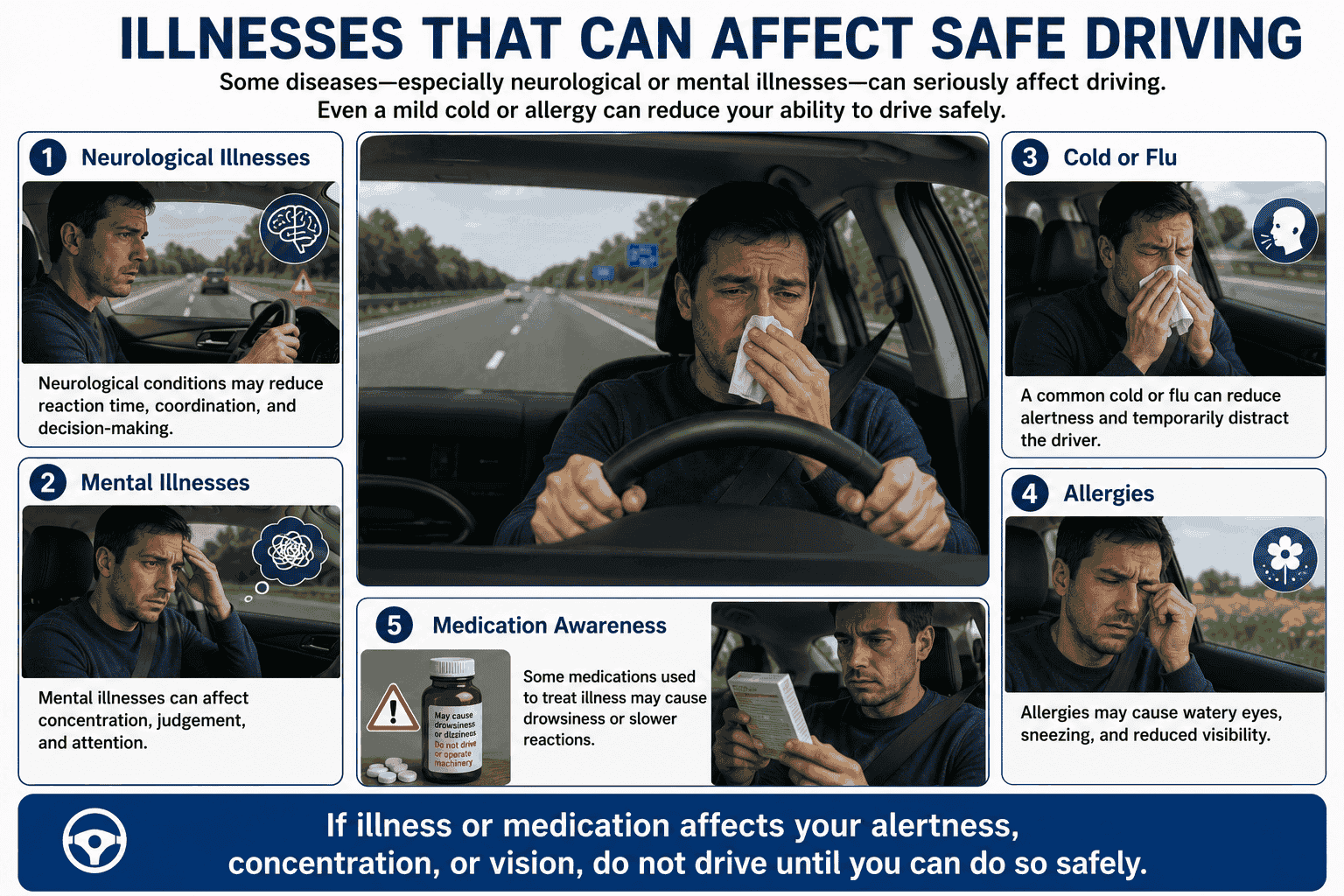
10.3.1 Driver Responsibilities
- Be aware of the effects of your illness and medication on driving.
- Always read the medication leaflet, including those of herbal or alternative medicines.
- Recognise symptoms of a health crisis (e.g., epilepsy, diabetes) and act accordingly.
- Never consume alcohol while on medication.
- Consult a doctor or pharmacist before starting new treatments.
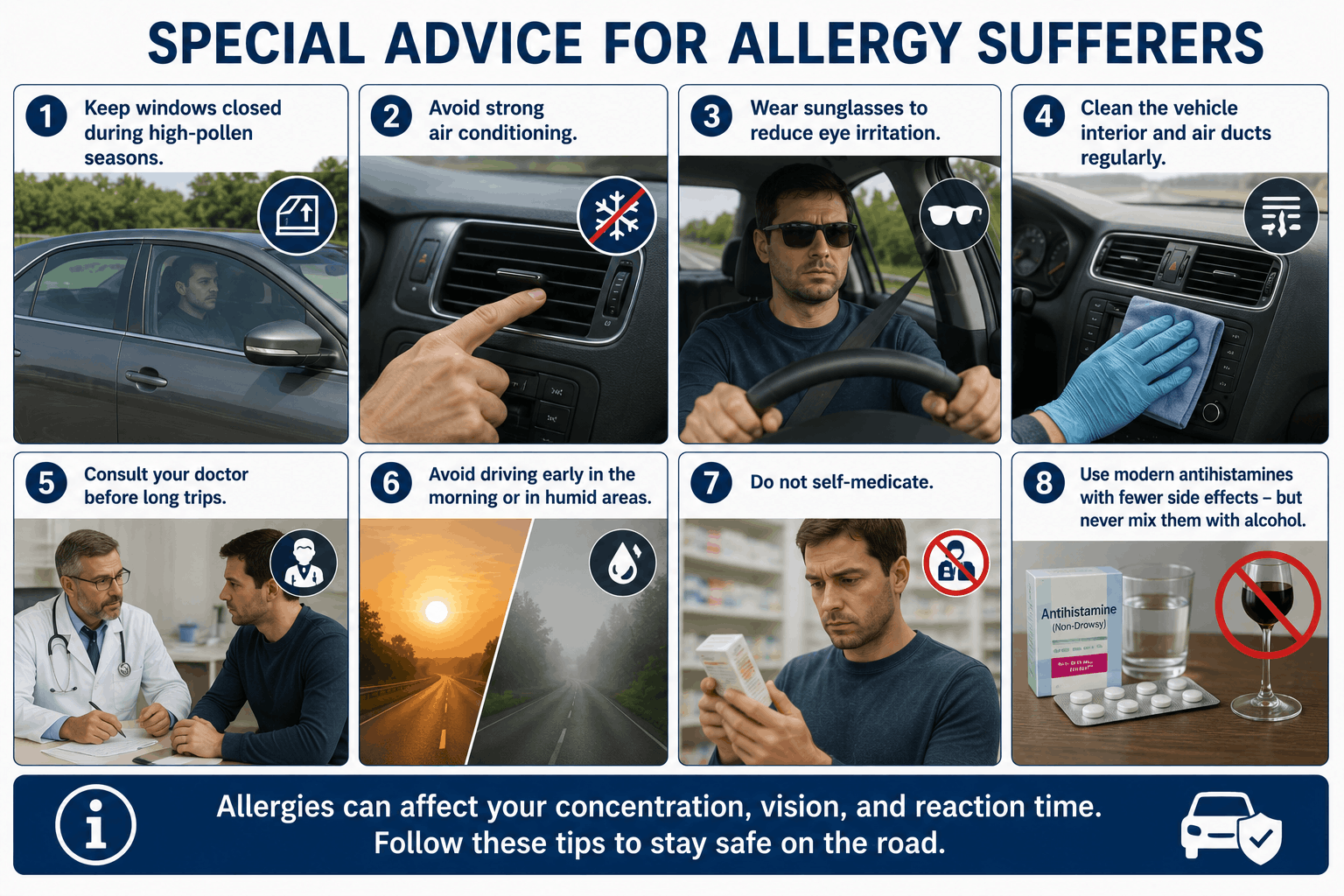
10.3.2 Special Advice for Allergy Sufferers
- Keep windows closed during high-pollen seasons.
- Avoid strong air conditioning.
- Wear sunglasses to reduce eye irritation.
- Clean the vehicle interior and air ducts regularly.
- Consult your doctor before long trips.
- Avoid driving early in the morning or in humid areas.
- Do not self-medicate.
- Use modern antihistamines with fewer side effects - but never mix them with alcohol.
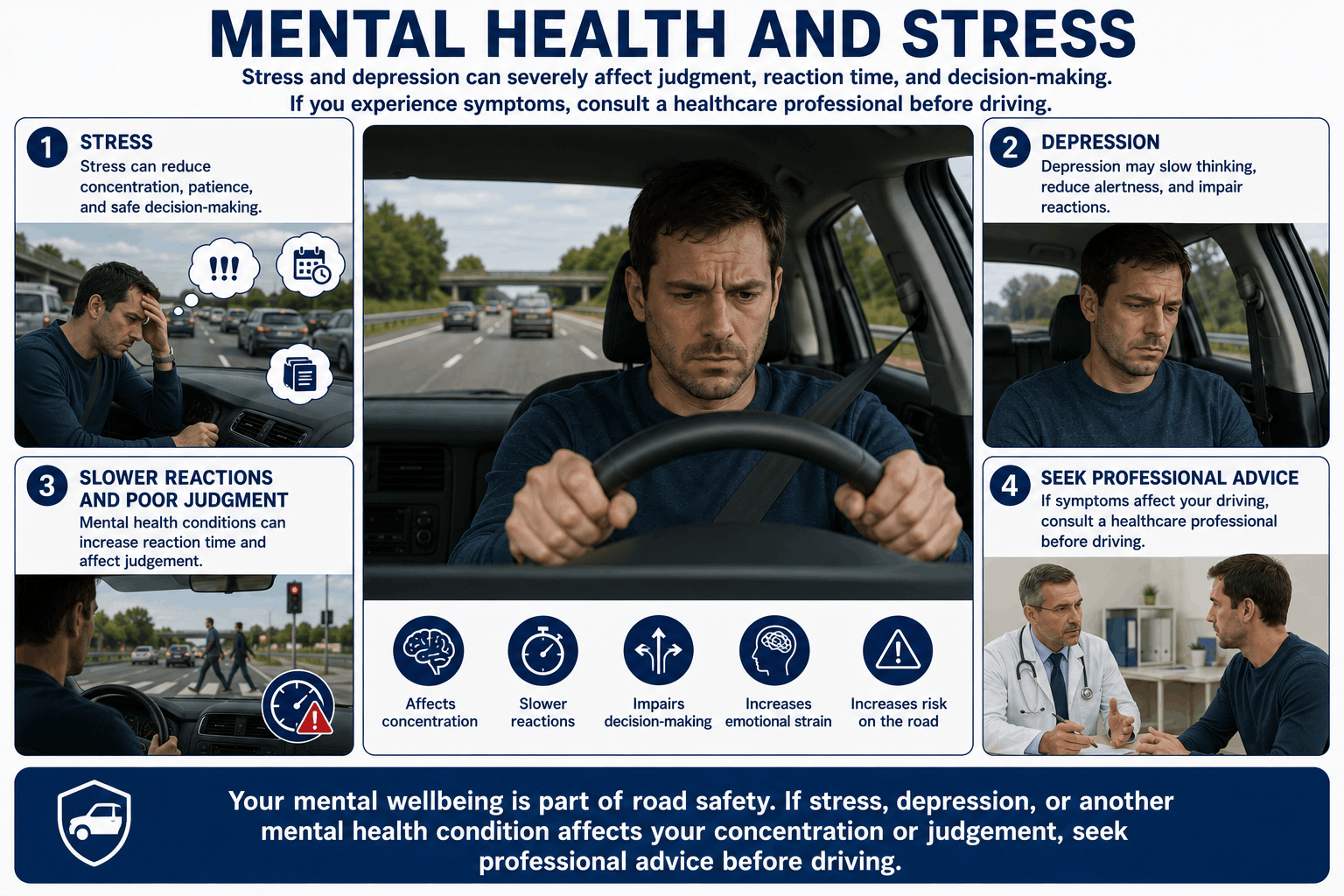
10.3.3 Mental Health and Stress
Stress and depression can severely affect judgment, reaction time, and decision-making. If experiencing symptoms, consult a specialist before driving.
10.4 Alcohol and Drugs
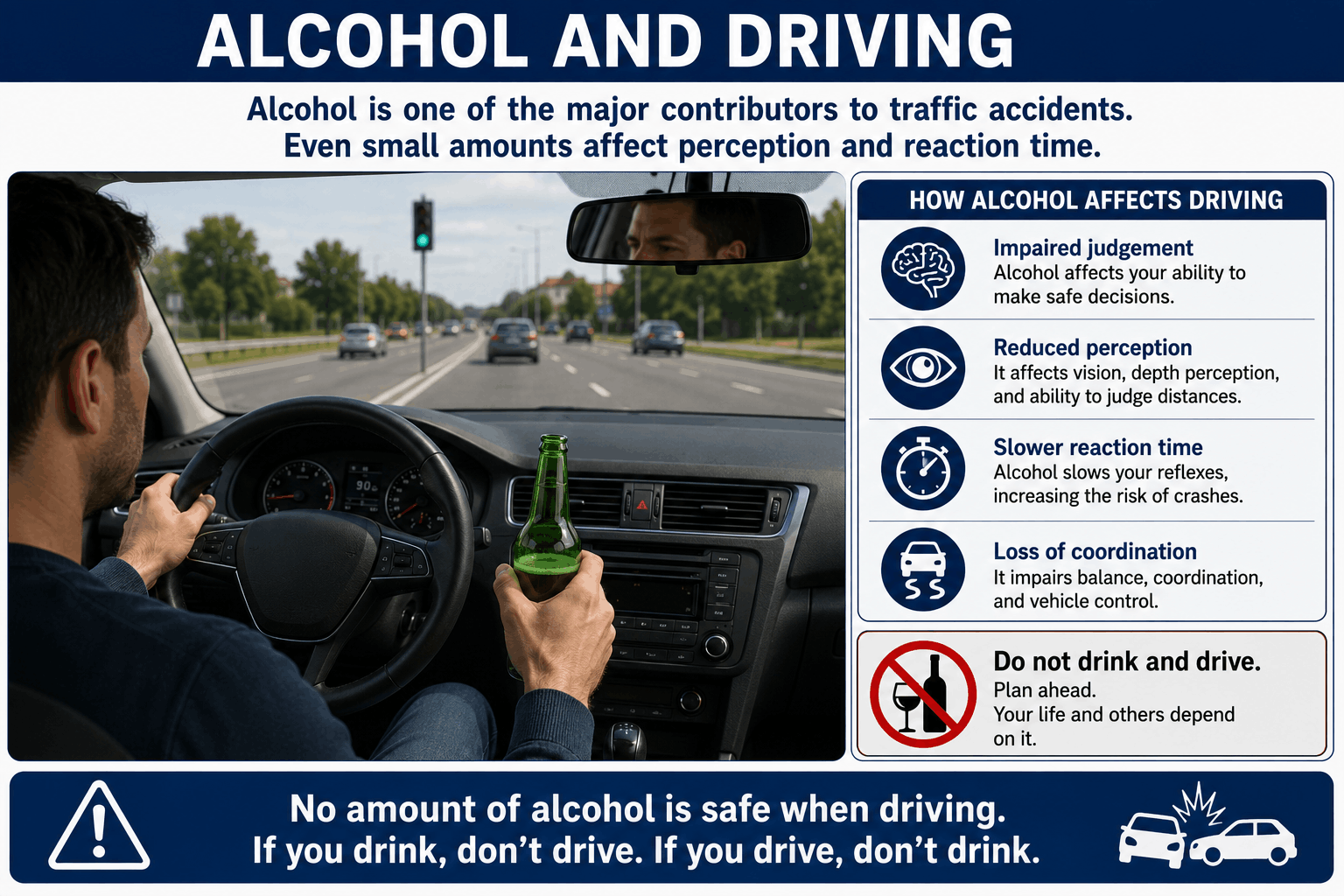
Alcohol is one of the major contributors to traffic accidents. Even small amounts affect perception and reaction time.
10.4.1 Legal Blood Alcohol Limits
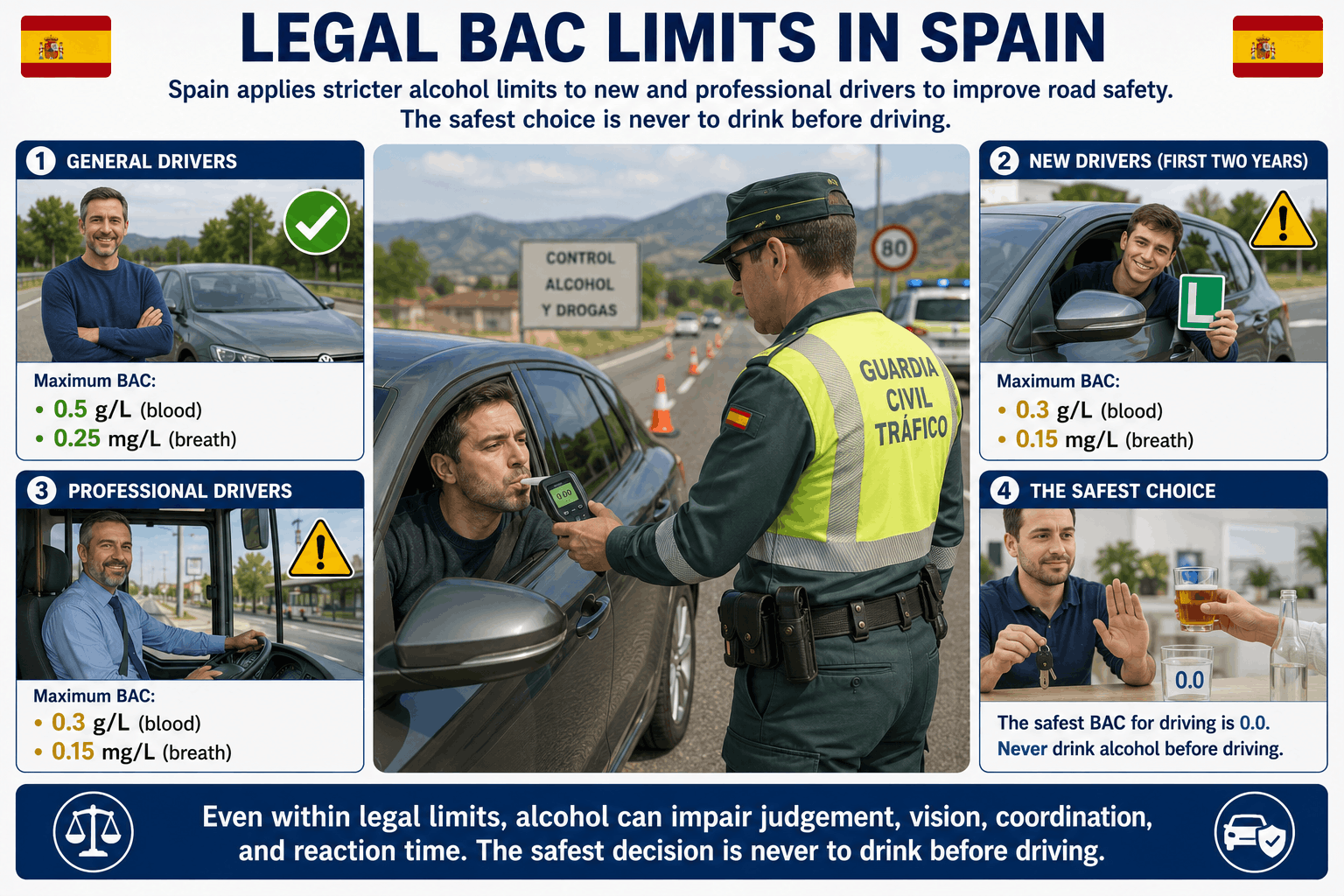
Blood alcohol concentration (BAC) is the total amount of alcohol in the blood after drinking. It can be measured as grams of alcohol per litre of blood, or milligrams of alcohol per litre of breath exhaled from the lungs.
| Driver type | Breath alcohol (mg/l) | Blood alcohol (g/l) |
|---|---|---|
| General drivers | 0.25 | 0.5 |
| New and professional drivers | 0.15 | 0.3 |
10.4.2 Influencing Factors
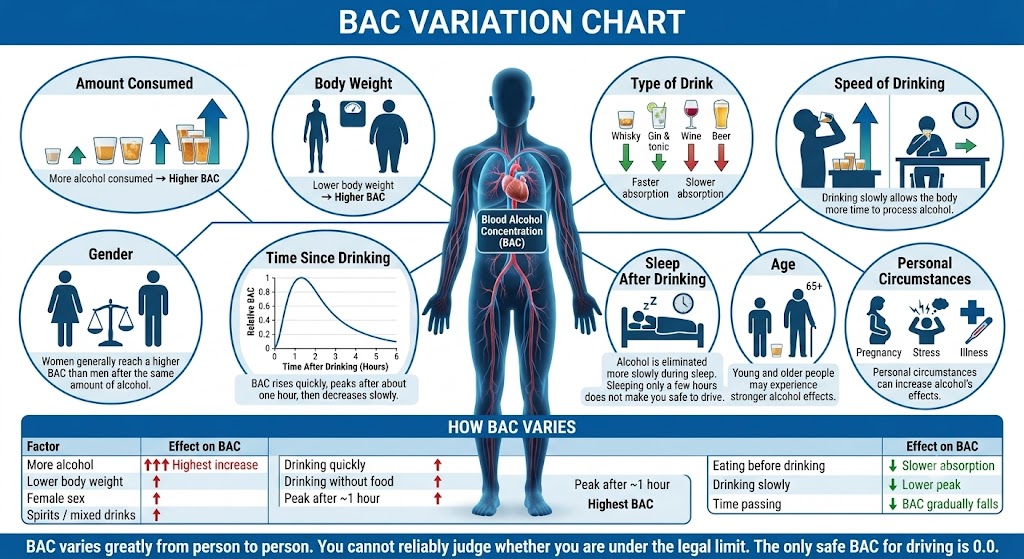
Alcohol does not affect everyone the same way. Factors that influence BAC:
- Amount consumed: the more you drink, the higher your BAC.
- Body weight: alcohol has a stronger effect on thinner people.
- Gender: alcohol usually affects women more than men.
- Time since drinking: BAC peaks about one hour after drinking, then decreases very slowly.
- Type of drink / how consumed: spirits like gin or whisky reach the bloodstream faster than wine or beer, and faster still when mixed with tonic or soft drinks.
- Sleeping after drinking: alcohol is eliminated more slowly while sleeping, so it is not safe to drive after drinking heavily and sleeping only a few hours.
- Speed of drinking: the body processes alcohol better when you drink slowly.
- Drinking without eating: food slows absorption into the bloodstream.
- Age: alcohol affects people under 18 and over 65 more strongly.
- Personal circumstances: pregnancy, stress, or illness can make effects stronger.
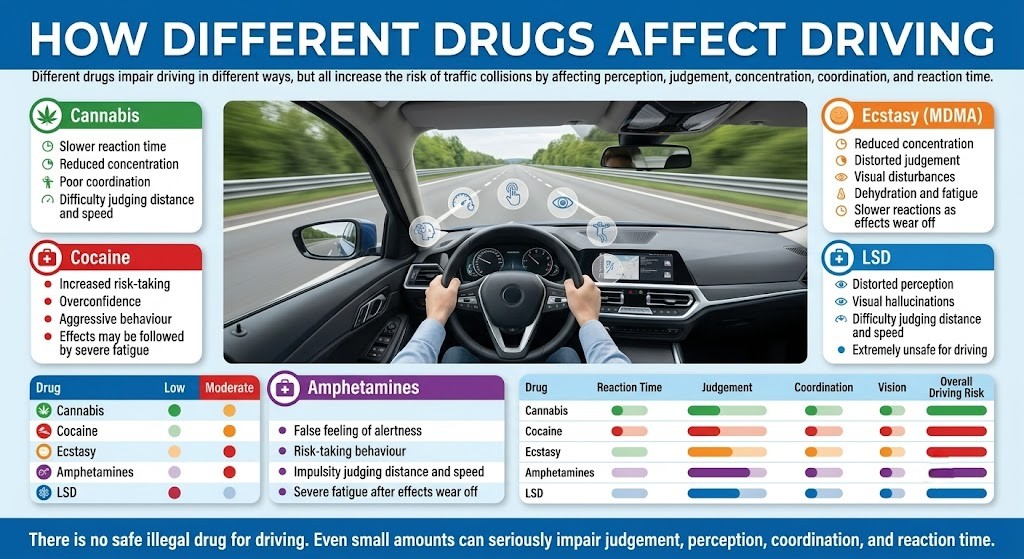
10.4.3 Effects of Drugs on Driving
10.4.4 Detection and Testing
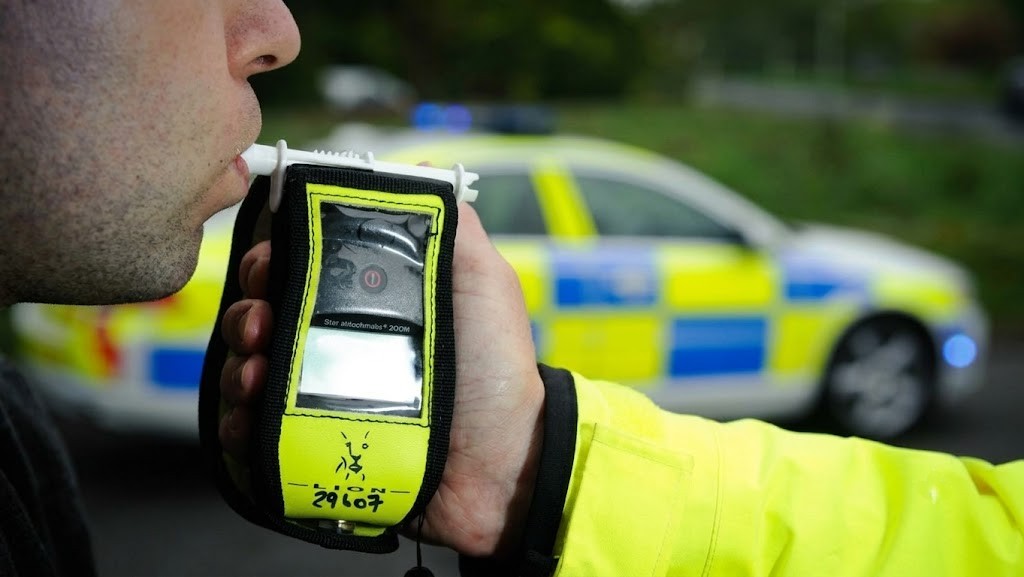
Alcohol tests via breathalyser devices are mandatory in case of traffic checks, accidents, and infractions. Drug testing involves saliva samples or medical examinations.
- If the result is positive or the person shows signs of consumption, the test is repeated to confirm it.
- To detect drugs, a saliva sample is collected and placed into a testing device.
- If the person disagrees with the results, they may request a blood test.
10.5 Reaction Time and Driving Performance
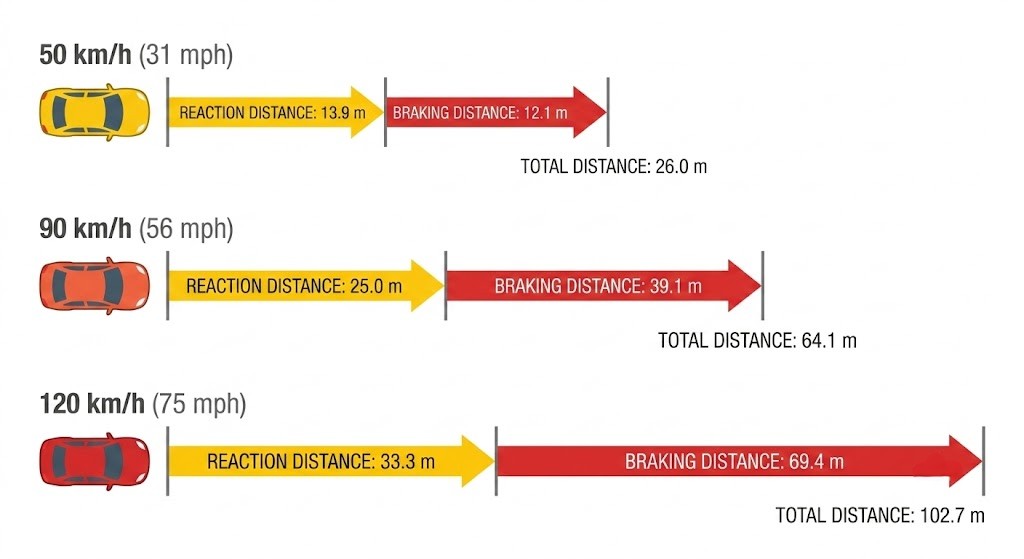
Reaction time is the time that passes between seeing or hearing something and reacting to it - for example, between seeing a red light and stopping the car. Normal reaction time is about 0.75 seconds (between 0.5 and 1 second), but it increases with fatigue, alcohol, drugs, age, or distractions. A slower reaction time means longer stopping distances and increased accident risk.
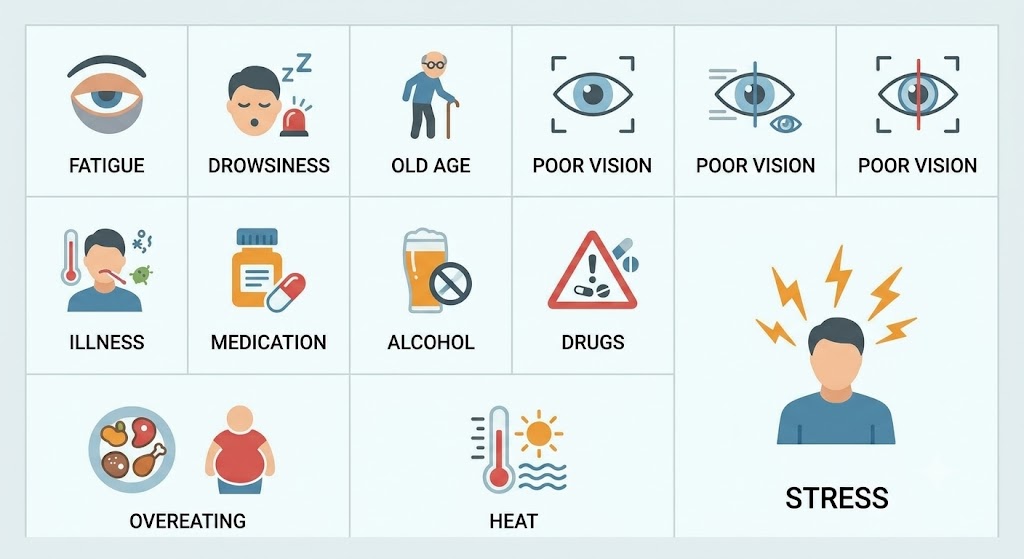
Factors that increase reaction time:
- Being tired (fatigue).
- Feeling sleepy.
- Old age.
- Poor hearing or vision.
- Illness.
- Certain medications.
- Alcohol and drugs.
- Eating too much before driving.
- Excessive heat inside the vehicle.
- Emotional stress or agitation.
- Lack of attention while driving.
Ready to test your knowledge?
Practice questions covering everything in Chapter 10 - Physical Condition of the Driver.Last updated: 2026-06-27
Practice the questions for this chapter
The theory is free to read. Create a free account to practice official-format questions and track your progress.