Chapter 11 - Other Users
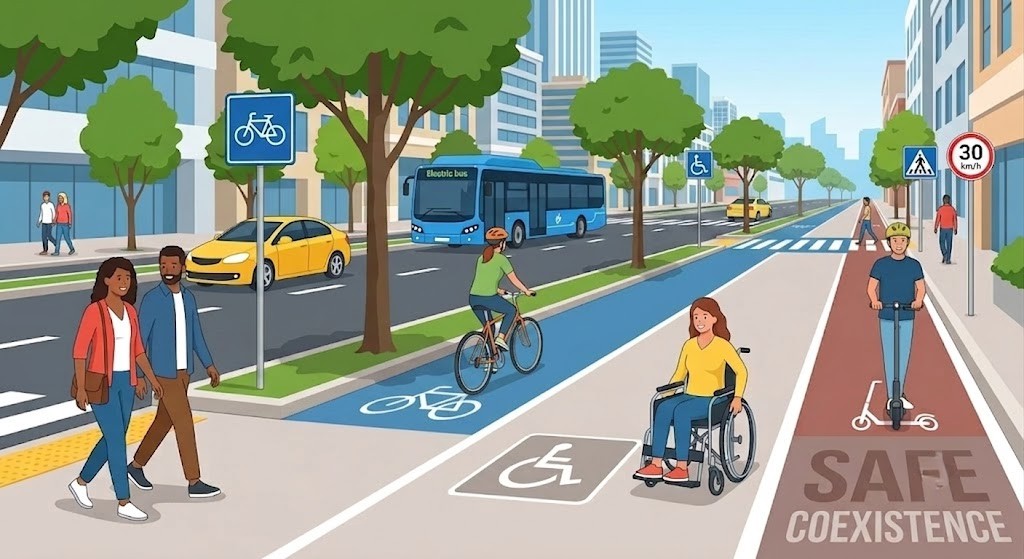
Sharing the road requires every driver to be aware of other users, especially the most vulnerable: pedestrians, cyclists, people with reduced mobility, and those travelling with animals or animal-drawn vehicles. Understanding and respecting their rights and obligations is essential for road safety.
11.1 Pedestrians
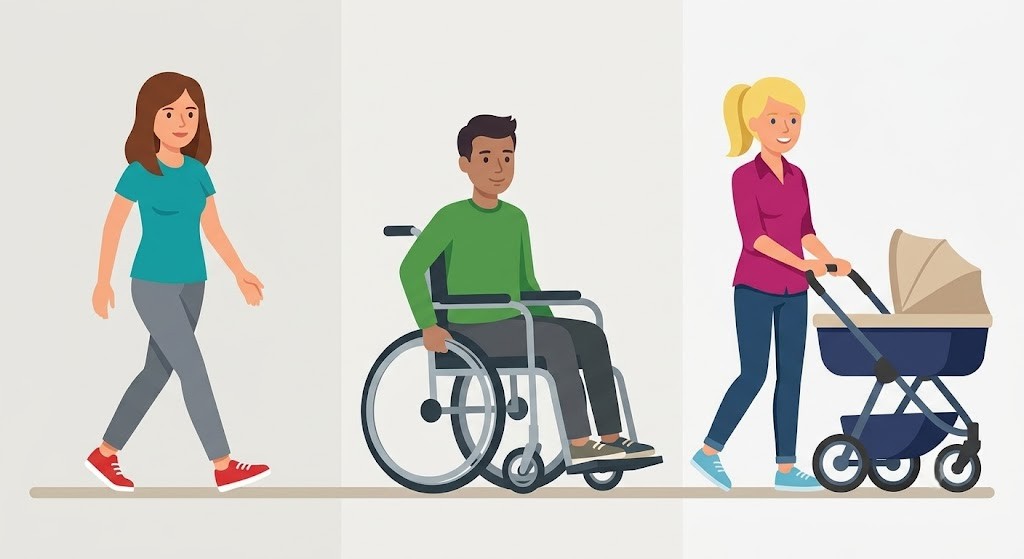
Pedestrians are road users who move on foot, in wheelchairs, or push small non-motorised vehicles like prams or scooters. They are particularly exposed to danger and must be protected.
11.1.1 Pedestrian Duties - General Obligations
When walking in towns and cities
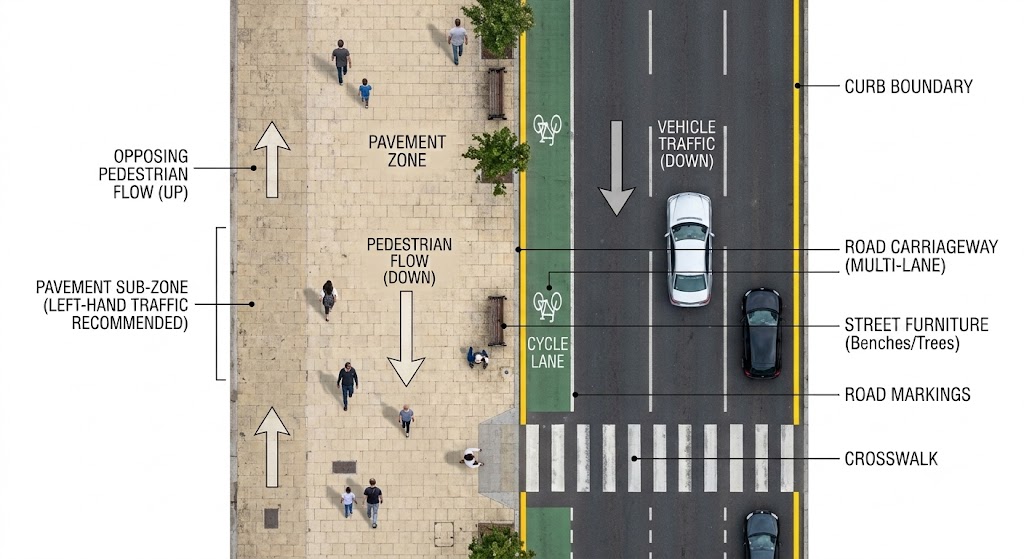
- Walk on the pavement and not on the road whenever possible. This also applies to pedestrians on roller skates, skateboards, or similar non-electric devices.
- Always keep to the right - in town and on the road - when pushing or pulling a bicycle, a two-wheeled moped, a handcart, or similar equipment. Wheelchair users must also travel on the right-hand side.
- People carrying a very large object or pushing a small non-motorised vehicle may walk on the carriageway if the hard shoulder or pavement is too narrow and they would obstruct other pedestrians.
When walking on the road
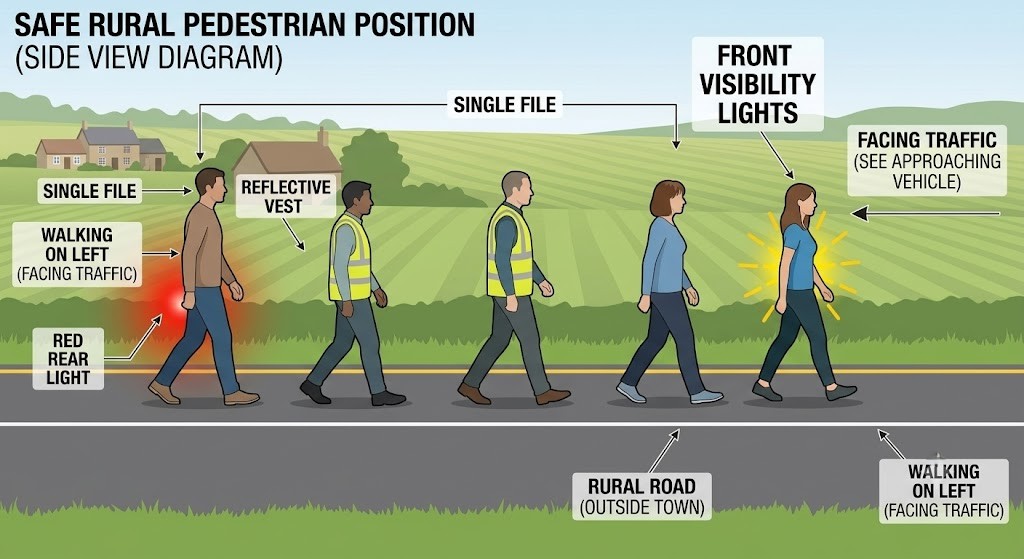
- On roads outside towns and cities, always walk on the left-hand side of the carriageway, unless it is clearly safer to walk on the right.
- At night, wear or carry something bright or reflective visible from at least 150 metres (e.g., a reflective vest or luminous wristband).
- Groups of pedestrians must walk in single file. Those at the front carry a bright white or yellow light; those at the back carry a bright red light, so drivers can see where the line begins and ends.
When crossing the road or street
- Walk straight across in a direct line and do not stop until you reach the other pavement.
- At pedestrian crossings, make sure vehicles have stopped or are approaching slowly before you start to cross.
- Always walk around roundabouts or traffic islands; do not cross straight over them on the roadway.
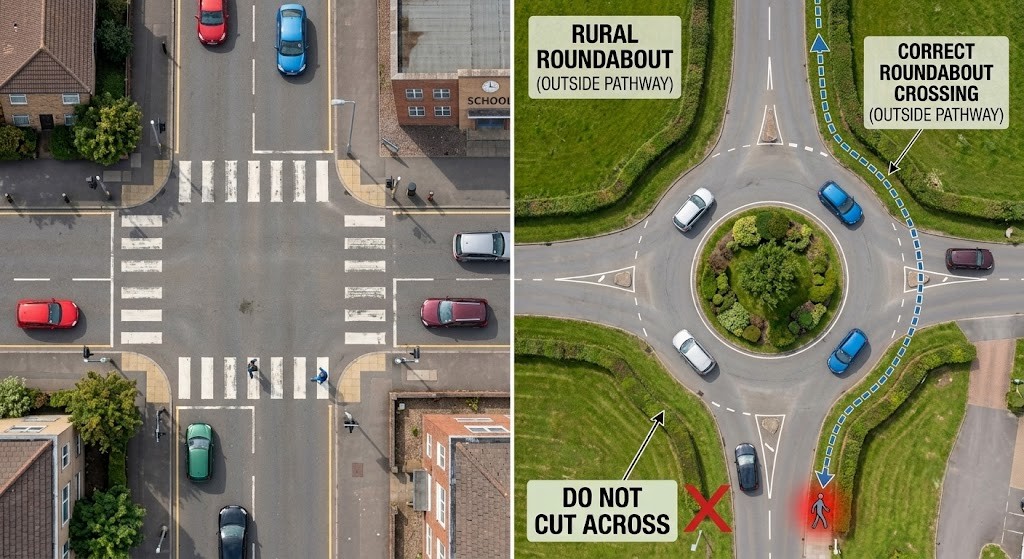
11.1.2 Where Pedestrians Must Circulate
- On sidewalks, pedestrian paths, or zones reserved for pedestrians.
- If there are no pedestrian facilities - in urban areas: either side of the road if safe; in interurban areas: the left side to face oncoming traffic, unless safety requires otherwise (e.g., when pushing a load).
11.1.3 Visibility and Safety at Night
Outside urban areas, at night or in poor visibility, pedestrians must wear reflective elements visible from at least 150 metres away.
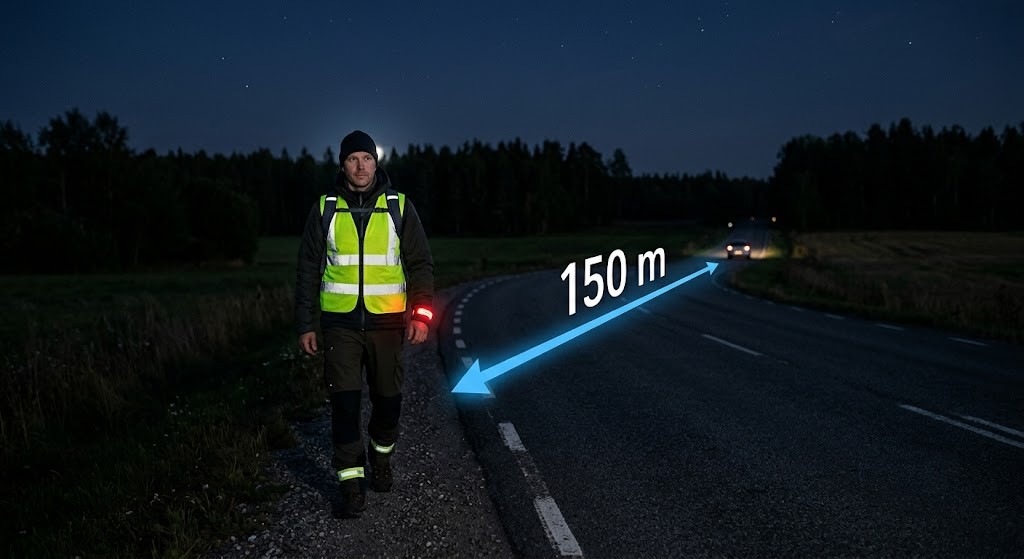
11.1.4 Prohibitions
- Pedestrians are forbidden from walking on motorways or expressways.
- Hitchhiking is prohibited on any part of the road.
- They must not cross intersections diagonally or without using designated crossings.
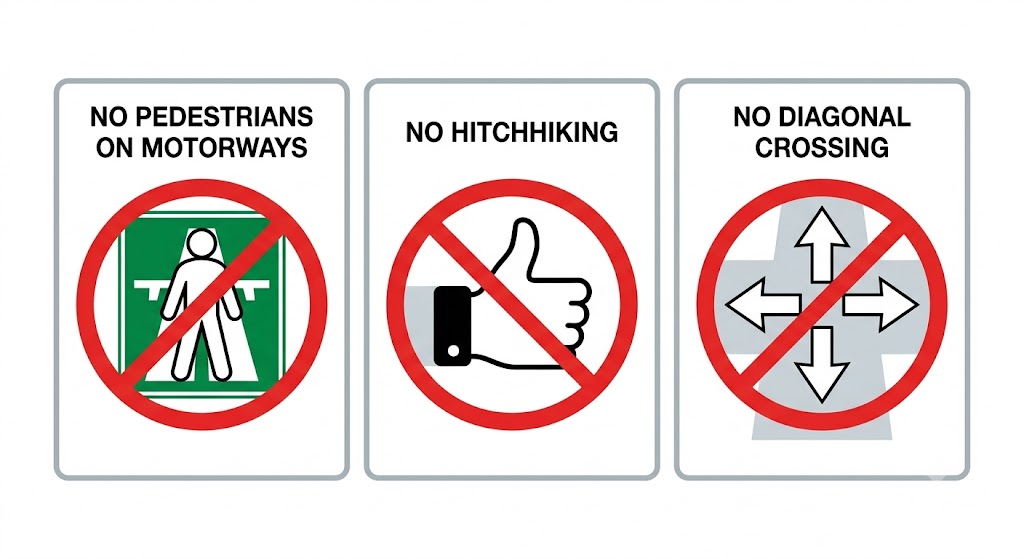
11.1.5 Driver Responsibilities Toward Pedestrians
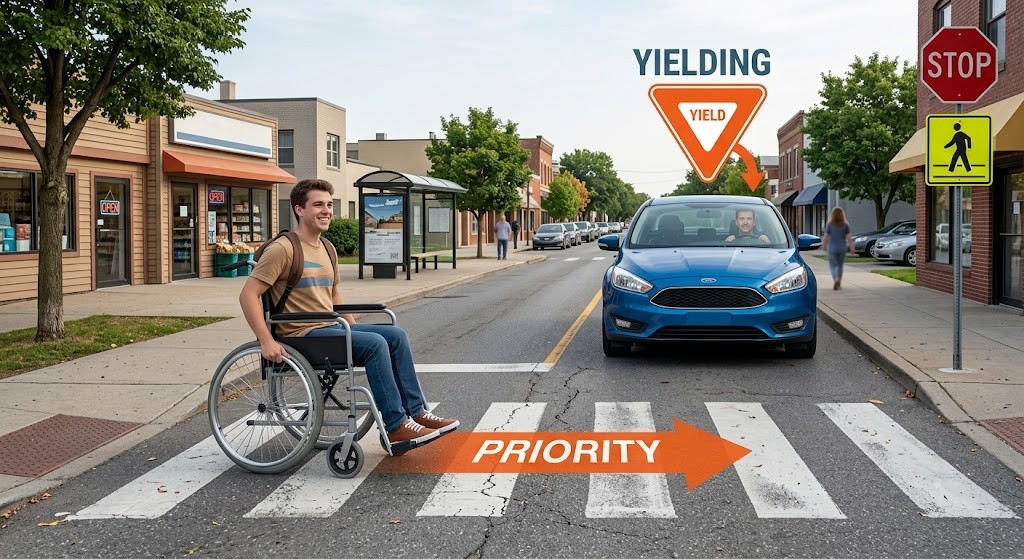
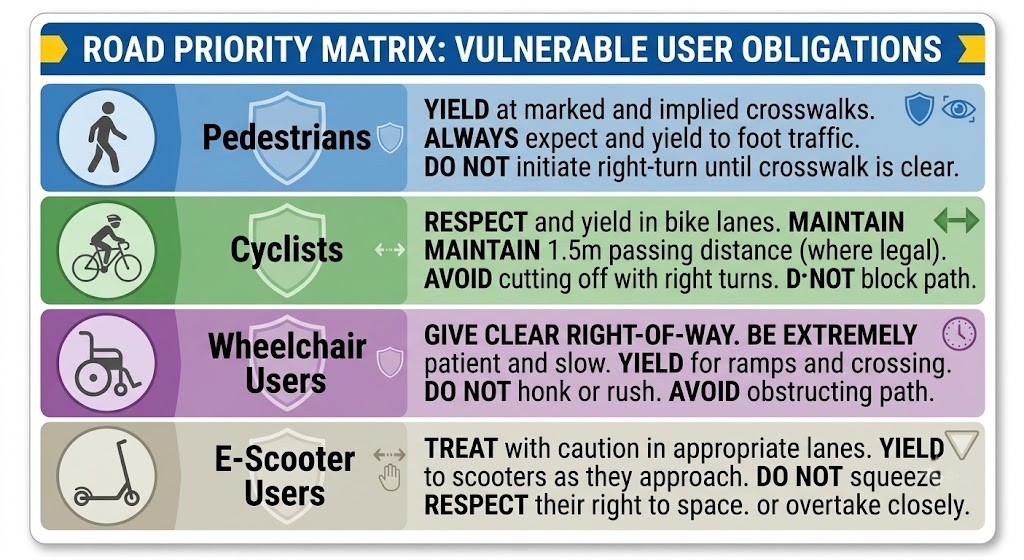
- Always yield to pedestrians at zebra crossings, when turning at intersections, or if a pedestrian has started crossing.
- Give priority to groups like schoolchildren or funeral processions.
- Slow down near schools, bus stops, or crowded urban areas.
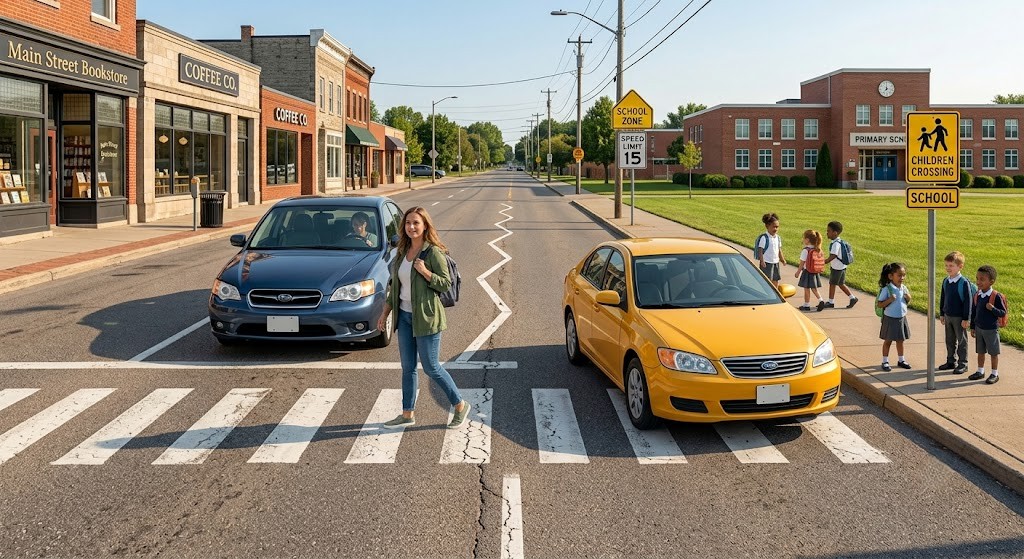
11.2 Cyclists
Cyclists are considered vehicle users, but with special rules and protections. They may use bike lanes, shoulders, and in some cases the main road.
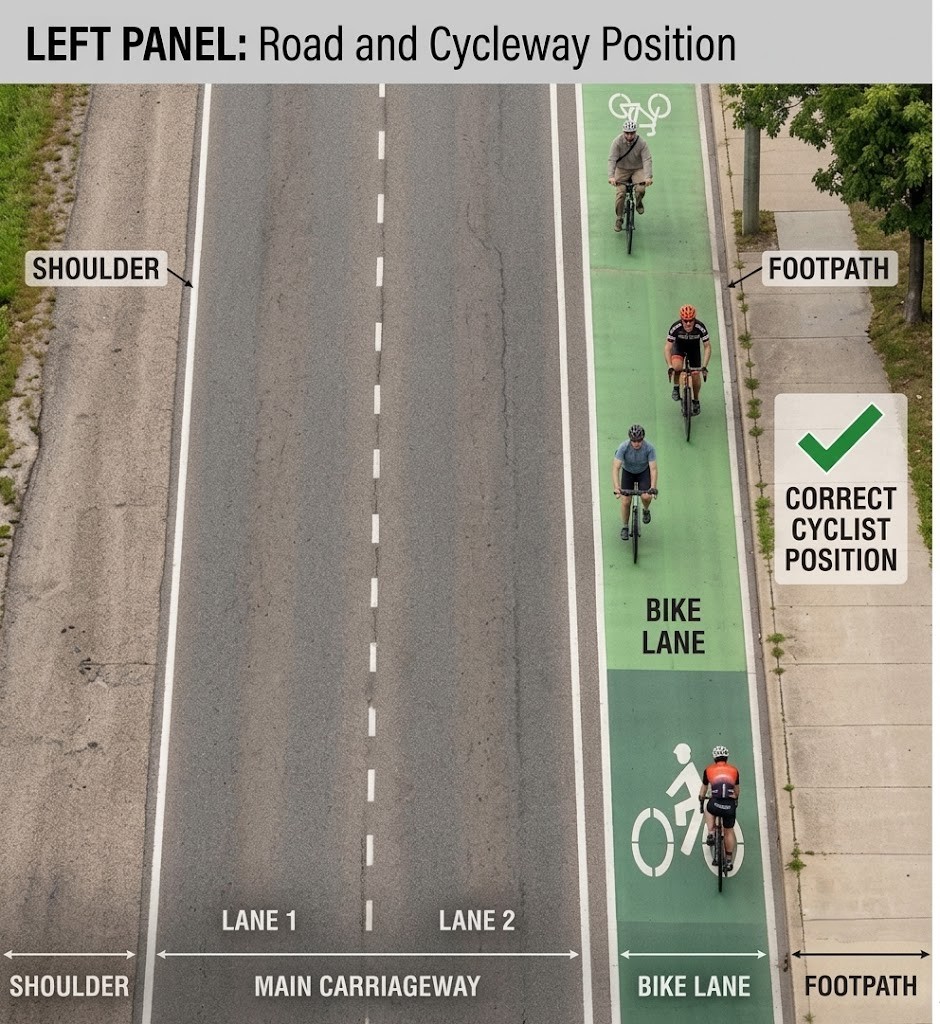
11.2.1 Where and How Cyclists May Circulate
- On bike lanes, shoulders, and, when permitted, the roadway.
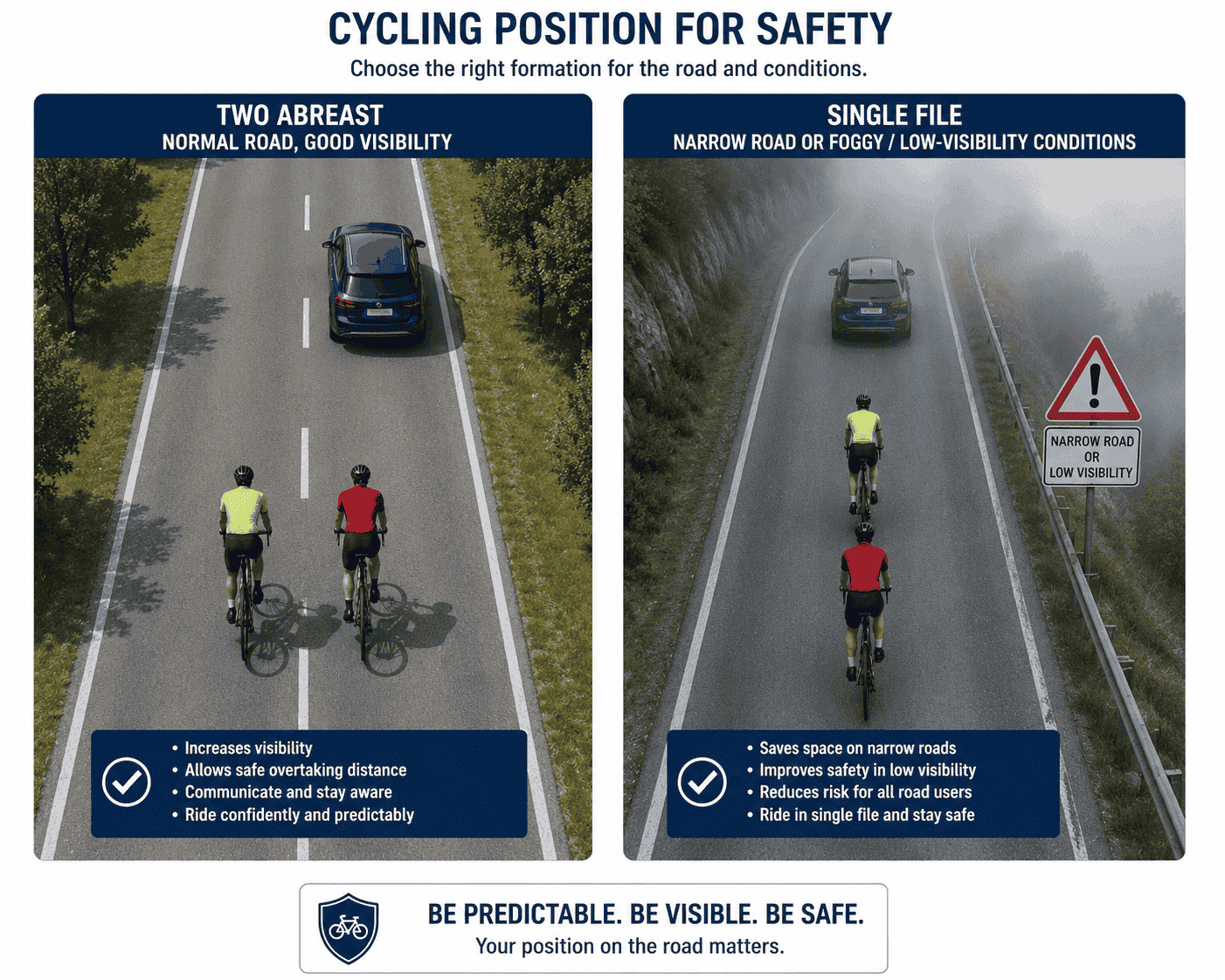
- They may ride two abreast, keeping as far right as possible, but must ride in single file in low-visibility conditions and on narrow roads.
11.2.2 Priority Rules for Cyclists
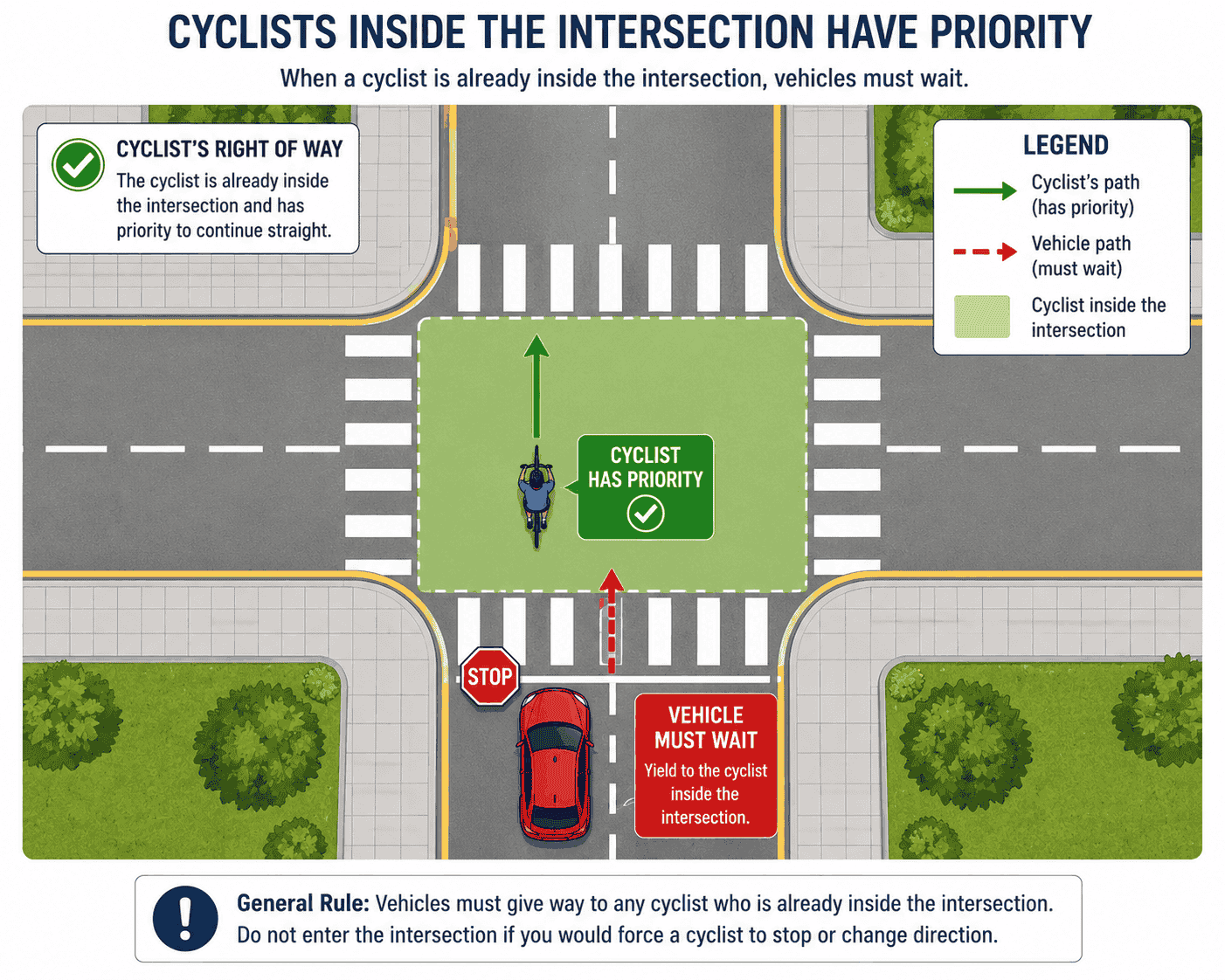
- They have priority when already crossing an intersection or roundabout as part of a group.
- They have priority at bicycle crossings, when riding in bike lanes, or along a shoulder.
11.2.3 Driver Obligations
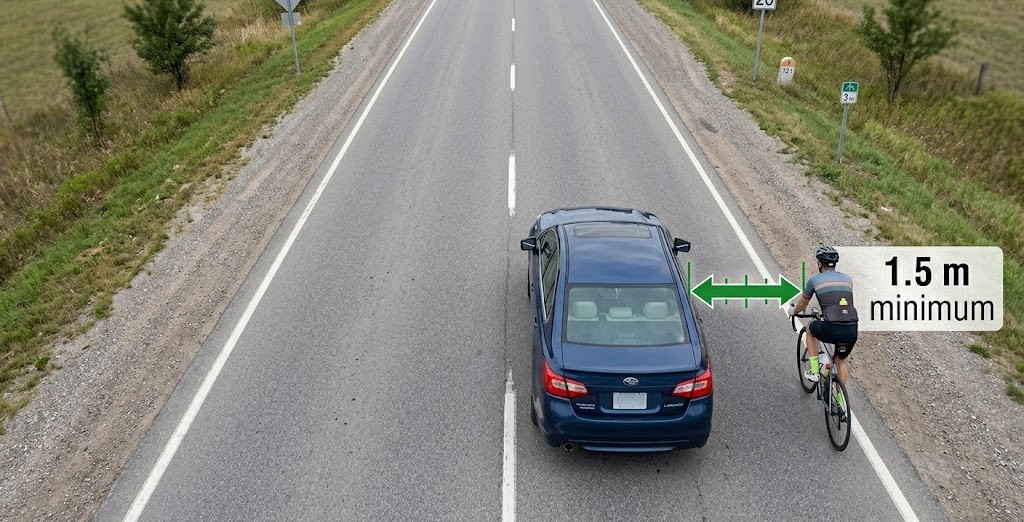
- Maintain a minimum lateral distance of 1.5 metres when overtaking.
- You may fully or partially occupy the opposite lane to overtake a cyclist, even if there is a continuous line.
- Do not overtake if there is risk to oncoming cyclists, including those using the shoulder.
11.3 People with Reduced Mobility
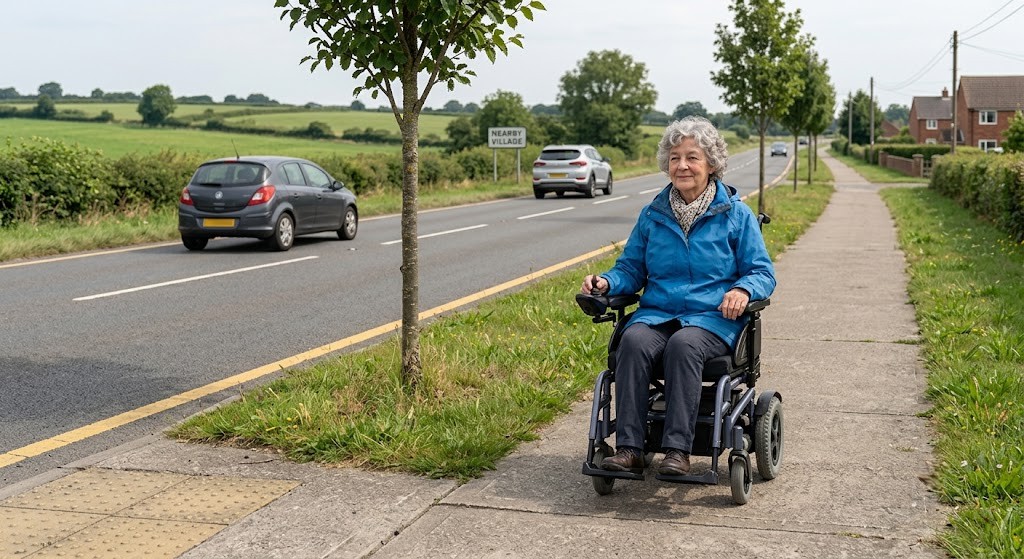
Persons with reduced mobility include those using wheelchairs (manual or electric) and vehicles specifically designed for physical disabilities. They are legally considered pedestrians.
11.3.1 Circulation Guidelines
- They may travel on sidewalks and pedestrian areas, or on the shoulder if necessary.
- They must be granted safe passage, especially at crosswalks or intersections.
11.4 Animal-Drawn Vehicles and Animals
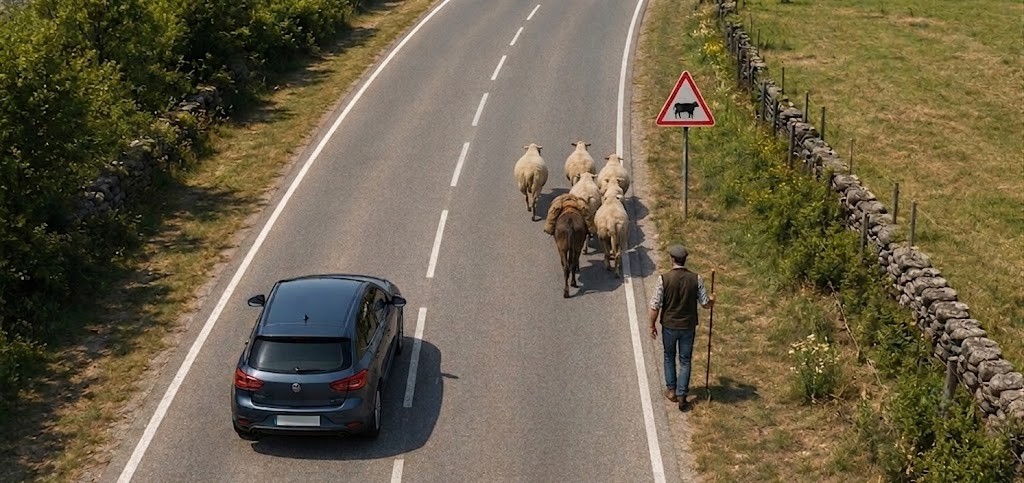
Livestock, pack animals, or animals used to carry people may only travel on the road when there are no other routes available. They must always be guided by a person aged 18 or over. Livestock and pack animals must use the right-hand shoulder; if there is no shoulder, keep as close as possible to the right edge of the roadway. Animals moving in herds or flocks must also keep to the right, occupying the least space possible. No animals are allowed on motorways or dual carriageways.
11.4.1 Circulation Rules
- Must be led or ridden by an adult.
- Must circulate on the right shoulder, or, if not passable, on the minimum space of the road needed.
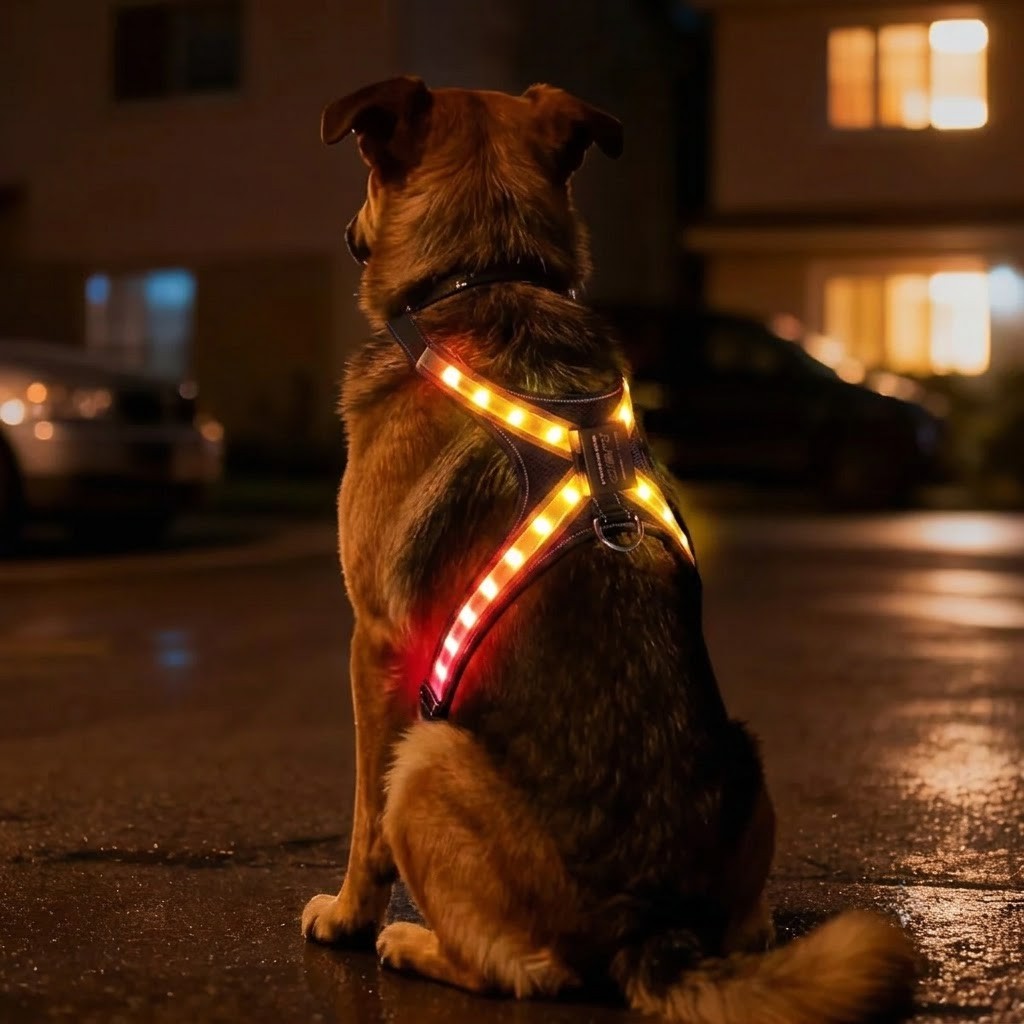
- At night or in poor visibility, they must carry white or yellow lights in front and red lights in the rear.
11.4.2 Priority Rules
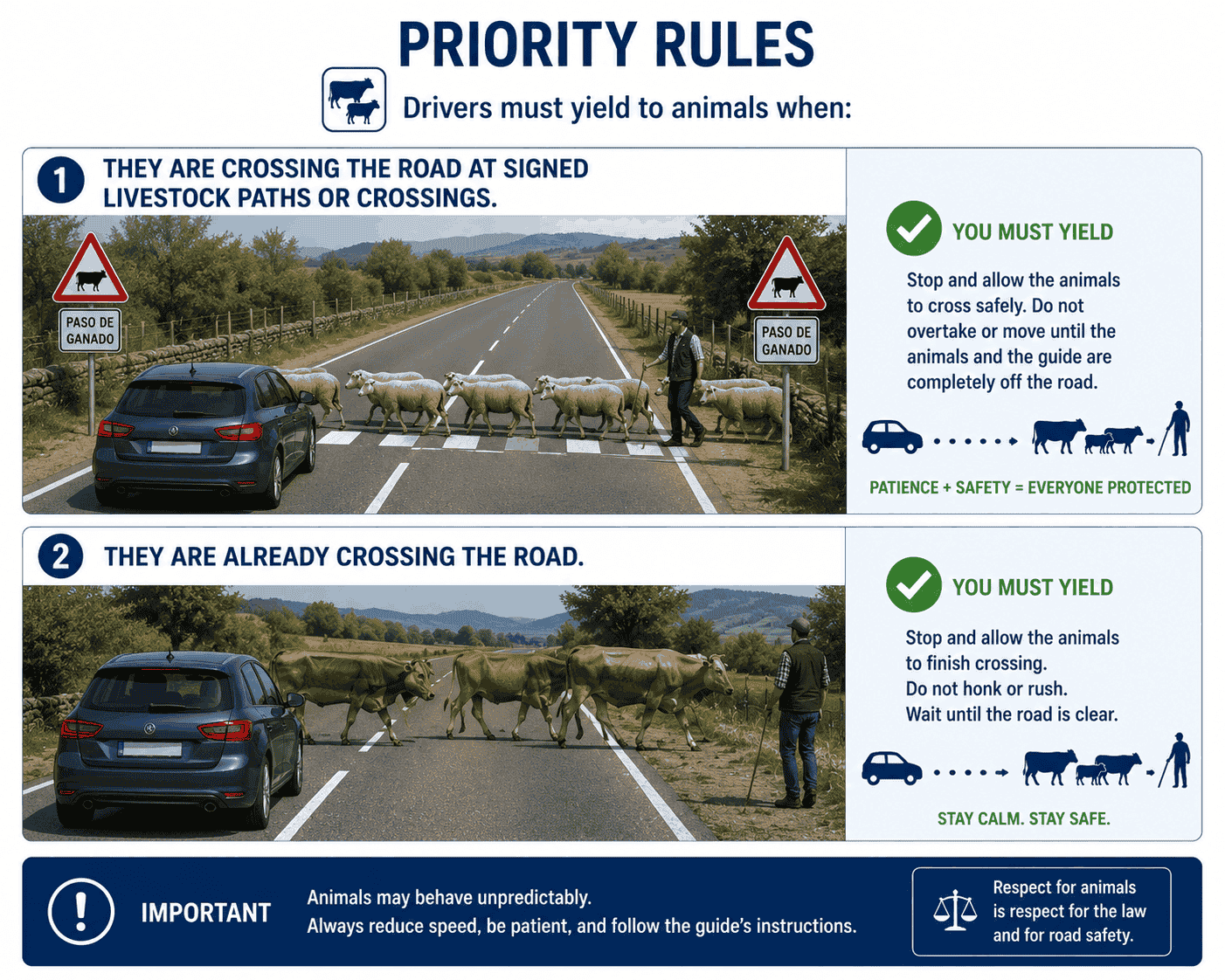
Drivers must yield to animals when:
- They are crossing the road at signed livestock paths or crossings.
- They are already crossing the road.
11.5 Personal Mobility Vehicles (VMP)
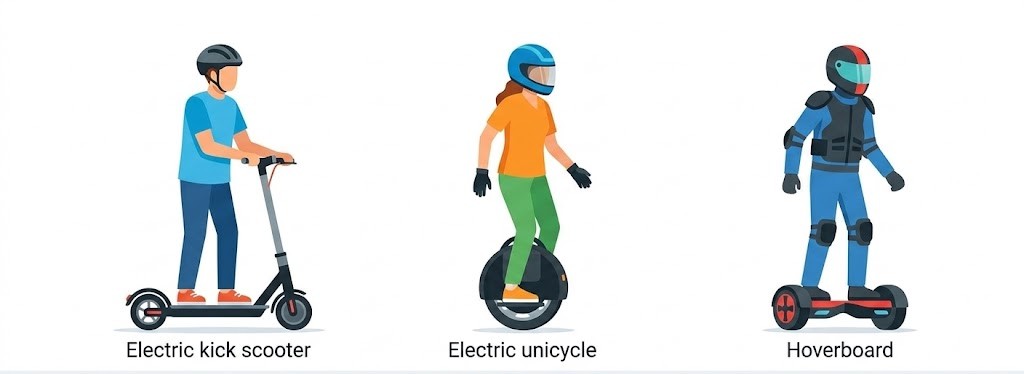
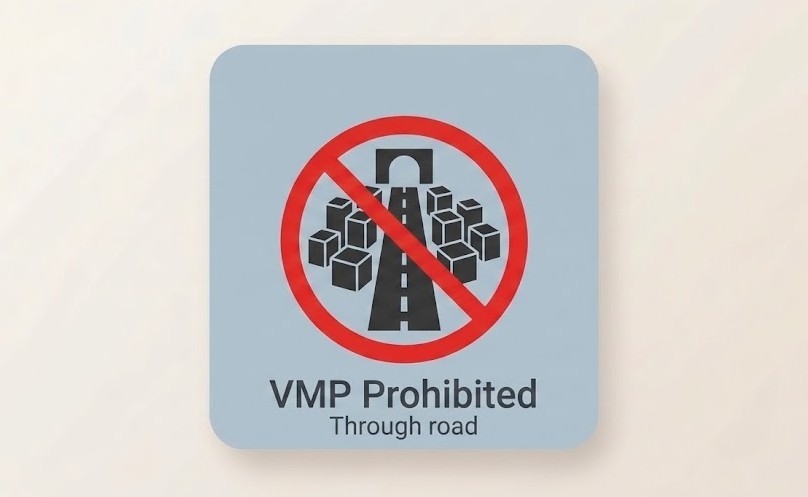
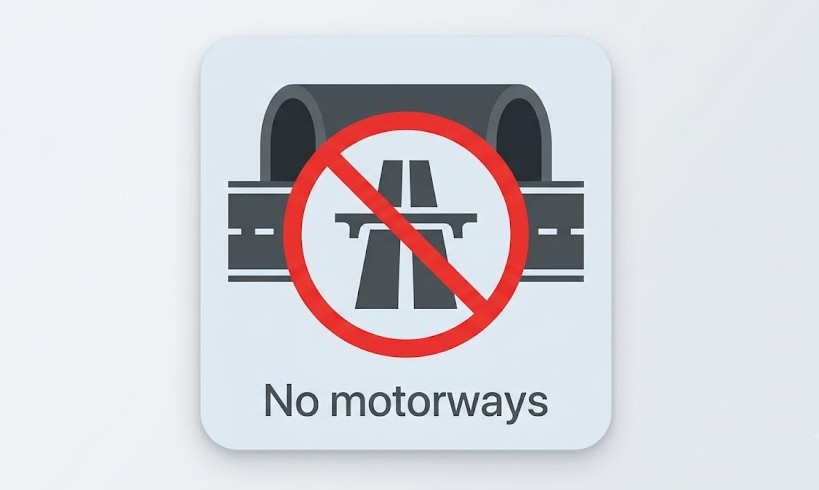
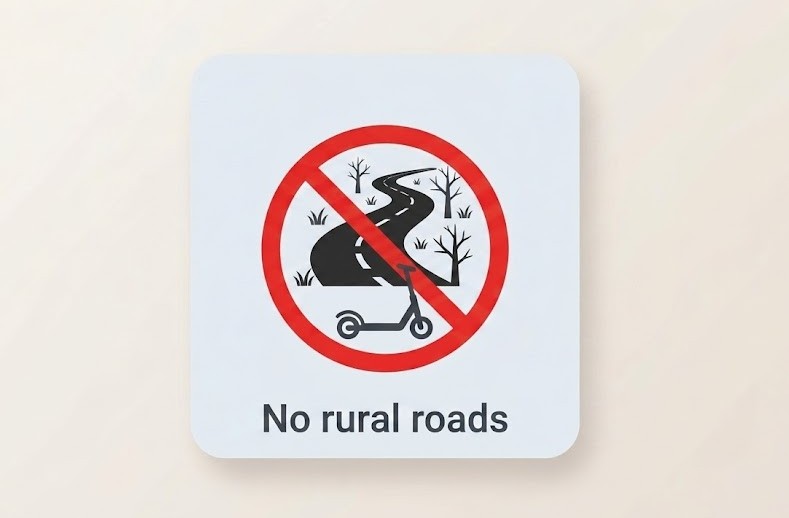
Electric scooters, electric unicycles, and other personal mobility vehicles are not allowed to travel on:
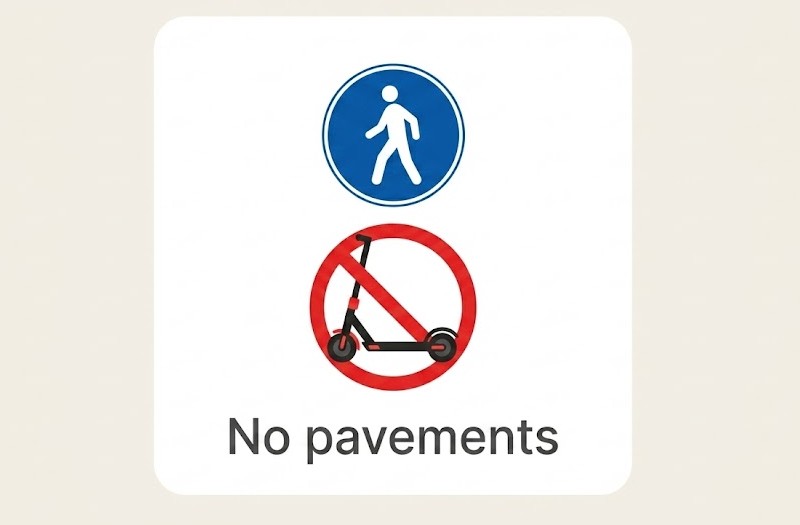
- Sidewalks and pedestrian-only areas.
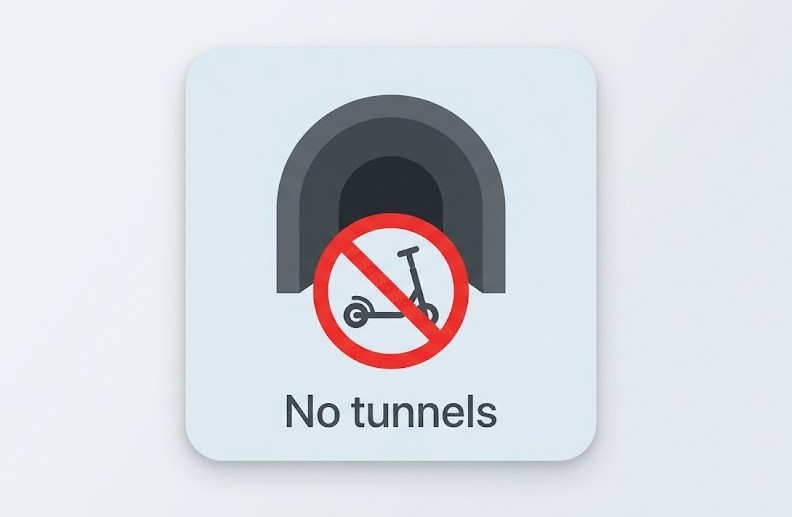
- Tunnels.
- Through-roads running through towns.
- Motorways and dual carriageways.
- Roads located outside built-up areas (outside the town or city).
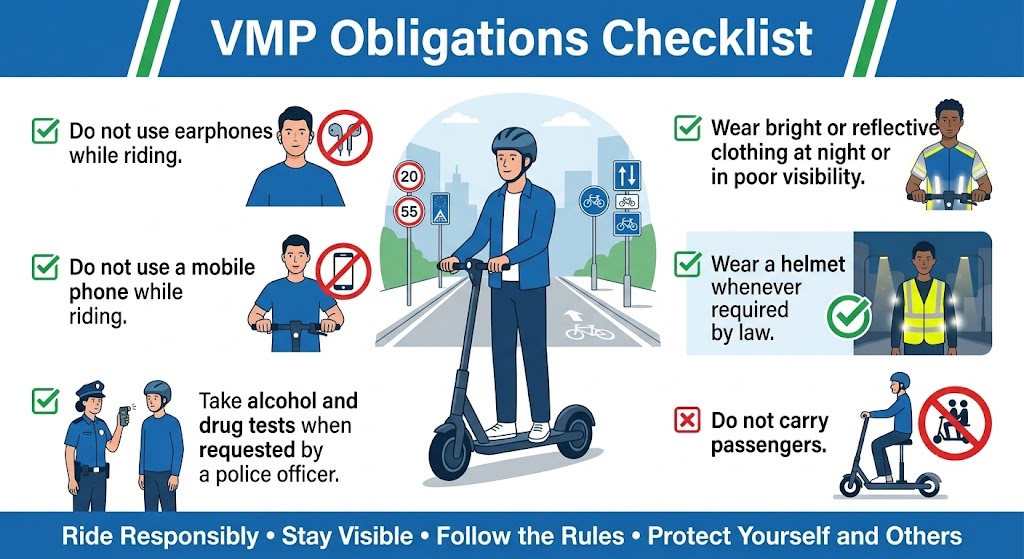
- Do not use earphones while riding.
- Do not use a mobile phone while riding.
- Take alcohol and drug tests when an officer asks, just like any other driver.
- Wear bright or reflective clothing at night or in poor visibility.
- Wear a helmet whenever the law requires it.
- You are not allowed to carry passengers.
11.6 Additional Notes on Vulnerable Users
Spanish Traffic Law defines vulnerable users as those most at risk of injury in an accident - pedestrians, cyclists, motorcyclists, and users of light vehicles like scooters and mobility scooters.
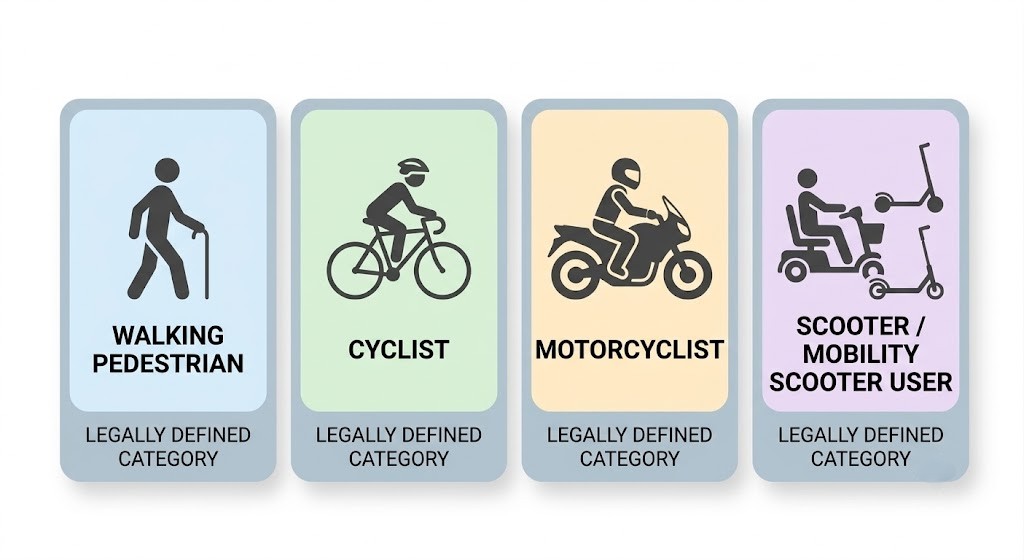
- Drivers must reduce speed when approaching these users.
- Be especially cautious near schools, hospitals, or playgrounds.
- Groups crossing the road must be allowed to do so as a whole unit.
11.7 Summary Table of Priorities
| Road user | Driver obligations |
|---|---|
| Pedestrians | Yield at crossings, when turning, or near buses and schools. Use caution at night and in low visibility. |
| Cyclists | Maintain 1.5 m distance. Allow full groups to pass intersections. Yield at crossings, bike lanes, or when they have priority. |
| Reduced-mobility users | Same rights as pedestrians. Special caution required. Yield at intersections and crossings. |
| Animals | Yield at signed livestock crossings or when crossing. Respect their presence on rural roads. |
Ready to test your knowledge?
Practice questions covering everything in Chapter 11 - Other Road Users.Last updated: 2026-06-27
Practice the questions for this chapter
The theory is free to read. Create a free account to practice official-format questions and track your progress.