Chapter 17 - Automobile Maintenance
Maintenance is essential to the safety, performance, and durability of your vehicle. Good habits reduce mechanical failures and accidents while improving fuel efficiency and environmental performance. This chapter explains basic systems, regular inspections, and maintenance practices all drivers should follow.
17.1 Why Maintenance Matters
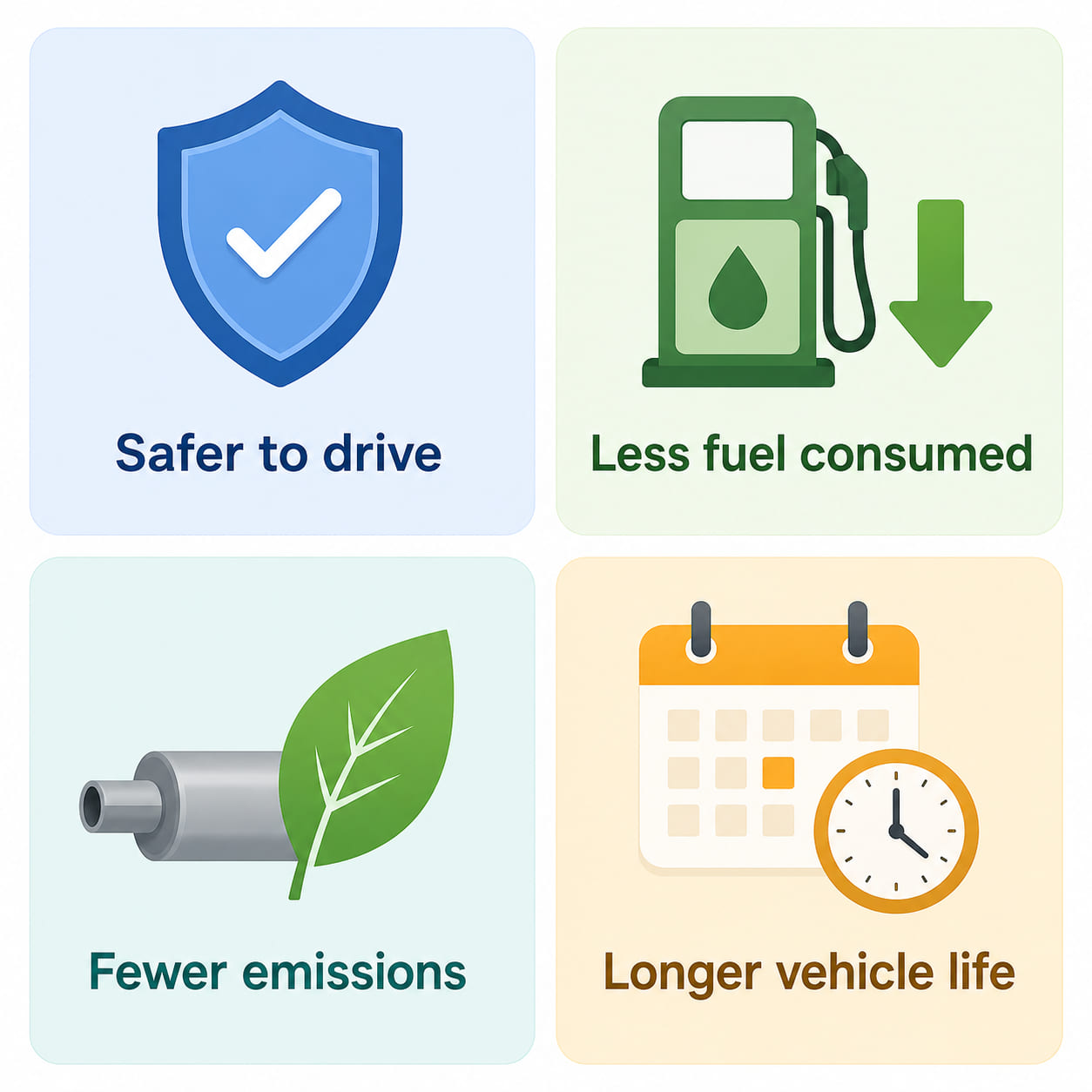
Vehicle maintenance is often a legal requirement (such as the Spanish ITV), but also a preventive measure that avoids costly repairs, dangerous breakdowns, and environmental harm. A properly maintained vehicle:
- Is safer to drive.
- Consumes less fuel.
- Produces fewer emissions.
- Has a longer useful life.
17.2 Basic Engine Systems and Maintenance
17.2.1 Lubrication System
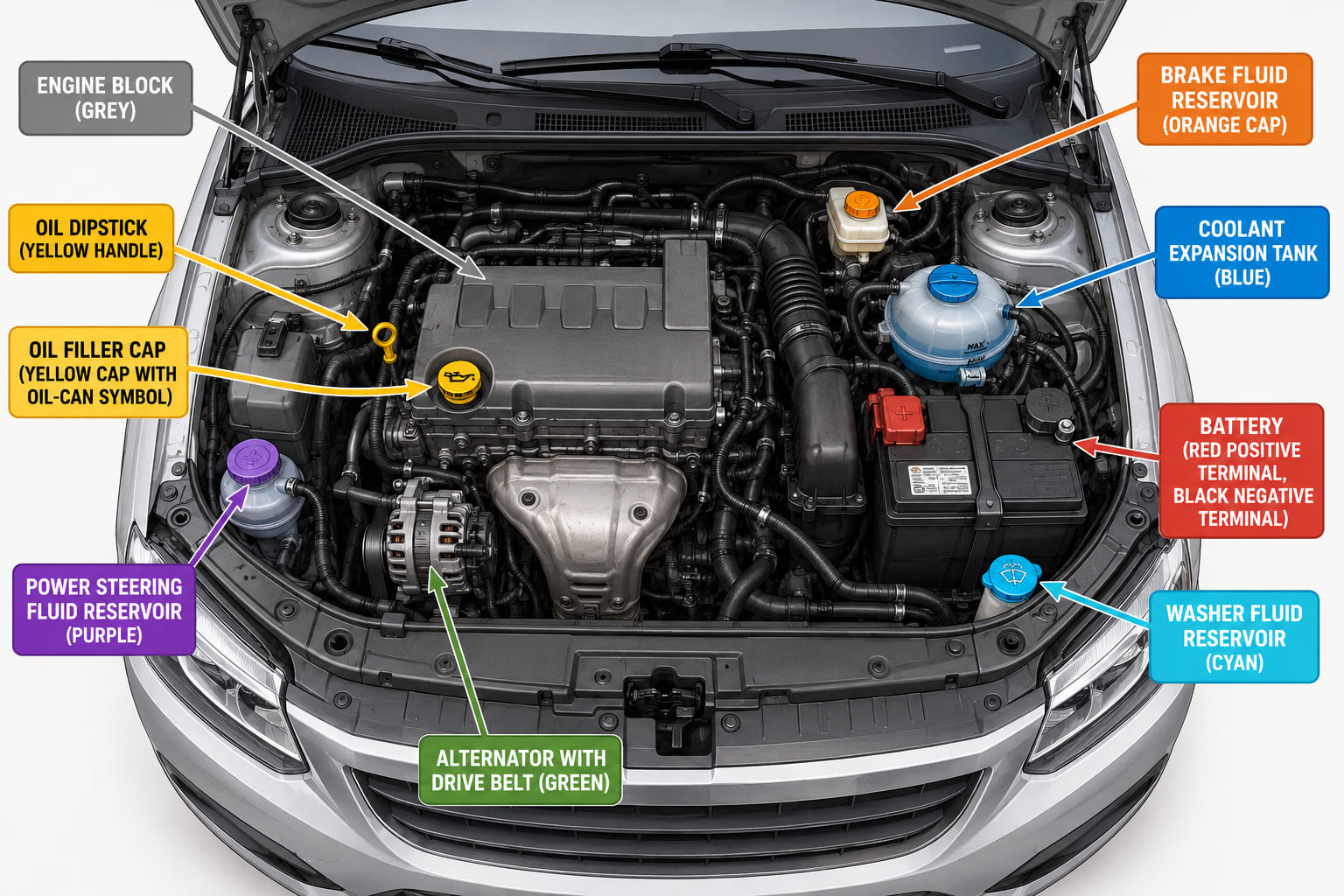
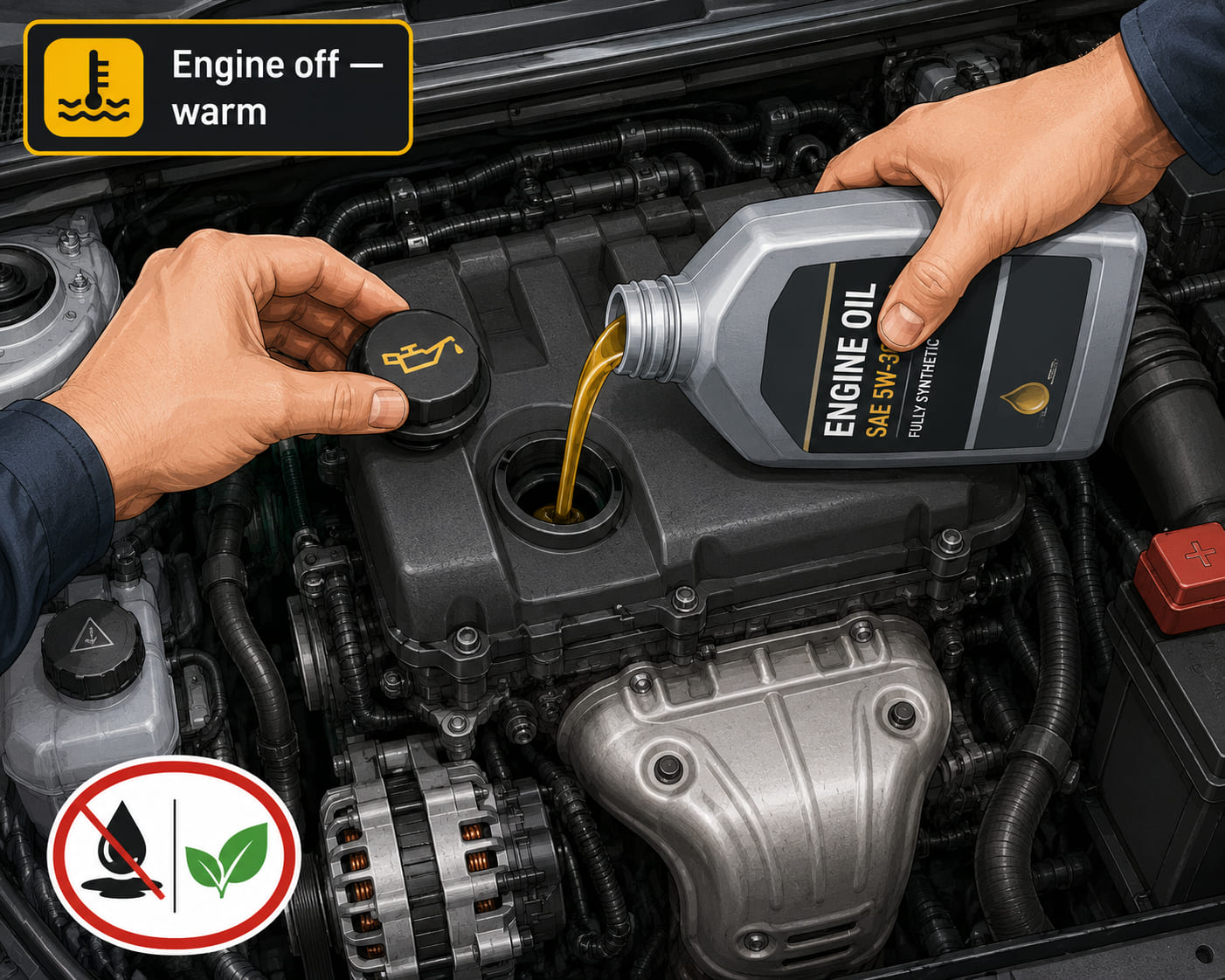
The lubrication system reduces friction between moving engine parts using oil. Maintenance involves:
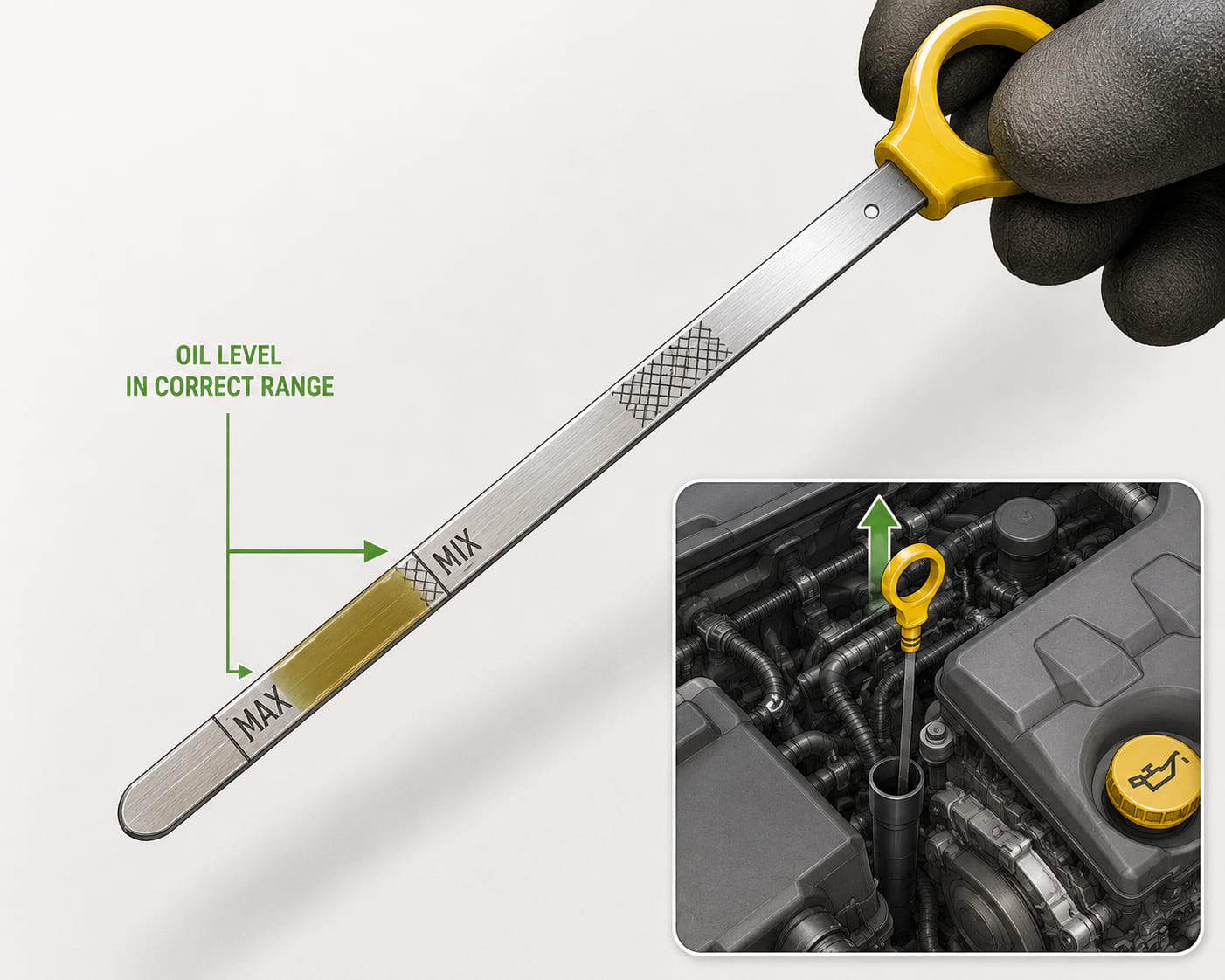
- Oil level: check with the dipstick - oil should be between the MIN and MAX marks, on a level surface with the engine cold.
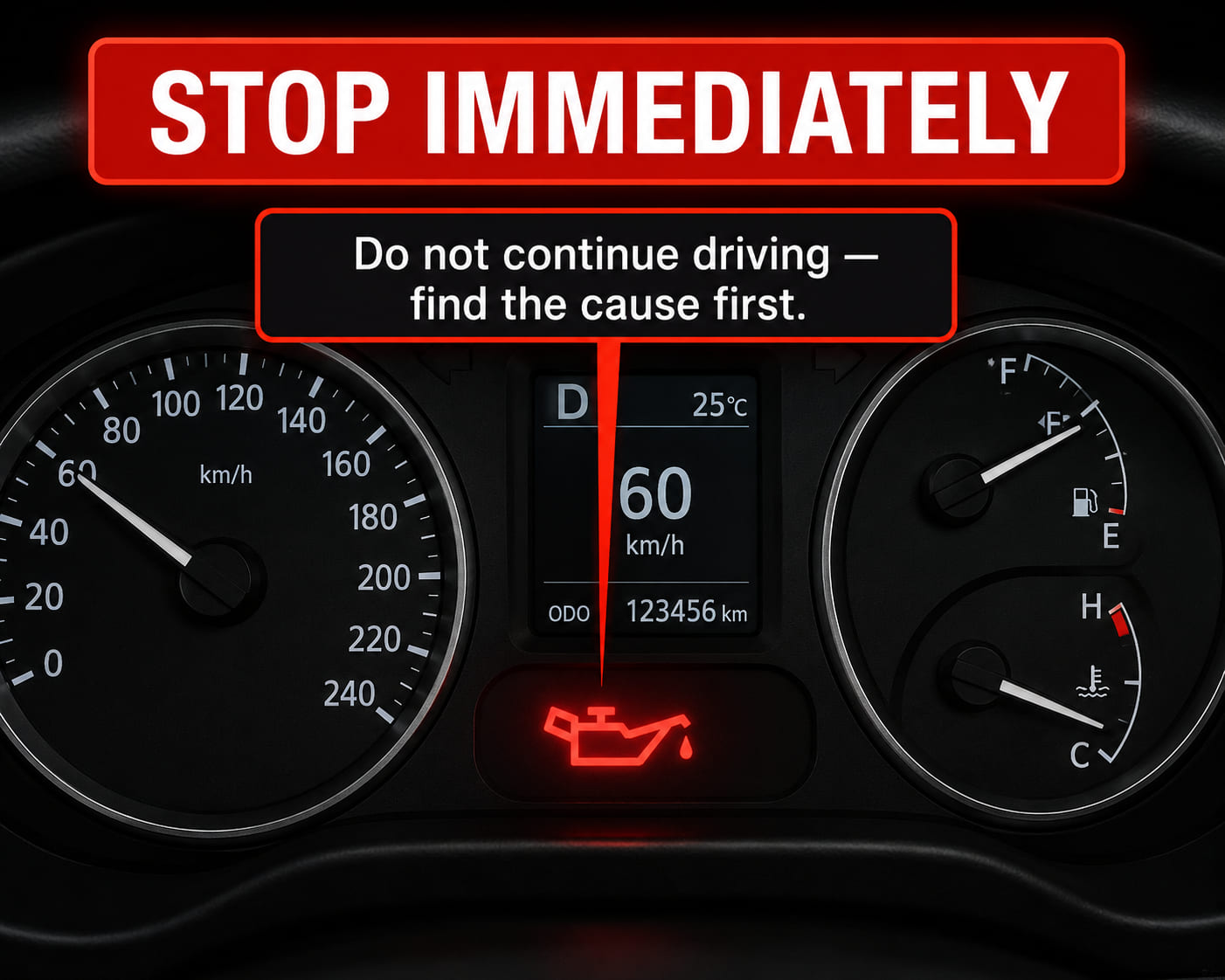
- Oil pressure: a dashboard warning light indicates pressure problems. If lit, stop the vehicle immediately.
- Oil and filter change: replace per manufacturer guidance. Oil should be drained warm and filled from the top of the engine.
Function. To distribute oil to all engine parts, forming a thin protective film that prevents metal-to-metal contact. Automotive oils are specially formulated to reduce wear. The devices that monitor oil are:
- Dipstick: indicates how much oil is in the engine. Check with the engine off and cold; the level must be between the minimum and maximum marks.
- Oil pressure gauge or warning light: monitors oil pressure (needed so oil circulates and coats all components). If the warning light comes on, the oil level is low or pressure is insufficient - stop and don't continue until the cause is found and fixed.
17.2.2 Cooling System
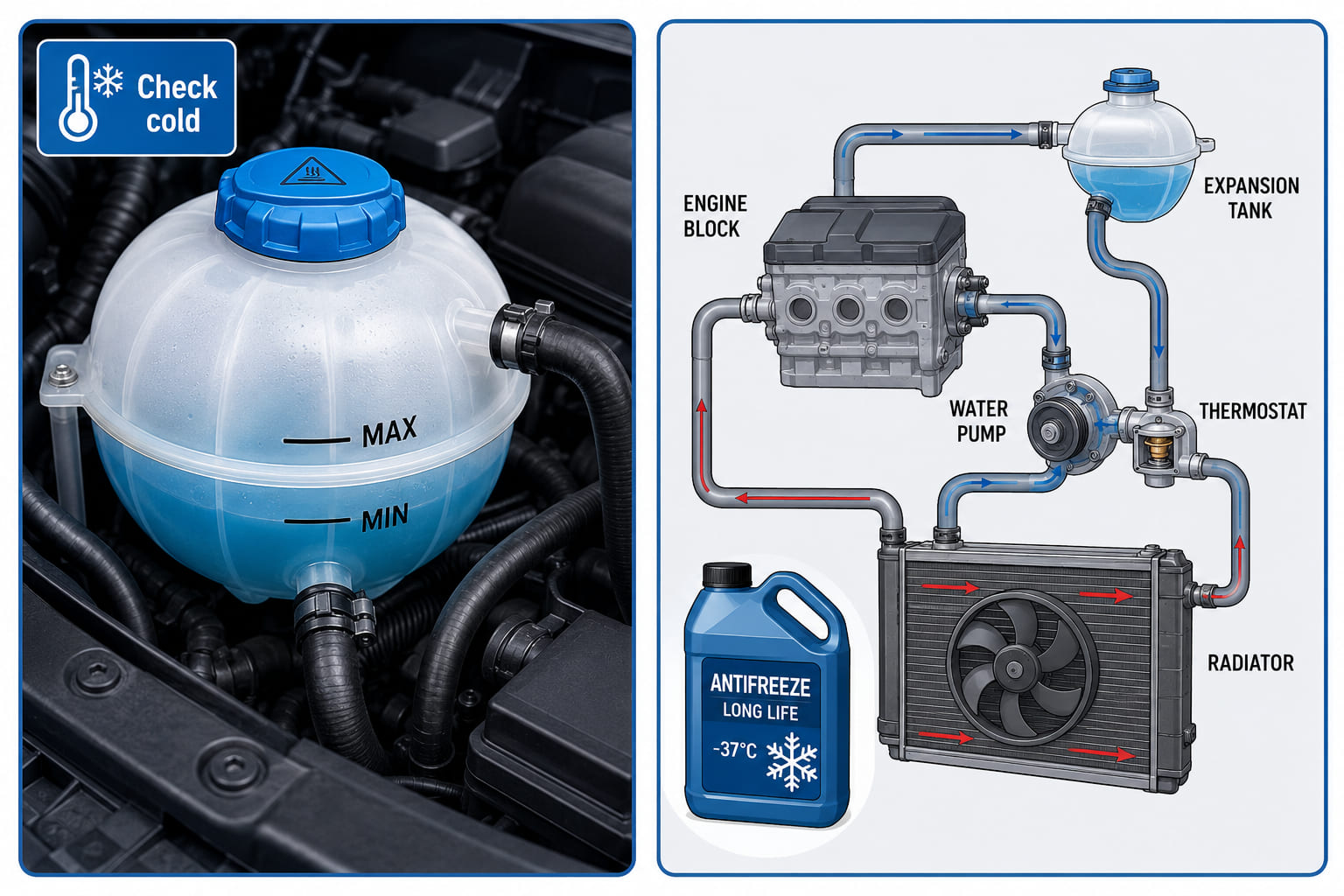
Prevents the engine overheating by dissipating heat. Maintenance:
- Coolant level: check in the expansion tank, cold - between MIN and MAX.
- Coolant replacement: follow manufacturer intervals. Use antifreeze in winter to prevent freezing.
17.2.3 Idle Speed
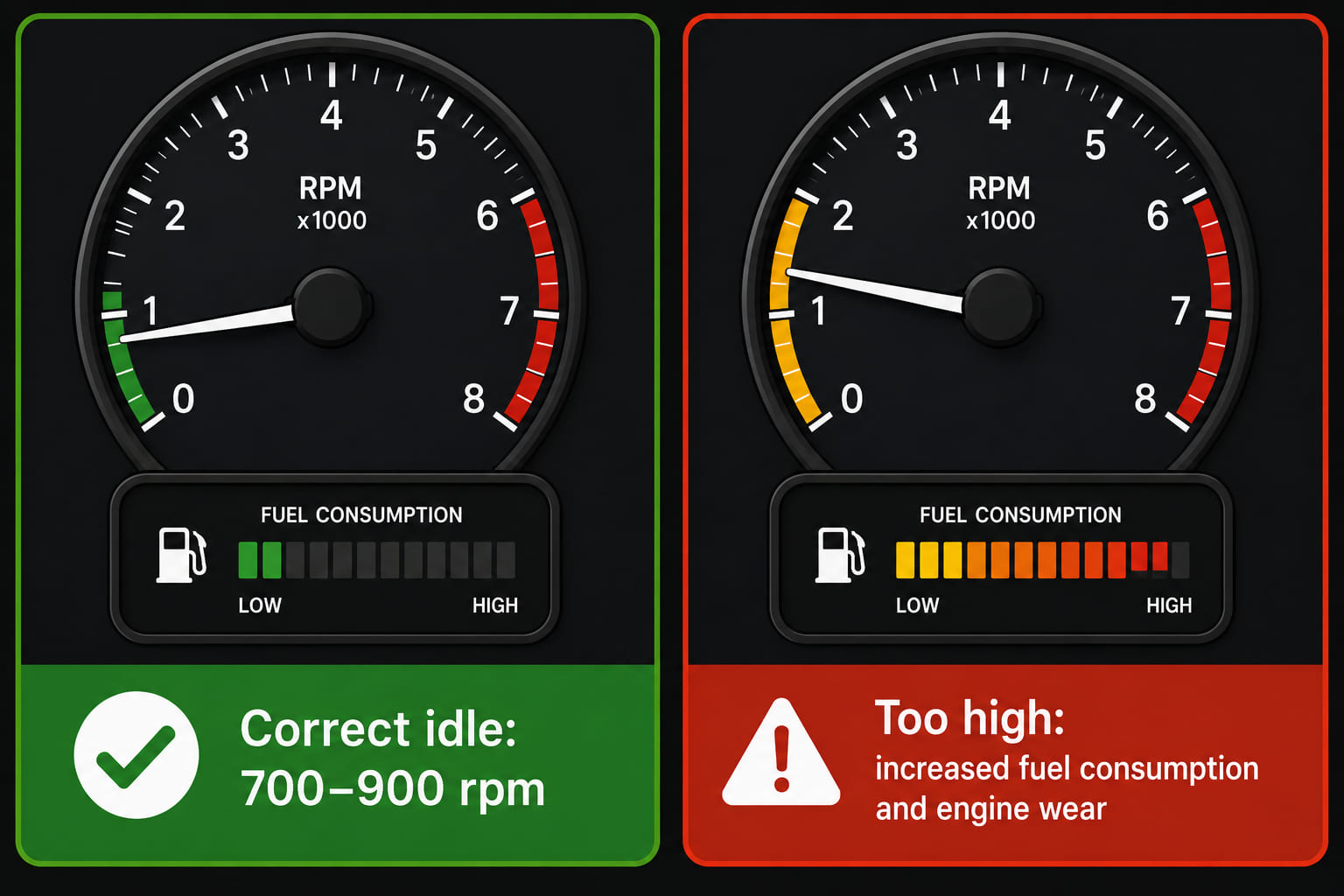
The engine idle speed must be correctly set. If too high, fuel consumption and wear increase.
17.3 Electrical System
17.3.1 Battery
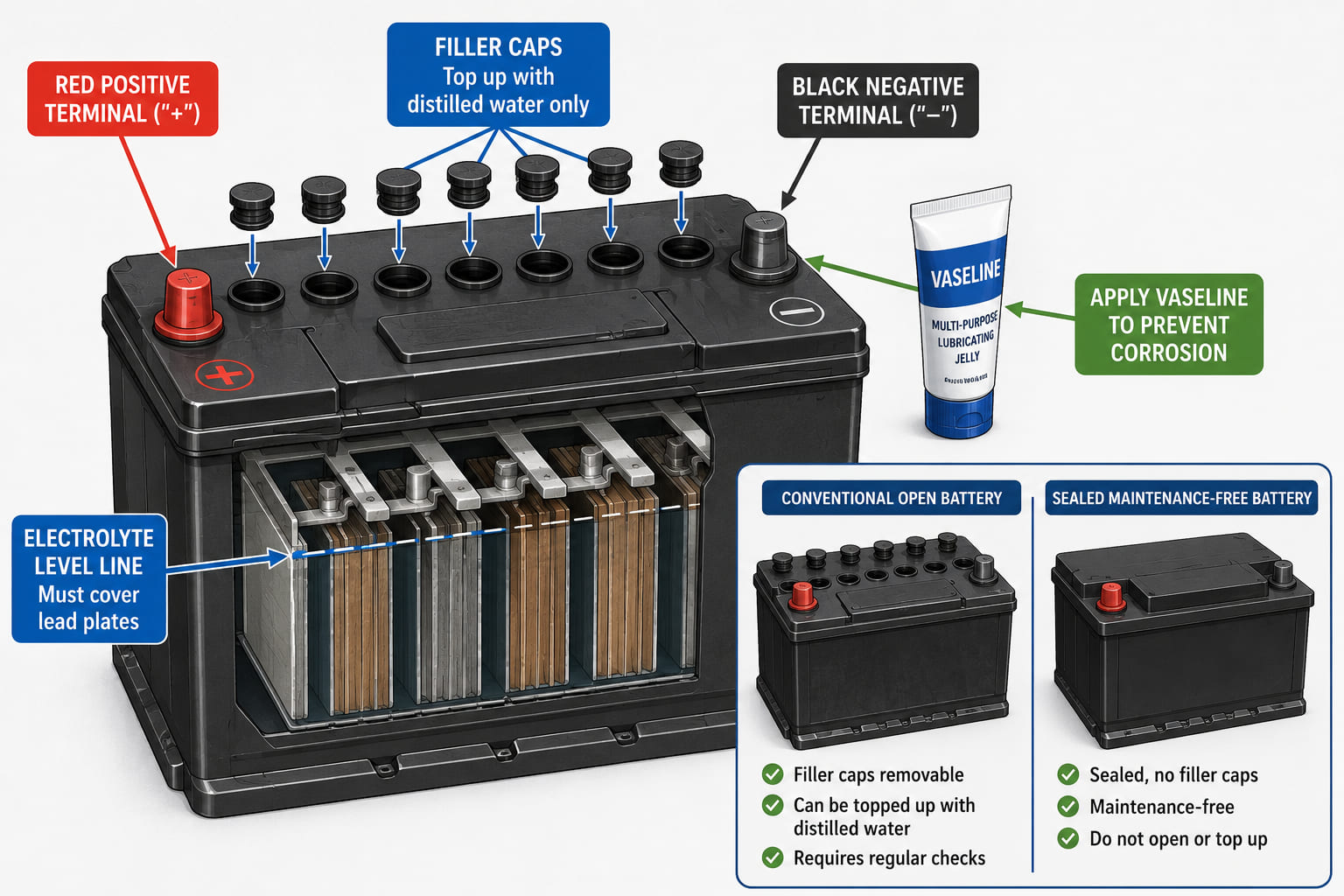
Supplies electricity when the engine is off. Types: maintenance-required and sealed. Clean terminals and cover with vaseline; in open batteries keep electrolyte above the lead plates using distilled water.
17.3.2 Charging System
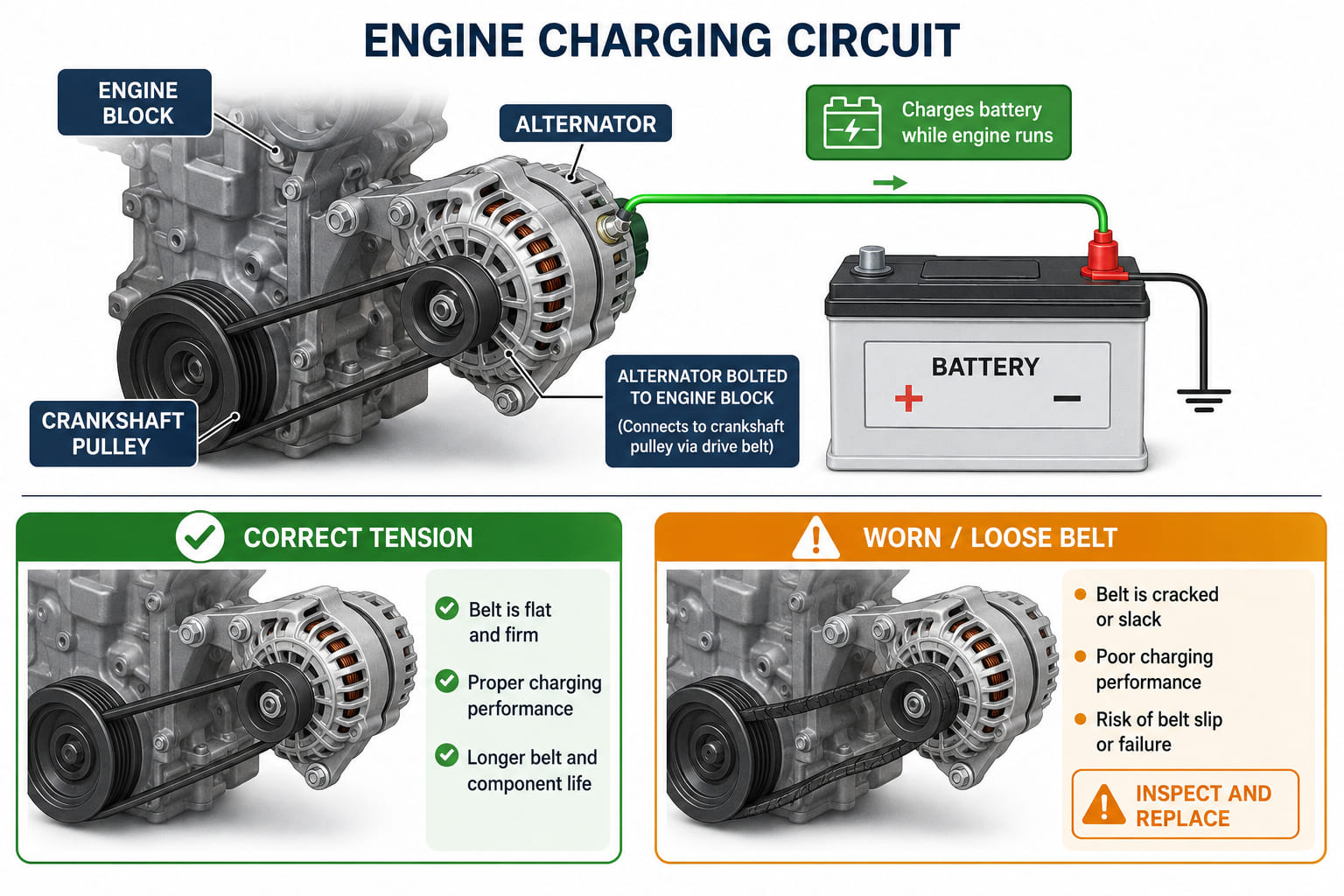
The alternator charges the battery while the engine runs, via a belt connected to the crankshaft. Check the alternator belt for wear and correct tension.
17.3.3 Starting System
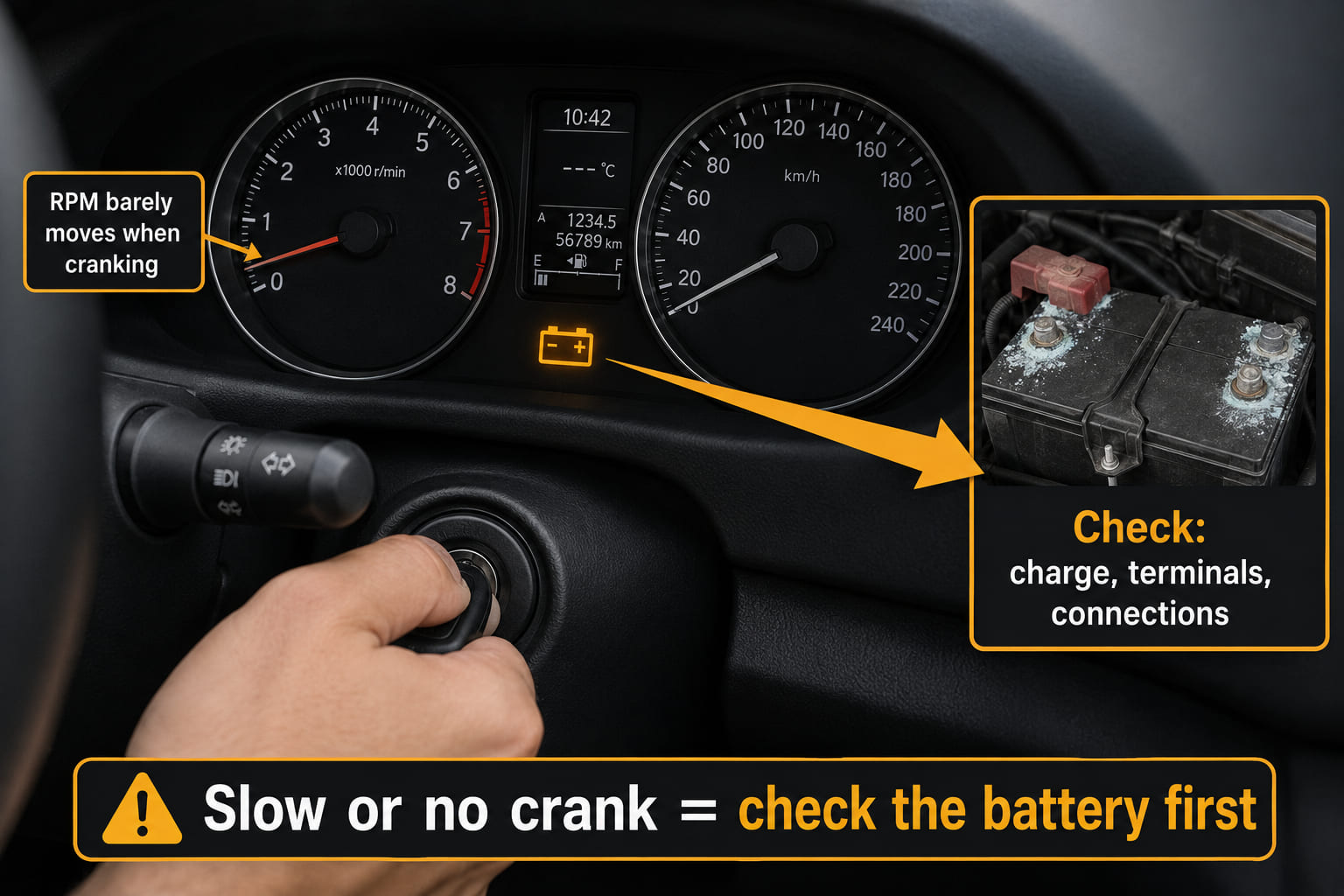
The starter motor turns the engine at ignition. If it rotates slowly or not at all, the battery may be low or poorly connected.
17.3.4 Ignition System
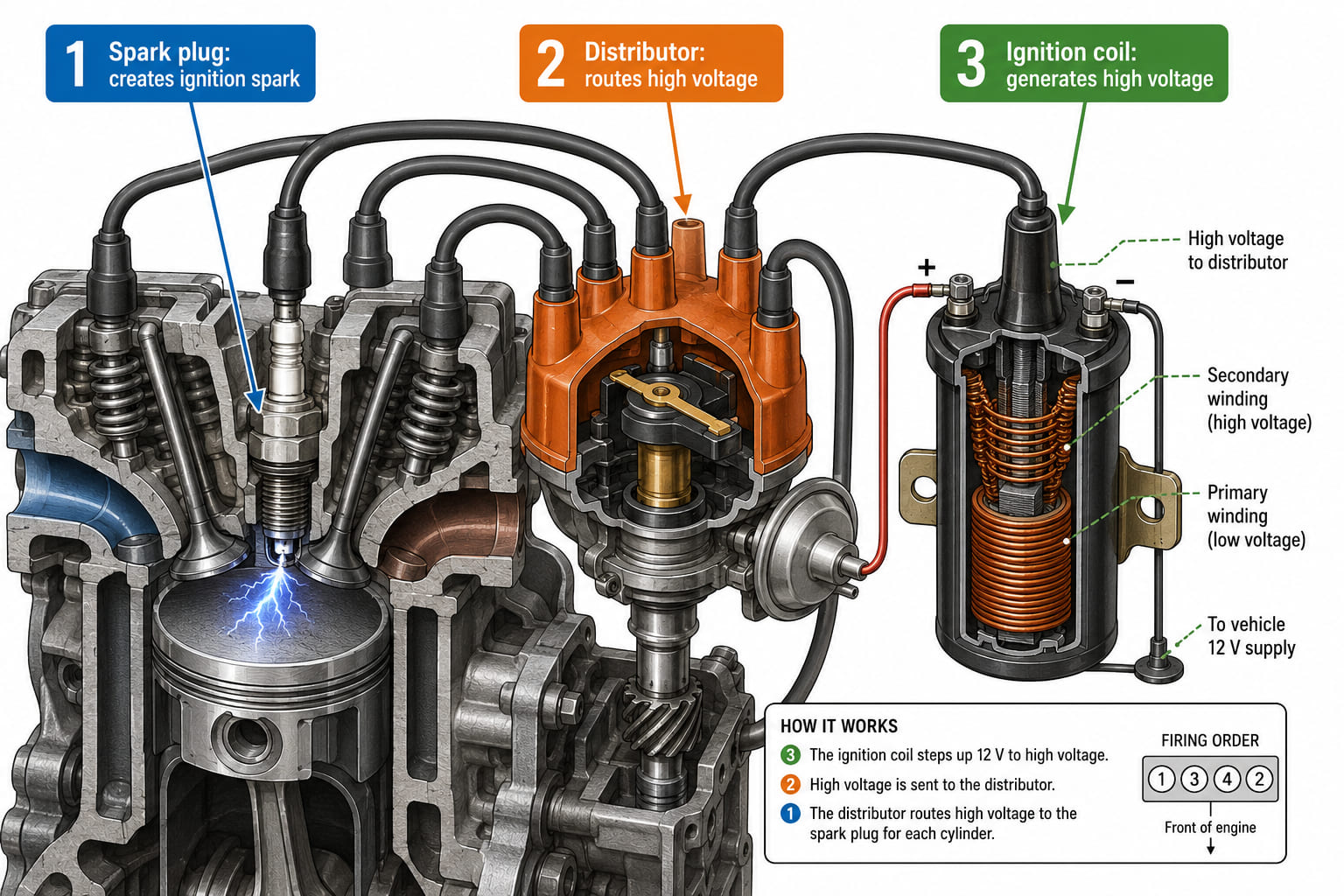
In petrol engines, generates the spark to ignite the air-fuel mixture. Includes spark plugs, distributor, and coil. Keep components clean and replace as needed.
17.4 Brake System
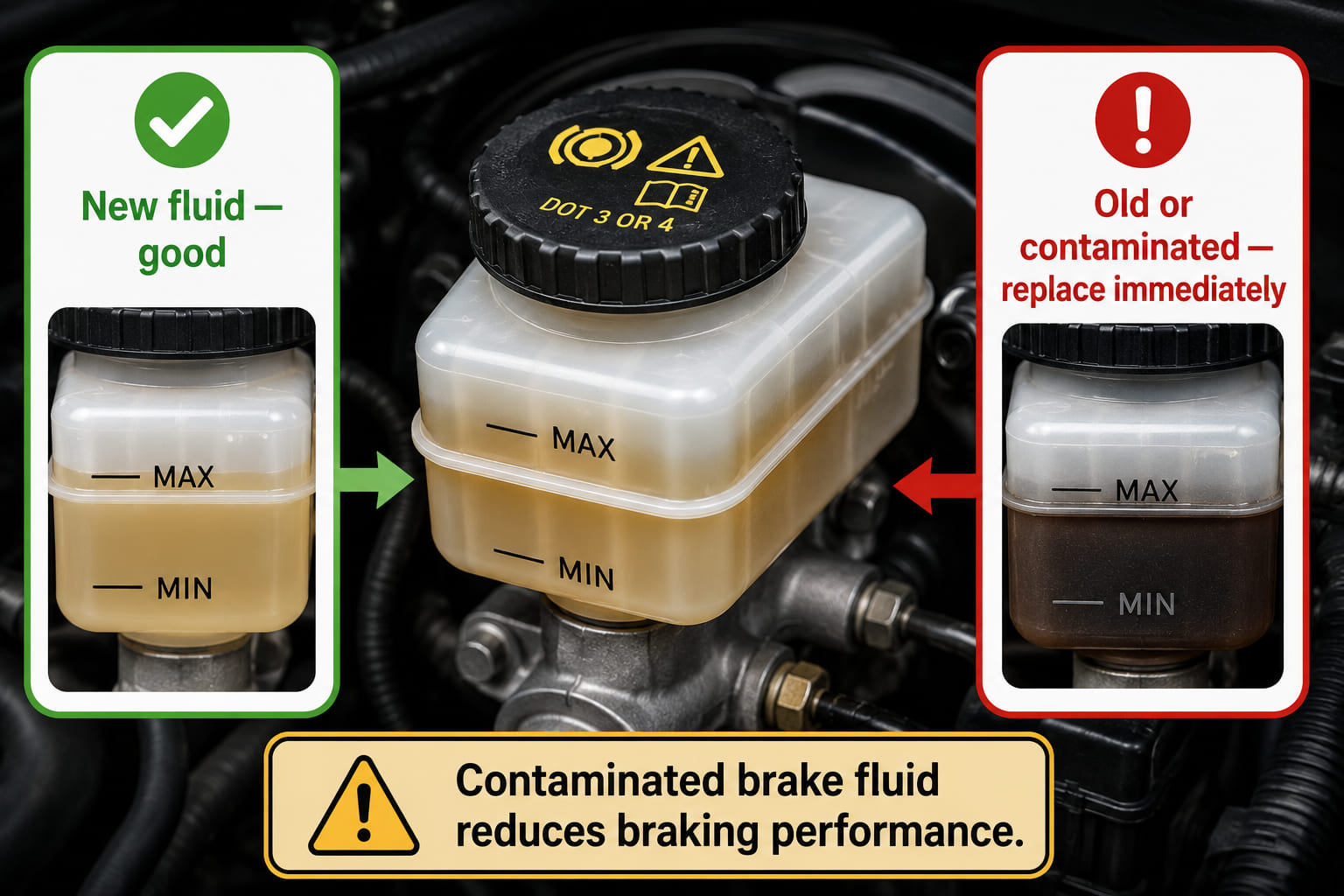
- Brake fluid: check the level and ensure it's not old or contaminated.
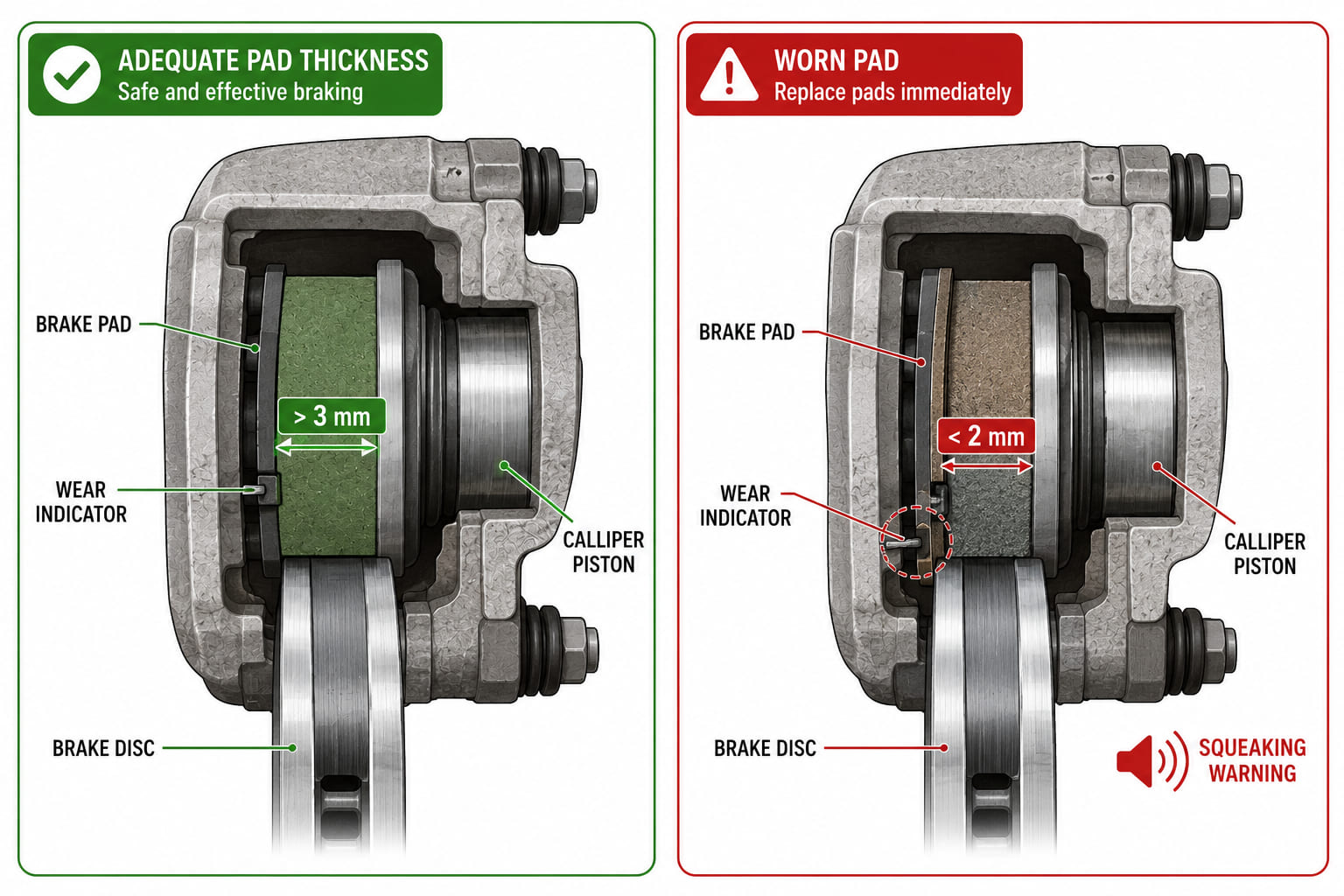
- Brake pads and discs: inspect regularly. Squeaking or reduced response may indicate wear.
17.5 Tyres
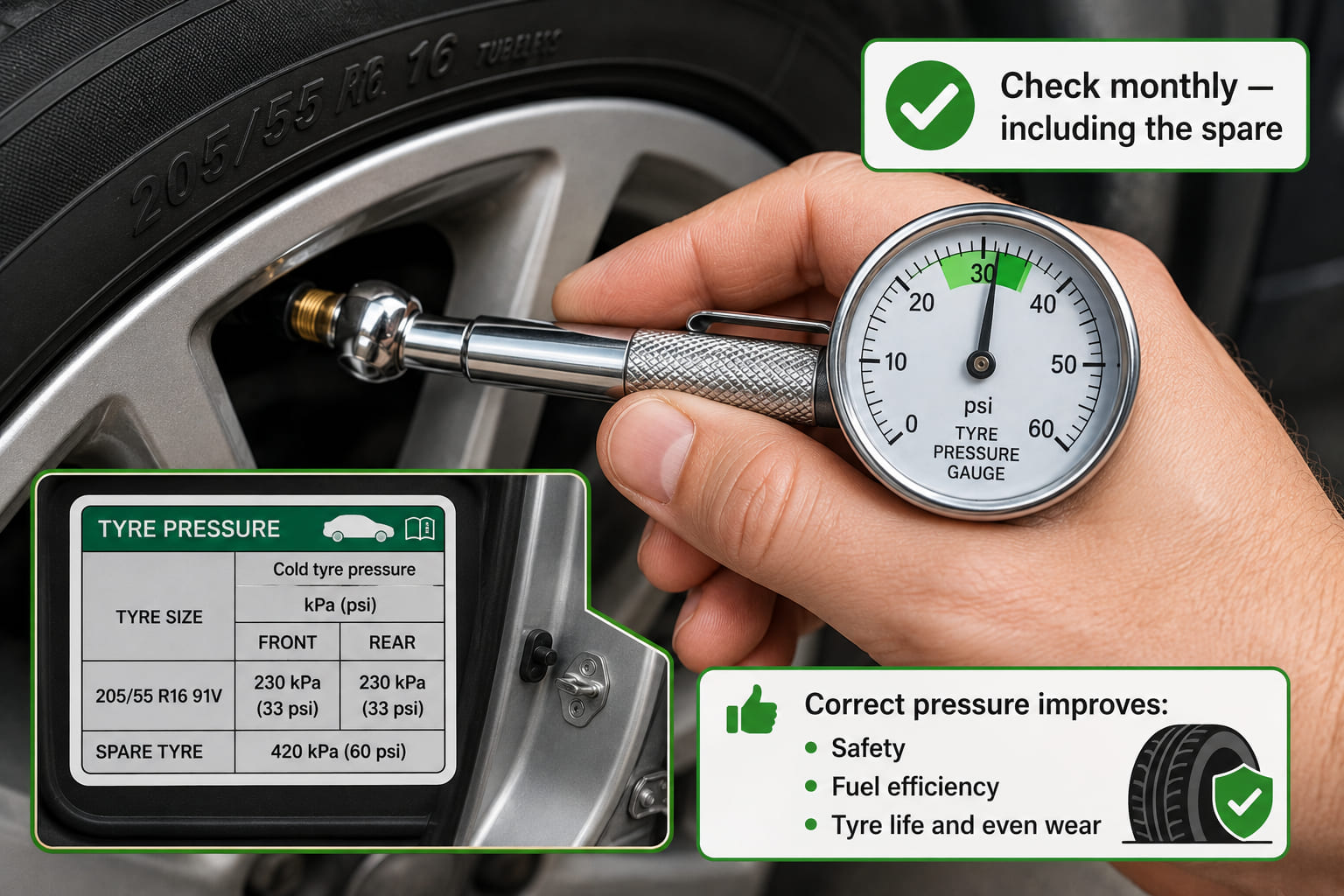
- Pressure: check monthly, including the spare. Follow manufacturer specs.
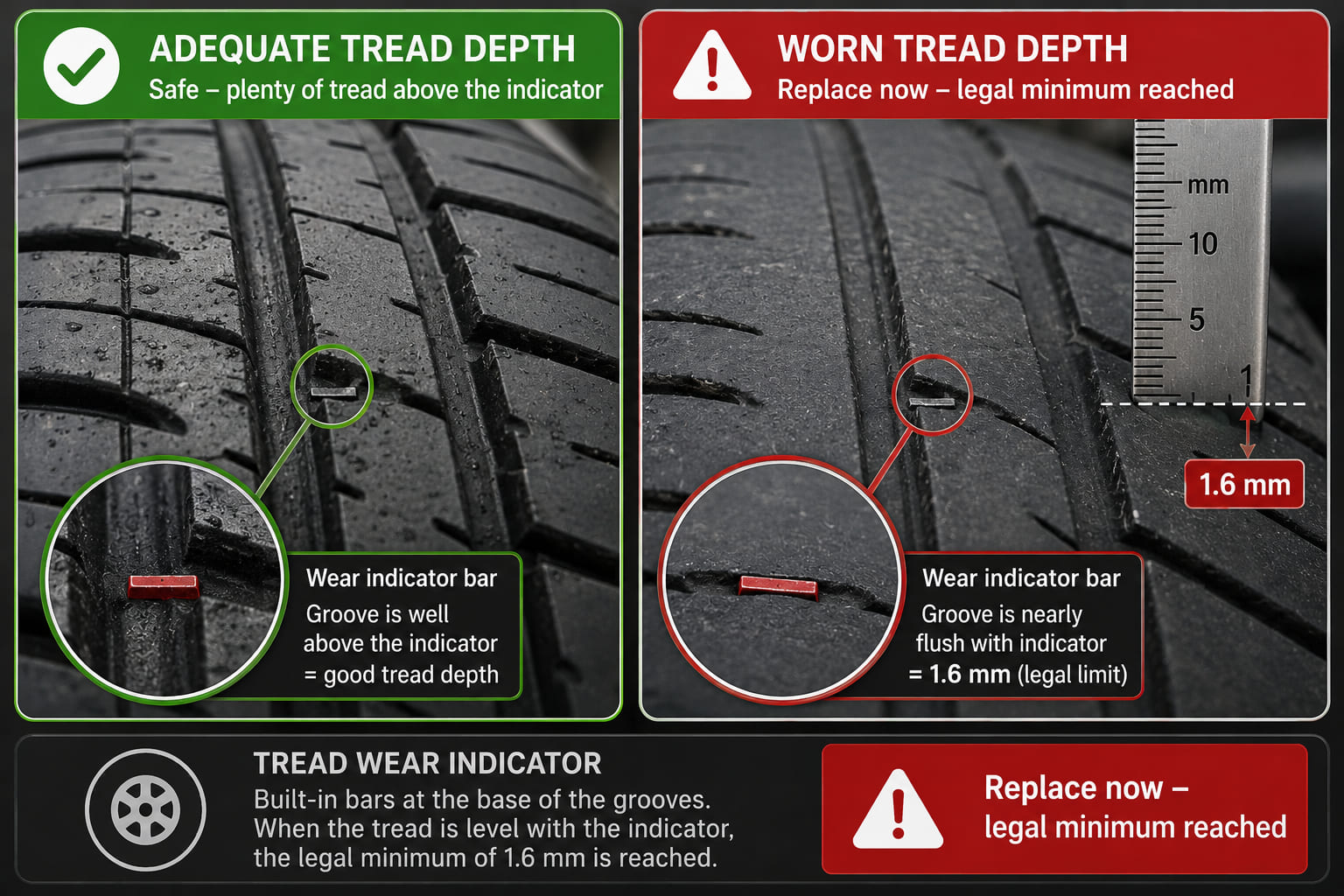
- Tread depth: minimum legal depth is 1.6 mm. Use the wear indicators on tyres.
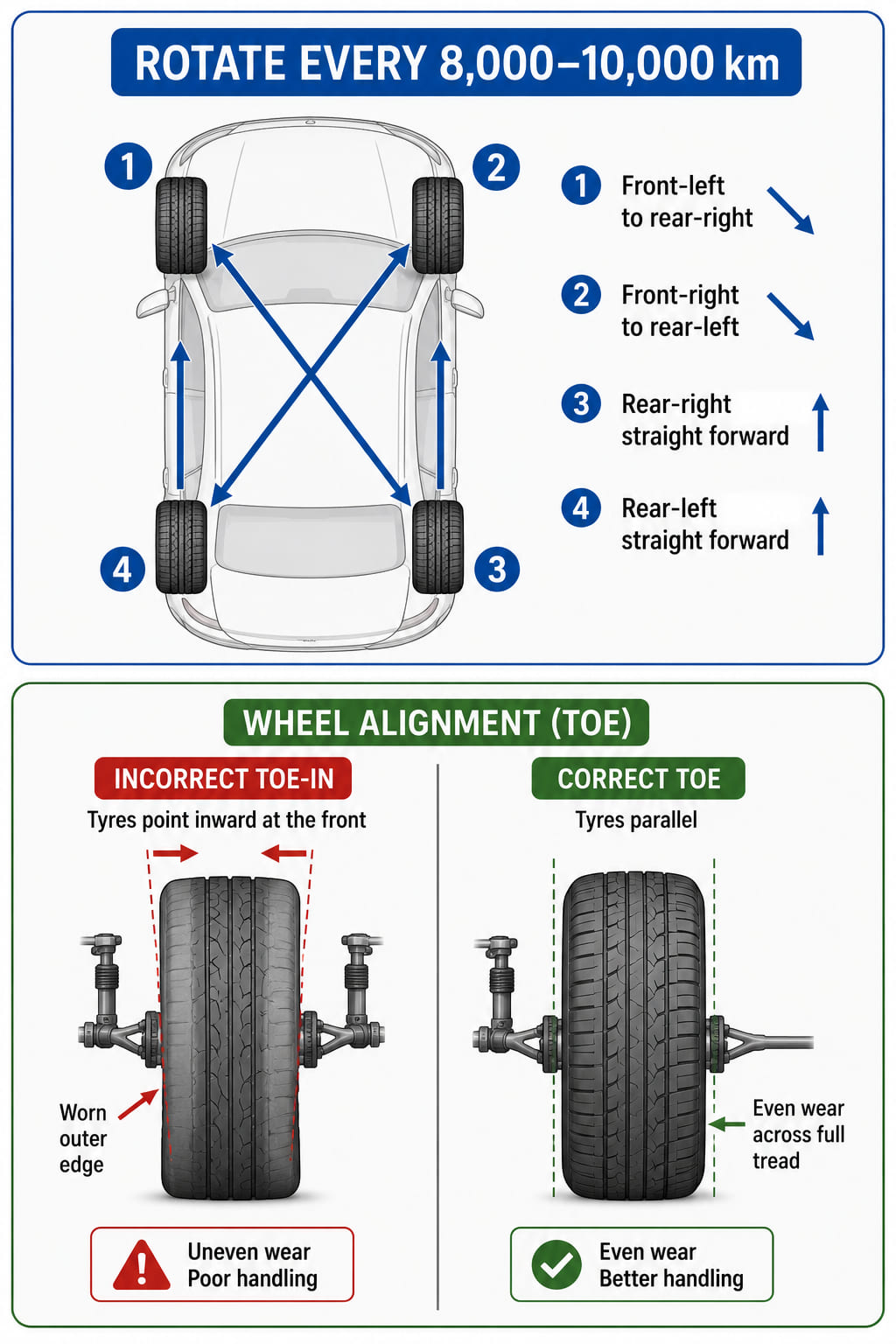
- Rotation and alignment: rotate tyres regularly and align wheels to prevent uneven wear.
17.6 Lights and Visibility
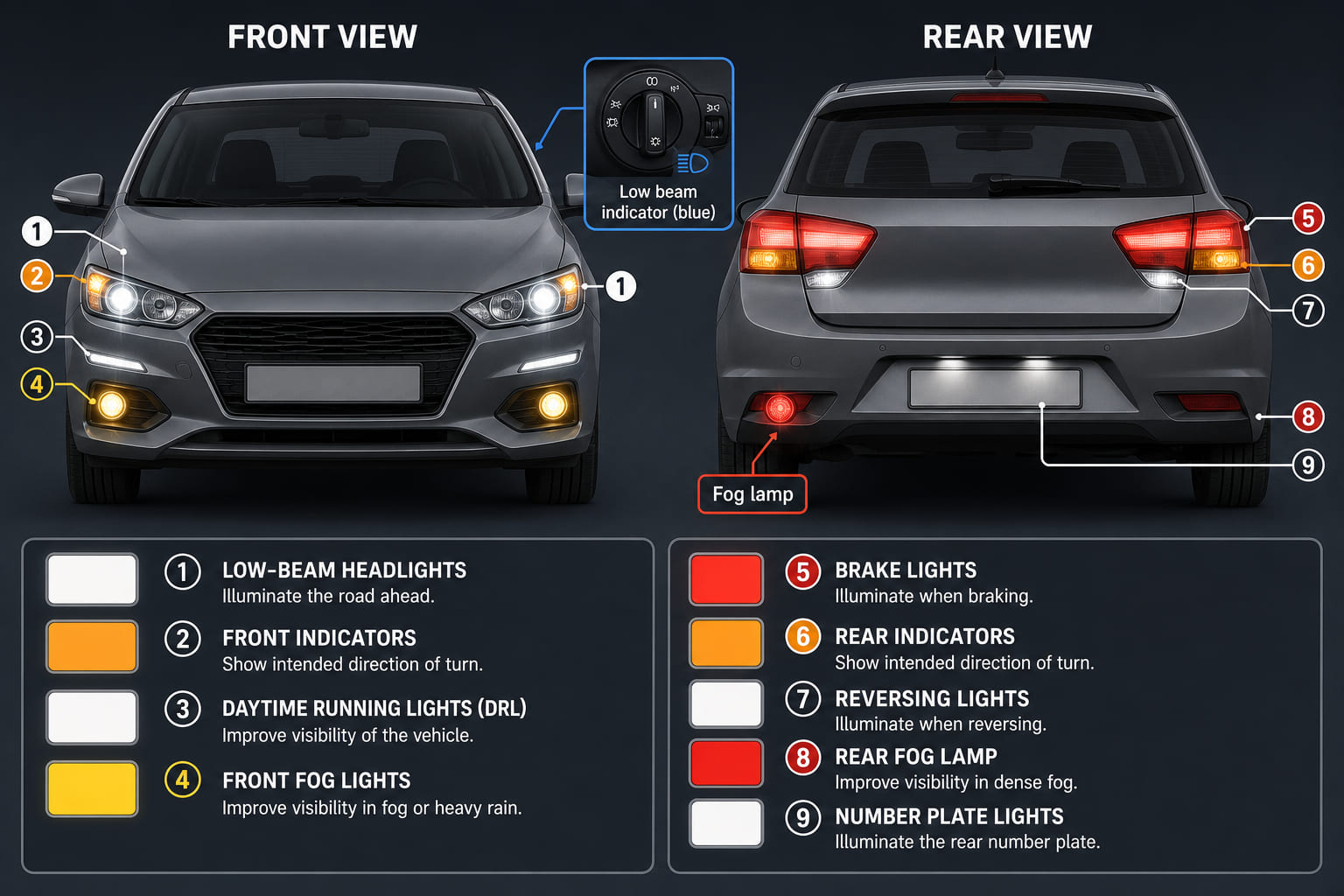
- Regularly check all lights: low/high beams, brake lights, indicators, and rear fog lamps.
- Replace any burnt-out bulbs immediately.
- Keep lenses clean for optimal visibility.
17.7 Wipers and Washer System
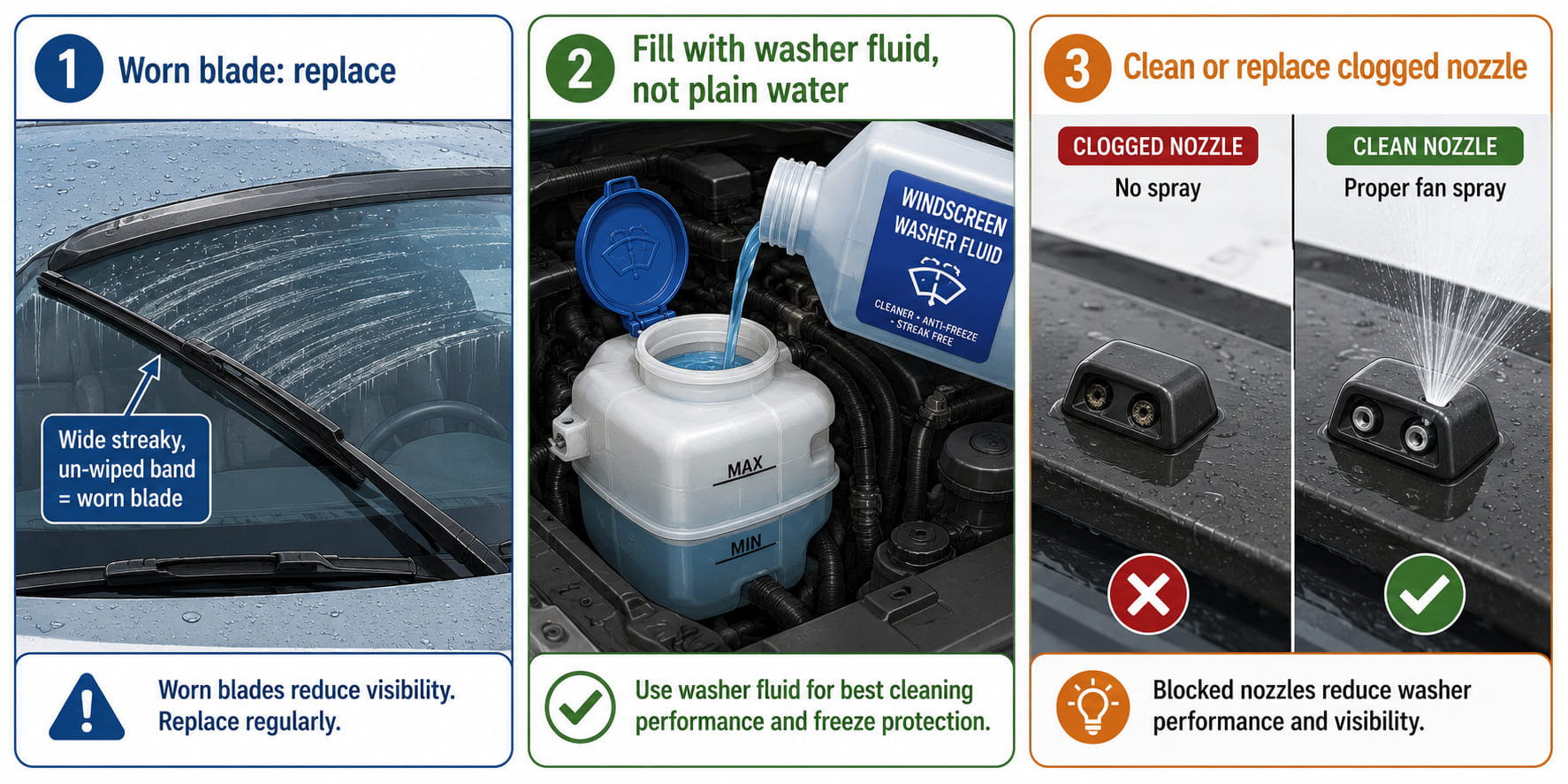
- Replace blades if they streak or squeak.
- Fill the reservoir with washer fluid.
- Ensure nozzles are not clogged.
17.8 Belts and Hoses
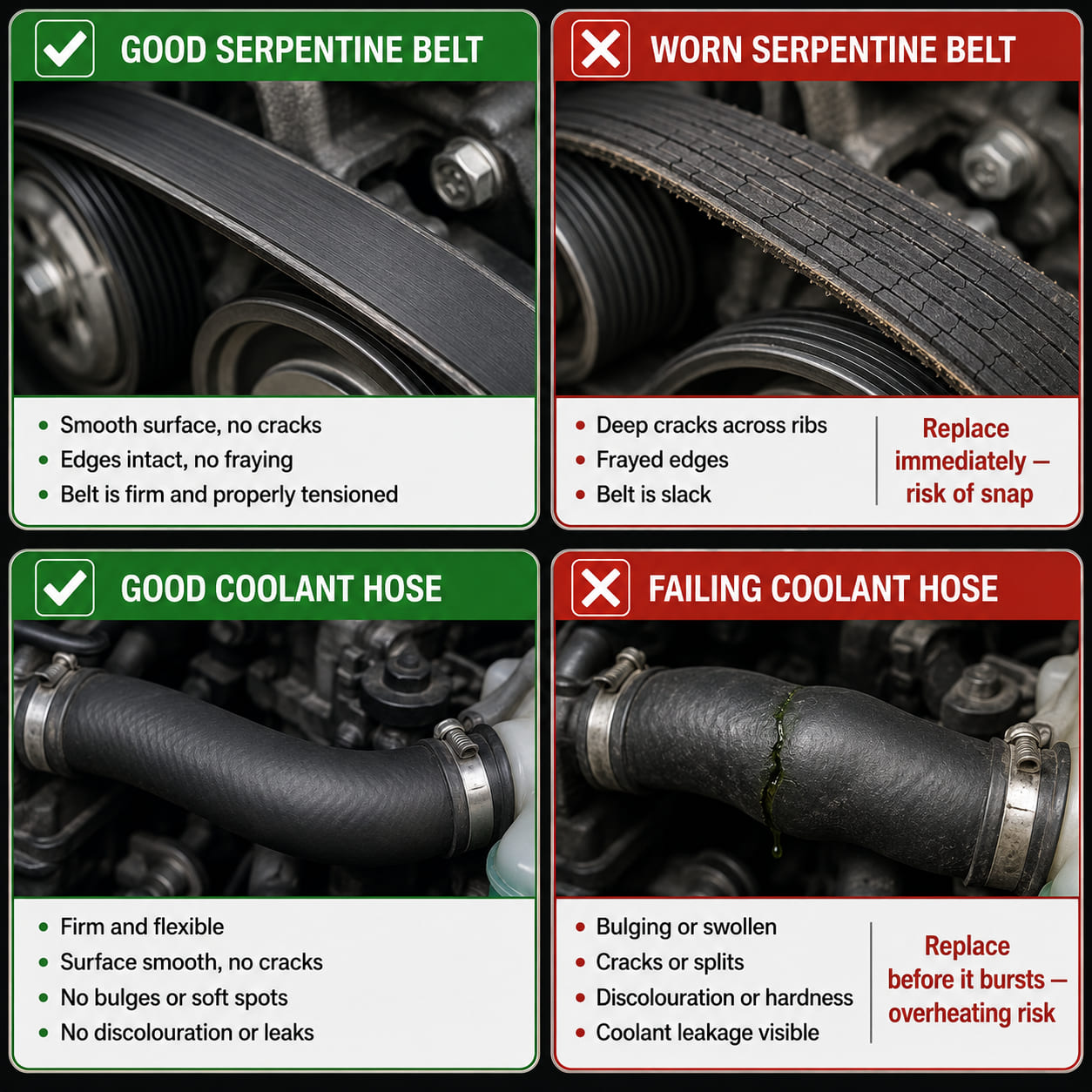
Check regularly for cracks, leaks, or wear. Replace according to the manufacturer's schedule to prevent engine damage or overheating.
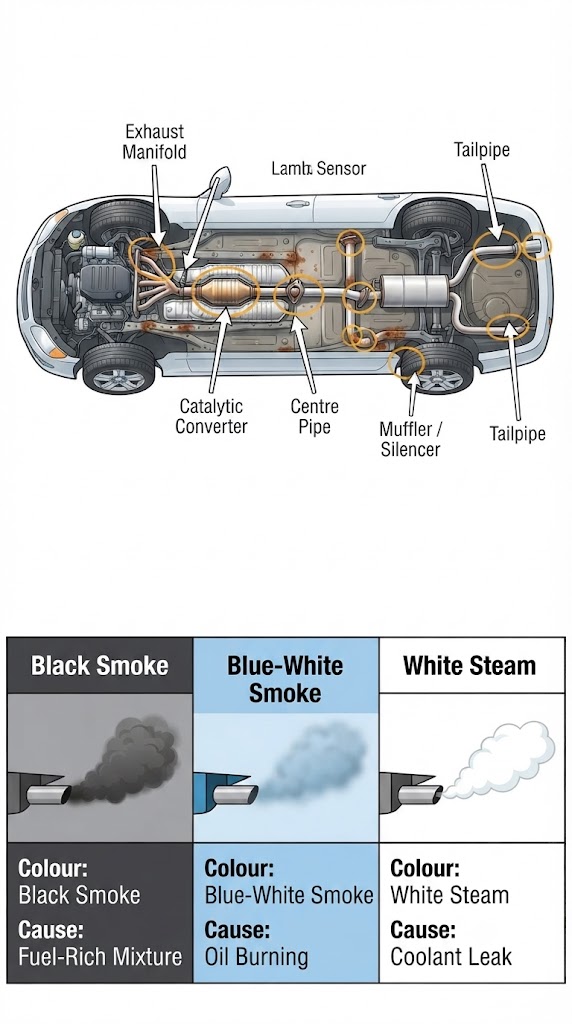
17.9 Exhaust System
A malfunctioning exhaust increases pollution and noise. Inspect the muffler and pipes for corrosion or leaks.
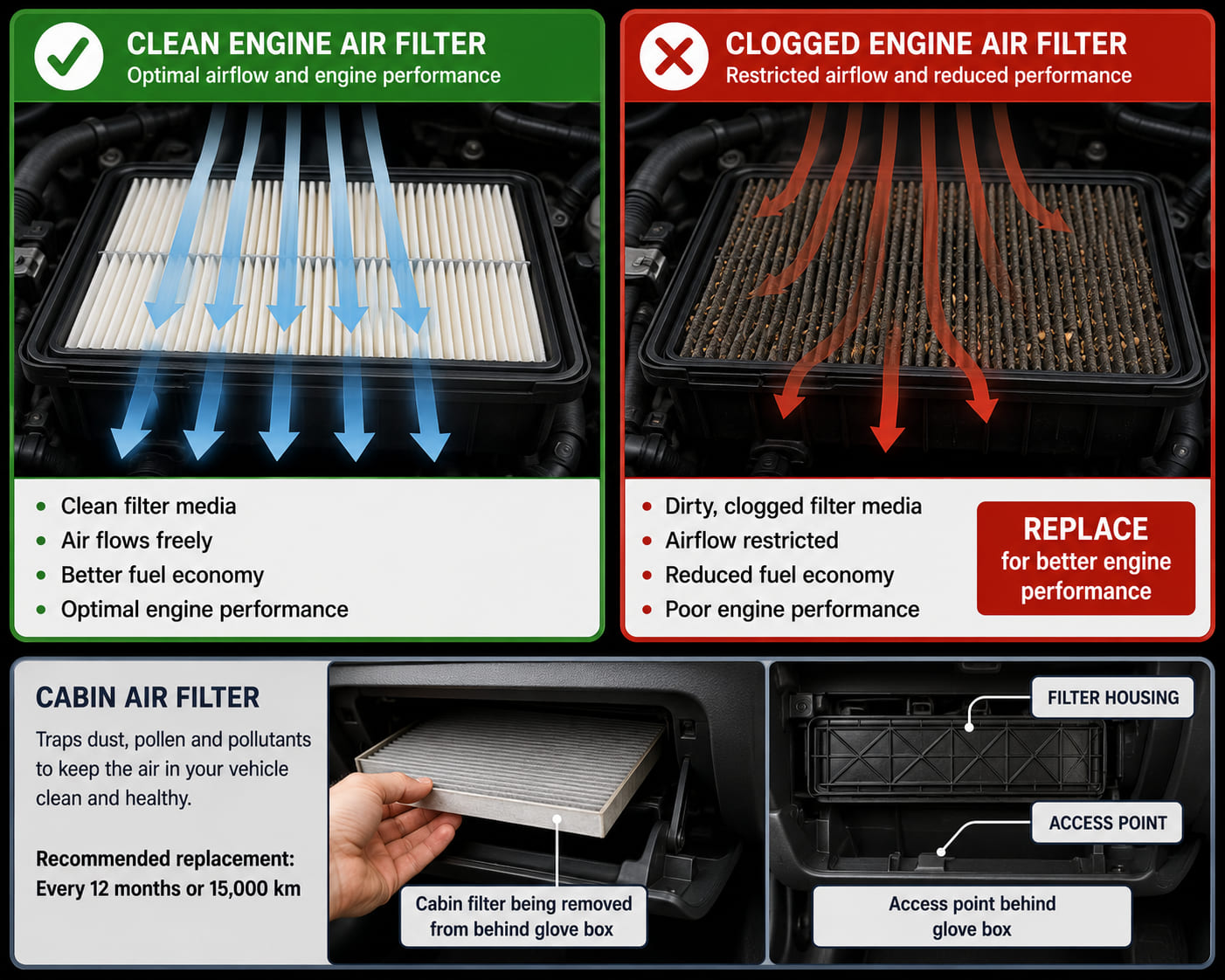
17.10 Air and Cabin Filters
- Air filter: keeps engine air clean. Replace as recommended to maintain performance.
- Cabin filter: improves air quality inside the vehicle.
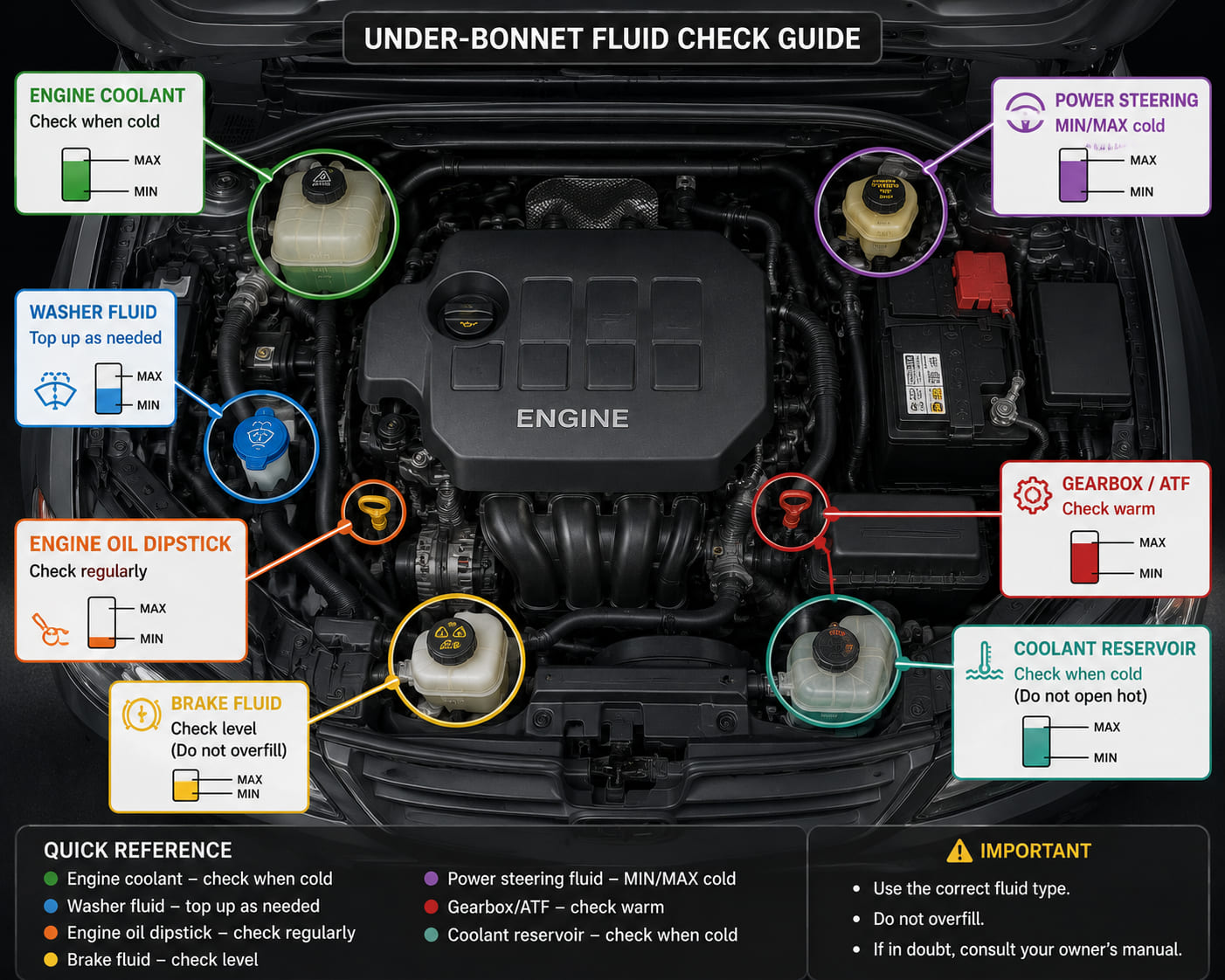
17.11 Transmission and Steering Fluids
These fluids ensure smooth gear shifts and steering. Check levels regularly and top up with the correct fluid type.
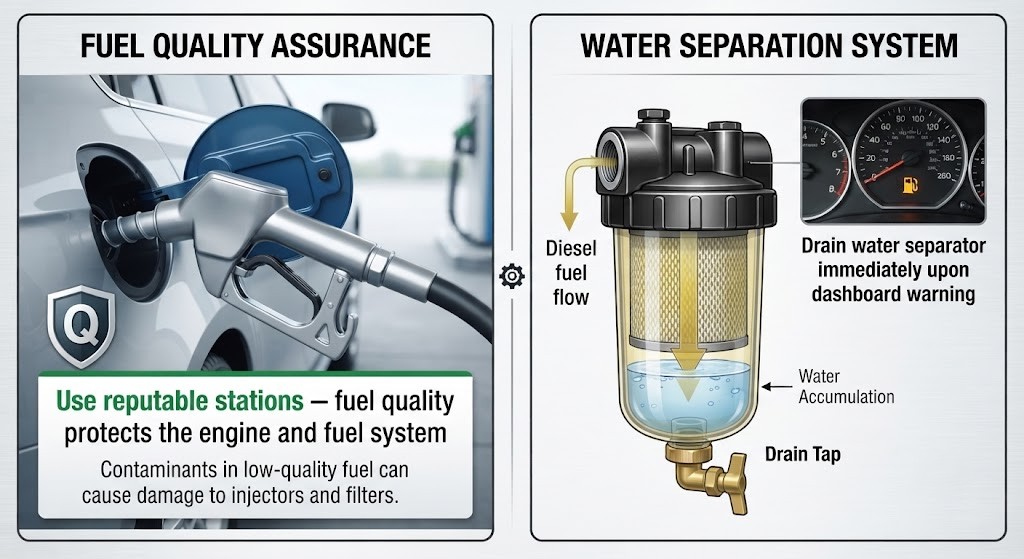
17.12 Fuel System
Contaminated or poor-quality fuel can damage the engine. Use reputable fuel stations. Diesel vehicles may need water-separator drainage.
17.13 Seasonal Maintenance
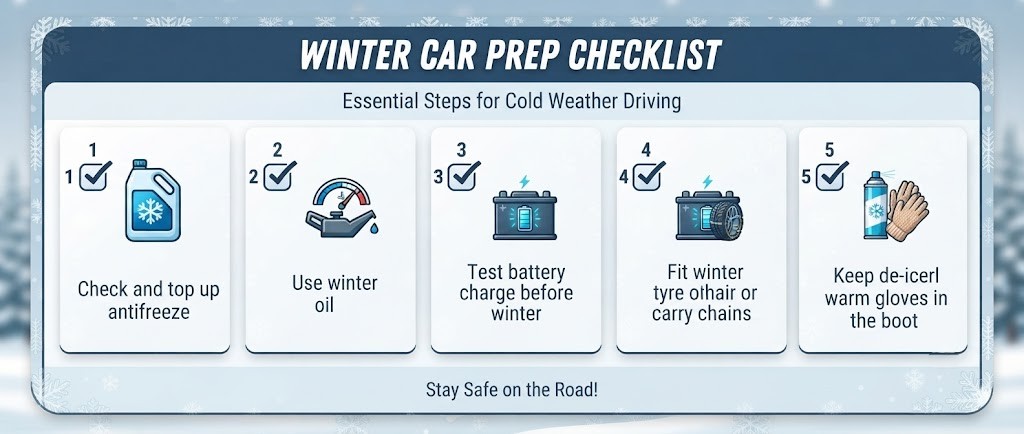
Winter
Use antifreeze and winter-grade oil. Check battery health and tyre grip. Keep de-icer and gloves in the car.
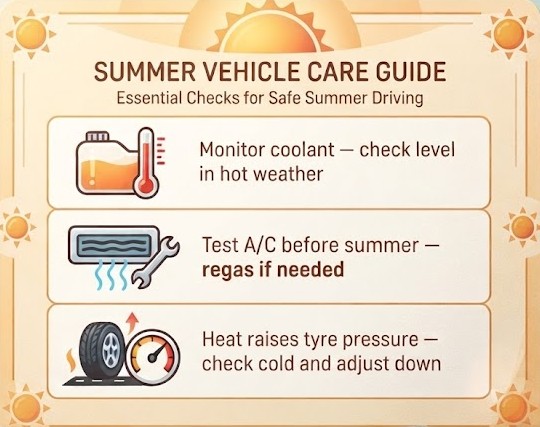
Summer
Prevent overheating: monitor coolant and radiator. Ensure air conditioning works properly. Avoid overinflated tyres due to heat.
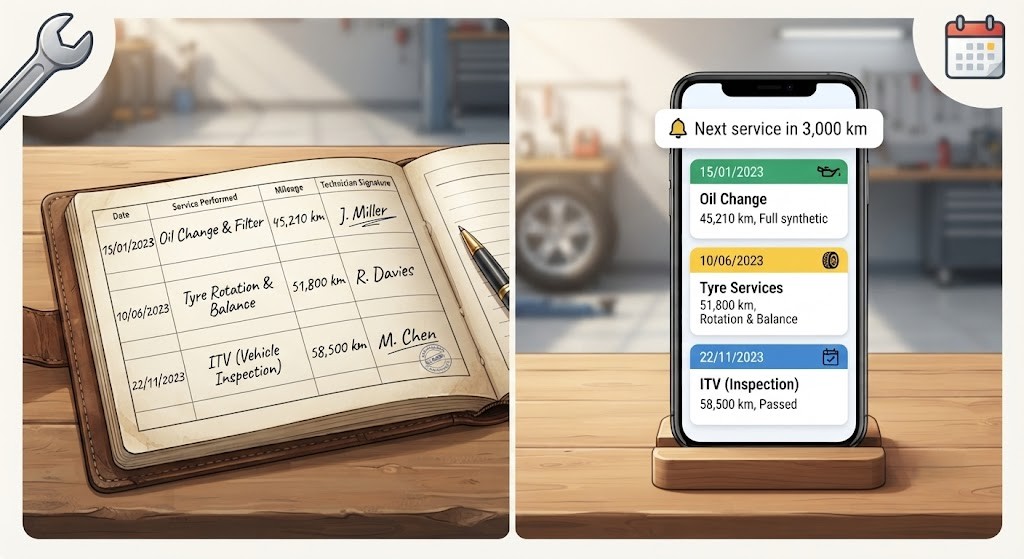
17.14 Maintenance Records
Keep a logbook of all inspections, replacements, and repairs. This helps plan maintenance and adds value when selling the car.
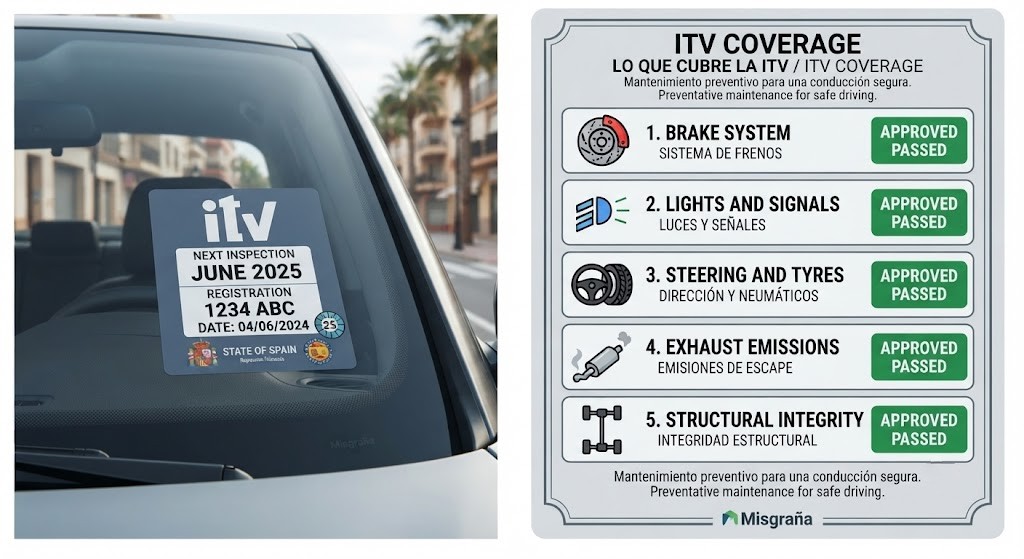
17.15 Roadworthiness Test (ITV in Spain)
The ITV (Inspeccion Tecnica de Vehiculos) is mandatory in Spain and checks that vehicles are safe and comply with environmental standards. Good maintenance ensures your car passes this inspection with no issues.
17.16 Tips for New Drivers
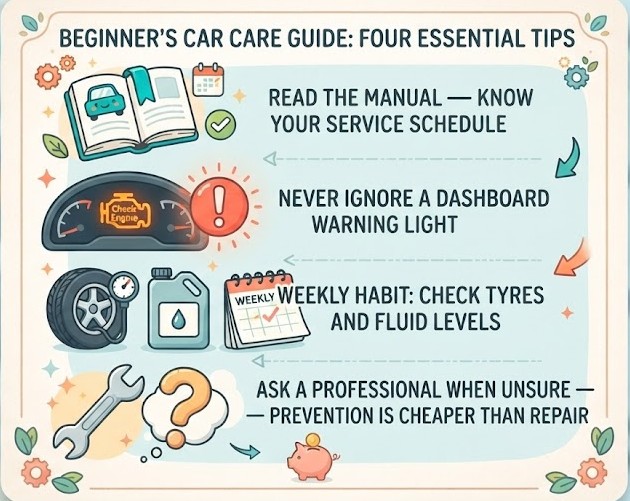
- Get familiar with your car's maintenance schedule and user manual.
- Never ignore warning lights on the dashboard.
- Develop habits of checking levels and tyres weekly.
- Ask a mechanic when unsure - preventive care is cheaper than repairs.
17.17 Conclusion
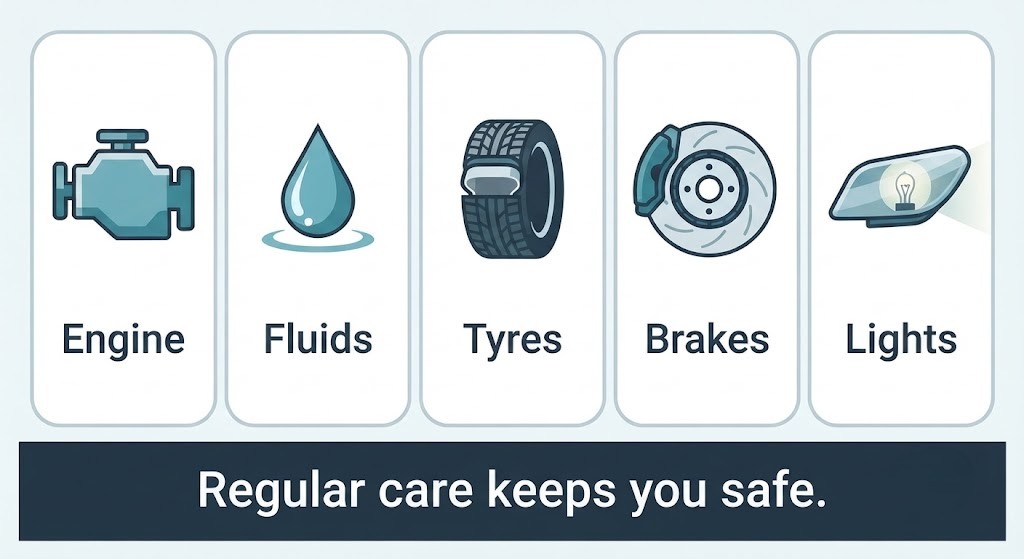
Maintaining your vehicle is not optional - it is a critical part of being a safe and responsible driver. With regular care of the engine, fluids, tyres, brakes, and lights, you keep your car reliable, safe, and efficient for years to come.
Ready to test your knowledge?
Practice questions covering everything in Chapter 17 - Vehicle Maintenance.Última actualización: 2026-06-27
Practica las preguntas de este capítulo
La teoría es gratis. Crea una cuenta gratis para practicar preguntas con formato oficial y seguir tu progreso.